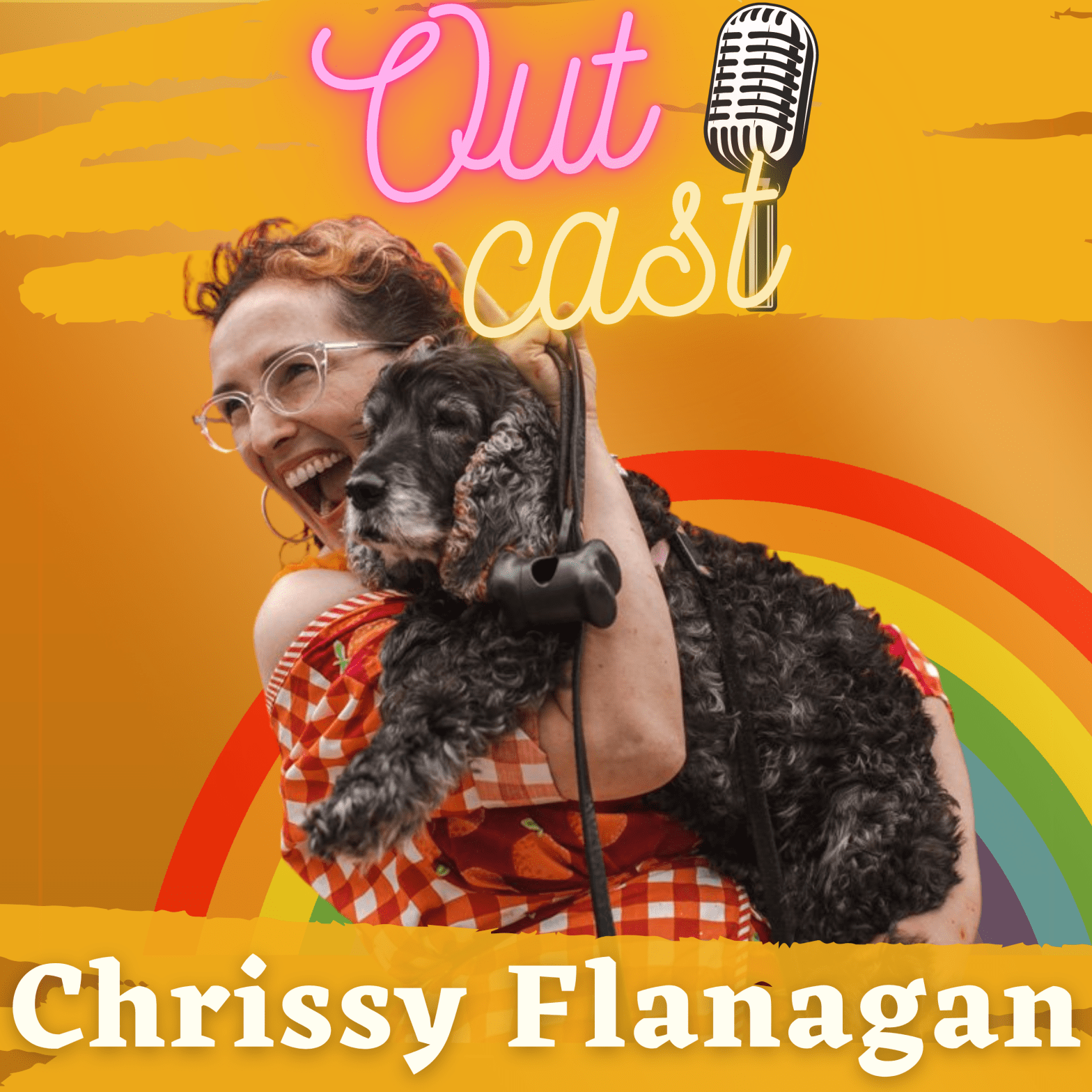
OUTcast S3, Ep 5 • 16 July 2023 • 57:10
Rosie 00:00:07 Welcome to OUTcast, the podcast where we hear coming out stories from famous faces and brilliant LGBTQ+ people working hard behind the scenes from all backgrounds and from all corners of the globe.
On this podcast, we discover life stories, and in doing so, we dissect some of the most pressing issues faced by the LGBTQ+ community today. We hope we can support and inspire you, our listeners, whether you’re part of the LGBTQ+ community – out or not – or an ally listening to learn more.
I’m Rosie Pentreath, your host, and I’ve shared my coming out story in writing and on various panels, and I know firsthand the value of talking through my experiences. Now I’m giving people from all corners of life, and from all backgrounds, the same opportunity.
You may have listened to other episodes before, and if you have, thank you for coming back. Or you may be here for the first time because of our guest – welcome. You can follow us on social media, at @OUTcastLGBT, and you can find us online at outcastpod.com. Thank you for listening!
Today, I’m welcoming Chrissy Flanagan to OUTcast. Chrissy is the Sydney-based founder of Chaotic Social, which dubs itself an afterschool club for adults, designed to solve others’ desire to make adult friends, as well as my own, to use Chrissy’s words. Chrissy came out as queer remarkably recently, in March this year, and she is a self-proclaimed baby queer. We explore that term and Chrissy’s experience of so recently discovering her true sexuality as well as her experience of being a neurodiverse person with a diagnosis later in life.
Hi Chrissy, welcome to OUTcast Podcast.
Chrissy 00:02:07 Thank you. Thrilled.
Rosie 00:02:10 We met through a recent Chaotic Social baby queer panel. We’ll come back to Chaotic Social, but I wanted to pick up on your experience as a baby queer and on the start of your coming out story that you mentioned in the panel. I think you said you realised you’re queer during Sydney World Pride. What happened?
Chrissy 00:02:30 There’s obviously been… you don’t wake up one day at 40 and go like, do I potentially, yeah, there’s a lot of history to it, but it all just kind of came together. Yeah, right at the start of Baby pride – Baby Pride – World Pride and all these people were saying to me, oh, this is amazing. You know, just in time for World Pride, like so, so great for you to find out that you are, you know, a baby queer.
I was like yeah well, I don’t think there are orientation classes, so I don’t like truly know how I’m going to like capitalise on this wonderful advantage and timing. But as it happened, then I did go to a bunch of stuff and it was actually quite great. So I was wrong and they, they were right when, when you do have a later in life kind of it all coming together for whatever reason, a lot of mine was like two very long term relationships that meant it just sort of wasn’t on the cards. There’s so much if you’re a thoughtful person, concern about how to find out about this ethically and in a responsible way and without being like a burden on the community. So yeah, that’s sort of something I’m trying to experience deeply so that I can help other people in their journeys as well.
Rosie 00:03:44 Yeah, and I like how you tackled that in the, in the class itself that I came to – the panel. You kind of have this sense of wanting to, obviously you want to dive into it and explore it, but you’re very conscious of yourself and your history and what you sort of say or experience. You kind of had some key questions in that class for a panel of queer people across the spectrum and across the experiences of coming out at different stages in their life. I loved those questions. Do you have any of those burning questions that you still have or find yourself asking when you wake up each morning?
Chrissy 00:04:22 I’ve got, I’ve got such a live question at the moment, which is yeah, a very like, a today evolving situation and feels, essentially that feels like a milestone on my queer journey. Which is that there’s someone that’s in my life already where we’ve just last night acknowledged that we had feelings for each other and that is AFAB and she only dates women. We’re in the deep conversations of, well, what do we do about that? Is that too high risk? But like once it’s been acknowledged, what are your kind of options for going forward with that situation in either direction? But also, what’s at stake? But also what a lovely thing it could be if it did, yeah, work out. But an incredibly sort of high risk situation in terms of the risk of our existing relationship, which is working for both of us already. Yeah.
But yeah, the conclusion after very, very extensive texting over about two hours this morning, the conclusion is that we’re just going to meet up and have a pash and that’s how what we’ve discussed, everybody’s every concern and all, all of everybody’s potential hopes of what could be great about it as well. So yeah, there’s, there’s always something new, when I feel like I’ve landed the basics, there’s always like another little first. Mm.
Rosie 00:05:57 I think what’s so good about this and this situation is you’re being so self-aware and you know, whilst you are, you’ve come out later in life to put it in a kind of a basic package, you know, that kind of self-awareness might not necessarily be with you if you’re coming out as a teenager or as a young adult actually. So there’s kind of pros and cons in that sense, that you are actually being more careful than perhaps making mistakes as a younger person,
Chrissy 00:06:23 I think so. And definitely with the benefit of like, a lot of therapy. I just had my one year therapy anniversary, wished my therapist happy, you know, one year. God bless, she took it very well. I didn’t tell her I loved her, which I considered an accomplishment! I’m working yes, in the baby queer space, but also in a lot of other behaviours that I need to focus on. Yeah, yeah, that definitely has been very beneficial.
Rosie 00:07:07 Is there a way of describing how you first felt these things? How you first realised these things were properly real? That you could be attracted to women as well as men or to people on the whole gender spectrum?
Chrissy 00:07:20 I think when I was about 13. I’d said to my mother, in the way you kind of do testing things out, I was like, oh, my, my friend thinks that she might, you know, be interested in in girls instead of boys. And my mother, my mother’s response was, well, you are not. Okay!
And because I was desperate to impress my mother, that was, that was just like the end of that being anything that it could, it just, it couldn’t be in those circumstances. And then, yeah, I was in a relationship all of my twenties. In the year in between, I had in between relationships, it kind of came back up again. But I looked into that in a fairly immature way in that I had a very, very bad threesome. Deeply regretful. No, nothing wrong with threesomes, but it was just like poorly planned on my part and that was not a good experience. And what I took away from that was like, oh, well then I checked and as it turns out, I’m, I’m not, I’m not attracted to women. I didn’t put together like, I’m not attracted to this woman.
Chrissy 00:08:33 Yeah. But like, you have bad sex with anyone. You don’t just go, oh, well then that entire gender… I just missed that. Mm. So that took me another 10 years and then I, yeah, got into another long-term relationship and so then that kind of leads me to now, and it was, I think it was like February when I just, I’ve been broken up with my long-term partner since September, and then February I just sort of started feeling ready to date again. Mm. And it, it just, it didn’t feel like a big thing. I was just sort of saying in a TikTok, you know, I think I’m, I think I, I feel the interest to start dating people. And then at the end I was like, and maybe not just men this time. And, and people were like, did, did you just come out? I was like, oh, did I?
Rosie 00:09:27 Coming out on TikTok, it’s very 2023, I have to say.
Chrissy 00:09:30 Well, like coming out without even like realising. Like I hadn’t, I just hadn’t quite processed… I just sort of thought, oh, it’s, it’s not really a big, like, it’s not really a big deal, it’s just, you know? So it, it hadn’t occurred to me to go that, yeah, that, that thinking that had standing like, or significance, it was just something that I was feeling. But yeah, then it, then it became like, oh, you, like you, you’re telling your parents, are you telling your friends? I was like, oh, do people still announce that? Like they’re going to, that they’re planning on dating whoever they’re planning on dating. But I was like, oh, look, you know, fair enough, I do. I, I certainly am still very close with my mother and tell her everything. So it would be, it would be an admission if I didn’t, like, if I’m going to be dating people Mm, it’s probably, I will be telling her about that.
Chrissy 00:10:26 So I may as well tell her in terms of her coming out. So yeah, told her and she was totally fine. Largely, I’ll have to re-look at my TikTok about that because I’ve largely forgotten how it, how that went. I’ve subsequently had to come out to her a few more times after that because she’s done the whole, oh, you and such and such seem like such good friends thing. Like, you know, Mum, we’re dating and we kiss, so I’m, I’m sorry that you haven’t experienced intimate relationships where you also, like, there’s a loveliness and a support to it. So you associate supportive behaviour only with friendship.
Rosie 00:11:06 I love that. I love that you’ve like totally reframed that because I’m still in the camp of like, I can’t believe they called us friends just so homophobic, blah, blah, blah, blah. So that’s, yeah, amazing. And we do always keep coming out. That’s another thing that I like that you just pointed out there.
Chrissy 00:11:24 Yeah. And it’s that mix between, well, you wanna like represent and visibility is important and particularly if you feel secure in your identity and there, there are still people and especially young people who are not necessarily feeling so safe. It is important to have adults who do, and I, and I feel exactly the same way about neurodiversity. If you are where you are really happy to own the label, whatever the label is, if it’s still divisive in some parts, then I think it’s one of the most positive things you can do is to be really out about that and and proud because there are people who don’t know that it’s okay to be proud.
Rosie 00:12:09 Exactly. Exactly. I want to talk about your neurodiversity a bit later. One of your questions there was do people still have a big coming out moment? You talked about how you, you did decide to do that with your mum, for example. Have you found talking to lots of queer people and you know, being a baby queer, asking all these questions, have you found a lot of queer people you’ve spoken to have said yes, that is what still happens and that is still necessary? Or are people a bit more relaxed? Or does it depend on your age?
Chrissy 00:12:39 I think it depends a lot on age. I’ve got a lot of friends who have kind of kids in the early- to mid-teens and seems like identity is just so dominant with that age group, but there’s a sense of freedom and that you can try on different things without it being kind of a huge deal. s=Such that like a, yeah, um one of my friend’s 13-year-old kids came home a couple of weeks ago and was like, I’m a demisexual and I was like, what? And there’s not the baggage to it with the really young people. I find that it’s with people in their twenties, it can be so almost over politicised. Like it’s divisive for you to be anything too specific. So just everybody is queer. And then, yeah. But in getting into sort of the, the thirties and forties it falls, starts to fall much more into the traditional like, you know, the groups and the groups can be quite sort of divided and necessarily with like a broader sense of like, this is the, the queer community, but like these are the lesbians such that people in different groups have previously like lobbied me to be part of.
Chrissy 00:14:07 Like they, they’re like, we think you are one of us. Like I’m not, I’m not totally, I appreciate it and I’m very flattered, but I’m not sure it necessarily works that way. That like looking for recruits to your orientation.
Rosie 00:14:21 It’s like a religion! What I like in this is that, yeah, there’s this kind of real nuance in those younger generations. Also a nuance between whether you want to just say you’re queer or gay as a catch-all, or if you really want to hone in on something really specific. So yeah, being pansexual or instead of bisexual, you’re bi+ or all those different categorisations. And I think the way I land on it is that for some people, or even in some spaces and some vulnerable moods, you really do need that categorisation. And then in other moods and in other spaces you might be happier with the general phrase and then you might not even come out in some places just becasue you’re tired or threatened or something.
Chrissy 00:15:04 I like, I do want us to get to a place, and I’m sure we will, I think in a few more generations, where it’s just, it’s not really that relevant. Mm. Like it’s not like society is present for sexual encounters. It’s just like we have to go through a phase where it’s a highlighted part of our identities in order to normalise it and, and have it made mainstream and accepted more broadly because there still are places and people where it’s not accepted but true just should not fucking matter to anyone.
Rosie 00:15:38 Totally agree. I totally agree. And what’s happening, so I feel like even in the sort of 12 years I’ve been out when I was 18, it felt really tabooed and really difficult, which seems strange to say now. And I know there’s other people that would’ve had different experiences, but within a couple of years there was this watershed where people like Cara Delevingne was suddenly with a woman and people were coming out, et cetera, et cetera. So I’m kind of that generation. But now when I look at what’s happened over the last 12 years, like how much more open and much more evolved things have become even in 10 to 12 years. It’s amazing.
But you’re right. Like we still need to do this coming out on this kind of work and talking about it because we’re still not quite at the stage where you can just be a human that rocks up with your human and that gender and the sex they have and who they’re attracted to has literally nothing to do with it, the way it does in the straight community.
Rosie 00:16:30 But it is needed because, you know, I run social media accounts for my career and if there’s anything to do with pride for that brand or business or TV show or whatever it is, inevitably a white man usually jumps on social media and goes, it doesn’t matter who they’re having sex with. The trouble is they made it matter only a few decades ago, you know, you got fired from your job, it was illegal, you were declared to have a mental health issue or illness. So what’s happened is we’ve had to declare it as a good thing to reclaim it. And then yes, the next step in, you know, a decade or two hopefully if we don’t go backwards, is that it will become irrelevant, I hope. Yeah.
Chrissy 00:17:12 Yeah. Just like another, you know, like I enjoy tennis Yeah. On, on like a long list of things that are things that matter to you, but Yeah. Yeah.
Rosie 00:17:23 And we keep saying baby queer, how do you define baby queer?
Chrissy 00:17:27 So I also got told off by the internet, that happens a lot. I’m fine to be policed. When I had had my first kiss with a woman in like March, I had said on the internet that it was a very validating experience for me because particularly being later in life and also it’s not that I was angry with men – I wasn’t not angry – it wasn’t like I didn’t want it to be a rejection. Do you know? Mm. It’s that kind of fear of gaslighting yourself that is like, have I intellectualised queerness, because I have also done that. I wanted that like, it was validating to me to have that backed up by a sexual experience that was absolutely on the par with any other, in terms of the intensity of the experience for me. So that, that landed for me. But then quite a few people said, you like you shouldn’t have to one, you shouldn’t have to have that experience.
Chrissy 00:18:33 There are people who can still be queer even if they’re not sexually like they can be, you know, they’re not, it’s not the same thing. And you shouldn’t be equating having sexual contact with queer people as you are not queer if you’re not so, but for me and for the age I was, that just landed with me and I’d sort of as a throwaway line said, well, you know, so maybe I’m not a baby queer anymore. And I was like very much told that I was in fact a baby queer and to pull my head in, you know.
The panel said the other night that, you know, it, it can be a bit of a problematic term and it’s a little bit of gatekeeping of queerness and really is that something that we want to be supporting? Which is, which is a good kind of question, but I don’t feel like I’m in a position to say what is appropriate as a Johnny come lately. I don’t feel like I should be say, no, you have to accept me as queer if the queer people who’ve been here a long time are like, you are not a proper queer. I’m like, cool, I’m not going to argue about that.
Rosie 00:19:44 I have fears of not getting it right. So I can understand where you’re coming from. But I also do think, yeah, any gatekeeping like that on the internet probably comes from a place of fear and trying to protect yourself. So I kind of, while I admire those people and I think these terms and safe spaces are so necessary, I feel like if you’re queer, you are queer. I believe, like, I believe you?! I don’t know, I don’t what I’m trying to say, but I know when I had to come out – because I had to, to be true to myself because it was really hurting not to – there was no question of whether I was queer or not, if that’s what we wanted to call it, or lesbian or gay or you know, same-sex attracted, all of those terms applied to me right then. Yeah. It’s a bit of a minefield on the internet as well. Because I think people have a safe space in anonymity just to type something and say, but you’re not properly this, you’re not properly that.
Chrissy 00:20:36 Absolutely. And there were, there were also queer people who were saying, and not very many at all, but you know, it happens, saying, well, how is it possible that you were at 40 like discovering your queer? Like I was co-opting it for clout. Yeah. Which is, you know, you incredibly hurtful because you’re like, why? I mean fuck off. But do you know it’s what it is.
Rosie 00:21:07 Well, it’s really hurtful. It’s annoying to me as well. And I wonder if they’re particularly young because as someone who’s been in the world for five minutes, you know that just life sometimes pulls you in a certain direction and it’s still good. So if, if it’s not too much of an encroachment, using your example of your first relationship, say it was with a man, with someone who’s not same sex, you know, you have a great time with them. You build a relationship and a life. It doesn’t mean you’re not still slightly aware of something in the background, but you just didn’t go that way that time. And then it, like you said, again, that happened again. That doesn’t mean you didn’t have some kind of inkling.
But also we are in a society that does demand us in most turns to deny the truth and deny the reality of what it is to be human. Quite often, even getting up for a nine-to-five job or living in a certain city or doing things your parents say, we’re never told to properly look in ourselves and answer the right questions. So why you’d suddenly be able to do that perfectly as a queer person earlier on and then discovering later in life. I don’t know. I don’t know why you’d suddenly be like Oh yeah, no, I don’t, yeah, I should have said it when I was 15. Sorry!
Chrissy 00:22:19 And also you can be bi queer the whole time and only happen to be in relationships with people of the opposite gender. Yeah. Like, and that doesn’t change that your queerness, I wasn’t at a surface level aware of it. I’ve always, I mean, I’ve always been had a majority of queer friends. I’ve always been hit on by women. Always. And I, and I was, it, it’s such that it was like a running joke in my family. Yeah. On a conscious level. I wasn’t aware of it, but when it, as soon as I started to unpack it at all and have the space to work through it, it all became extremely obvious. It was like a few things sort of happened to kind of tip it over to, to the front of my mind. Someone had said, you know, a lot of people, women who come out later in life think that everyone thinks that women are hot.
Chrissy 00:23:22 And and I was like, yeah, doesn’t every, like, doesn’t every, doesn’t everyone think that women are hot? And, and then, and I also realised, well I thought that that was what the male gaze was. I thought I was so straight that I was seeing women from like a male perspective, which is hilarious. And, and also I realised that with heteronormativity, that I wasn’t a attracted to men. I hadn’t chosen men to be in partnerships with primarily. There’s a lot of status and there certainly was in my family of being in a relationship with a successful tall, this, that this like a, a person, like a man that is a credit to me. And as someone that has struggled for acceptance in my family and generally in my young life, being able to choose another person that would elevate my status and maybe increase my acceptance in society and family was not something I was going to give up. So I just saw them in a different way, but not a way that was connected to me being romantically or sexually attracted to them.
Rosie 00:24:47 Mm That’s so interesting. And that makes a lot of sense. And then on the flip side, your, your sense of not fitting in with your family does sound like a queer story to put a very, very, very catchall and generic sort of lens on it. But you know, that is the queer experience.
Chrissy 00:25:06 Mm, absolutely. There’s definitely overlap there with the neurodiversity as well. And I mean, and there’s a huge amount there, a lot of, a lot of queer experiences and neurodiversity experiences as well. Huge correlation, the two sort of communities. But yeah, it, it comes down to, in both of those ways, my parents being from a generation where you had to cover things like you couldn’t be your authentic self. Mm.
And you know, and it wasn’t safe to be your authentic self. And our fundamental conflict was always just me wanting to be who I was and being told that that was wrong and unacceptable. And that’s, that’s really just a matter of masking and not masking And masking applies equally to orientation as it does to neurodiversity. Is it fundamentally just whether you feel like you can be yourself and whether you are supported in being yourself or whether you’ve been told for so long that you can’t be yourself, that you can’t remember who you are anymore. And it’s really threatening to see someone want to be authentic because that’s been denied to you.
Rosie 00:26:18 Mm, absolutely. Let’s talk about your neurodiversity and being diagnosed relatively later in life as well. How, how did that play out?
Chrissy 00:26:29 So I had realized probably about three years before I got the diagnosis that I had autism. Like I, you know, self-diagnosis always comes before official diagnosis. Very, very rarely someone’s psychologist picks it, but the vast majority of people self-identify when you’re coming to adults. And I had been in a senior role in a government organisation and there’d been like a, a placement of people with autism in that workplace in specific roles. And the organisation that did that placement gave a presentation to the whole organisation that was like, you know, this is what these people are going to be doing. And just so you understand, you know, a bit more about working with autistic people gave a presentation on that. But really I think they knew what they were doing and it was like, it was a stealth Are you autistic? presentation. Yeah, yeah.
Chrissy 00:27:28 Thank God it was during Covid because I have no poker face at all! And I, yeah, like very early in the Zoom I was like, camera is going off. This is really, really hard. Cause it was just like, oh, this is what like some of the characteristics of autistic people. And I was like, oh fuck, that’s a lot of to realise. And it was just incredibly clear. I I was very, very sure and at the end of the presentation, the people from that organisation were like, and if this is, you know, raised anything for you, you know, talk to HR about how you can get support and blah blah. And I thought absolutely not because this is a workplace with a toxic ableist, elitist culture. I, and if I was to like, not only will I not be talking to HR, I know I can’t even go seek a diagnosis independently because if I knew, like for sure I would be incapable of not saying so because I just like the capacity didn’t say anything.
Chrissy 00:28:34 So it’s like this is a piece of information that is unsafe for me to have. I’m just gonna like push that down and not look at it for a while. And then once I left government and just worked, started working full-time in my own businesses, I was like, okay, like now we are gonna go find out. But yeah, had heard a lot of horror stories about, particularly from women being gaslit by psychiatrists who are just like, no, you know, you’ve got a degree and you’ve got a job and you’ve had long-term relationships so you can’t, and like, who just wouldn’t even, couldn’t even get looked at because of this dismissive attitude from some less educated practitioners. Mm. So talked to my doctor and he was like, why do you think? And I said, look, I looked up the criteria, the diagnosis criteria, I mapped it against my experiences, the demonstrated that, and then I mapped that against how that’s affected me in my life.
Chrissy 00:29:33 Like, you know, here’s my five pages of Excel spreadsheets. If you, you wanna have a look, these are some highlights and it’s like, yeah. Like yeah, I think it’s probably something to look into. I’m really surprised and I certainly have never thought that, but you know, you’ve, you’ve done the due diligence. So he, he asked around and found someone who specialised in diagnosing women. So yeah. Went for that. And that was just a couple of sessions, but she, the psychiatrist had said in order to diagnose autism she needed to rule out PTSD because they can present in a very similar sort of way. Mm. But in the end she diagnosed with autism and PTSD and anxiety and depression. I was like, okay.
Rosie 00:30:17 Yeah,
Chrissy 00:30:18 Okay. And I mean, none of which is true surprising because when you’ve gone like this long with Yeah. Not only kind of being forced to mask because you were not accepted and then without the support. Beause without having the knowledge of what is going on with you, it doesn’t keep you out of having labels. It just means that the labels you have are that you are weird and awkward and socially uncomfortable. So you do get yourself into situations where you are gonna probably and very commonly sustain a few more. Yeah. Pick up a few more mental health issues. Yeah. The stuff that you were born with has gone untreated and you’ve been actively, you know, undermined in your life and being yourself.
Rosie 00:31:16 Yeah. You know, even if it presents as you saying the wrong thing often. And then it creates difficulties in relationships, et cetera. You’ve mentioned masking a few times. It’s easy to see the general definition of that or, or what that could be. And you related that to queerness as well. But, but what is masking when you’re neurodiverse?
Chrissy 00:31:37 So it’s trying to figure out what the, the rules are, of what normal looks like, and then just acting that way. So, and this is much more common in AFAB people because there’s, in socialisation, especially earlier socialisation, they’re much more pushed to conform to what’s expected. And there’s a lot more like, oh boys are just how they are. Like, oh you can’t, you’ve, you know, you’ve just got to support them as they are. People female born are really dragged to, no this is, this is what’s expected of you and this is what’s socially acceptable. So that’s part of the reason that there’s this what seems like a boom in diagnosis now because there’s a huge backlog. Anyone who’s kind of over 35, I mean really over 30, it just wasn’t even something that was thought of. Yeah, of course It seems like every man and their dog is being diagnosed now, but that’s because that’s, that’s a temporary thing because we are catching this entire pipeline of people and age who were missed before, weren’t considered, it wasn’t considered possible for them to have it in the case of a ADHD. It wasn’t, it wasn’t even a thing.
Rosie 00:32:56 Yeah. That’s so interesting because not to minimise it for neurodiverse experiences, but women mask in society anyway because we don’t have the power and the patriarchy means that we have to behave in certain ways to stay safe in a social sense and stay safe then in a societal sense and then also in a very physical real sense not to be raped or murdered. So men tend then, am I right in thinking and understanding to be diagnosed with a ADHD and autism more easily because men in society don’t mask more generally?
Chrissy 00:33:30 Yeah. Because there’s far less pressure put on them at all in life to mask.
Rosie 00:33:37 Yeah, exactly.
What was your diagnosis specifically?
Chrissy 00:33:53 So in February of last year it was autism and then ADHD in September. All the clinicians always say, oh yes. So yes you do have, you know, autism or a ADHD, but you’re so high functioning. You’re like, thanks because the thing is as well, it’s none of it necessarily, and it’s different for everyone of course, but it doesn’t necessarily stop you being able to do things, but you are on like the boss level all the time. it’s just much, much harder to do the things. But yeah, it didn’t prevent me from getting two degrees and having two long-term relationships and you know, having senior jobs, but it made all of those things much, much more difficult. And some people can fall into grief and I think this is probably an interesting parallel with coming out later in life as, as queer. But for what your life up to this point would’ve been like if you had had this information and had been able to live your life in this way because yeah, like I know my, my life would be unrecognisable if I had been diagnosed and had access just to the information and community and that I was, that I was okay.
Chrissy 00:35:25 And whereas I don’t regret where I am now. I know I’ve gone through a lot of unnecessary hardships be because of, because of not having had this earlier.
Rosie 00:35:38 God, that’s such a compassionate thing to say. And I wanted to ask that. How has it changed your life to have that diagnosis, those diagnoses?
Chrissy 00:35:46 It’s a matter of going, it’s not what everyone’s always said that I’m weird. I’m just not like broken in some strange way that’s just unaccountable. I’m not like born wrong and I’m in fact part of like a vast community of people with similar experiences and how wonderful it is to know that now at least I know that now lots of people before me have lived their whole lives and never, you know, had the benefit of this information. My, my mother’s 80, my psychiatrist when she diagnosed me was also like, PS your mother also definitely has autism. She was like, I don’t need to see her. She does, she’s had to go this whole time. And has never, until very, very recently when I’ve been speaking more about the, the autism and the ADHD to her has never ever communicated any solidarity with me in feeling different or not a part of things.
Chrissy 00:36:53 And because she’s been masking so hard and so successfully that she was kind of stuck in this little box where she, she was lying to herself that she was even pretending anymore. So very recently she said to me, well I’ve always known I was different. I was like, you’ve never said that. In 40 years you’ve only said that I’m doing it wrong and that I need to be thin and popular and I need to fit in. You never said that you felt different, you only you aligned with them. Mm. I wish we’d had that understanding up until now. Mm.
Rosie 00:37:33 Definitely. Yeah, definitely.
Chrissy 00:37:35 Yeah.
Rosie 00:37:37 You’ve already sort of touched on them and you can definitely hear the parallels between being queer and being neurodiverse, but have you got any examples where you’ve talked to people who are both things and why those things often do seem to, and I think studies have shown, go hand in hand?
Chrissy 00:37:57 Yeah, so I was on this Vivid panel about neurodiversity the other night and the entire panel was queer and two, the other two panelists were both non-binary as well. I remember the stats from that, but it’s something like 50% of people with autism identify as queer and 20% as trans. Wow. Which is hectic and there’s sort of more research required as to kind of what, like what’s up with that correlation. But speculatively what the panel was saying was, you know, there might be elements of pe people with autism find it very, very difficult to be inauthentic and they’re much more willing to probe their feelings. There’s a very high level of just naturally occurring introspection and a desire to be exactly who you are. So it it, it could be just that we’re like, we’re more willing to both accept and then communicate how we feel about our sexuality and gender than the average neurotypical person.
Chrissy 00:39:15 And so, you know, potentially it means that there are more gender diverse and queer people in the neurotypical population, but that don’t, aren’t prepared to look that in the eye for themselves or for what they might need to do about that. But yeah, more, more research is, is sort of required. But definitely it’s a very, yeah, huge, huge, huge overlap between the two communities. And both of them are very, I find so far safe and supportive for each other. And apparently it’s also not at all an uncommon story that you have like a, a revelation about your, your university and your queerness in a similar sort of period of time. Apparently this is like, I’m not at all an outlier in both happening. Yeah. And when I started telling friends that I felt, you know, queer, like as a baby queer, there was no surprise registered. So, and there was a lot of, it’s been really boring waiting for you to catch up once you start unpicking any of it, it just can fall apart really quickly in, in the best possible way.
Rosie 00:40:33 Let’s circle back. So we started this whole conversation because I came to Chaotic Cocial and I’m very grateful for that and I love Chaotic Social. You’ve created this inclusive, colourful, very orange, welcoming and kind of ingenious space for people in Sydney to make friends.
Chaotic Social really resonated with me. I went along to the panel I talked about, but I also wanted to read a poignant paragraph on your About page. So you say, it’s often said Sydney is a particularly tricky place to make friends as an adult if you miss out on doing the big four locally, or at all. So that’s high school, university, work and kids in Sydney. It’s hard to bridge that gap leaving many of us lonelier than we would like. I moved to Sydney when I was about 22 and I was like, oh my god, it’s cold. I, I don’t know what I’m doing. I feel so lonely. I’d grown up in Cornwall in the southwest of England, in a small town, but I had lived in Bristol and I’ve lived in London and I have to say Sydney is exactly that. Like that paragraph really resonates with me. It just is true and a lot of people have said it. Yeah. So I’m very grateful that you have seen that. You have articulated it so well and created chaotic social. Tell us what it’s all about.
Chrissy 00:41:53 I describe it as afterschool care for adults. I didn’t go to high school or undergraduate university here. I moved here when I was, yeah, I think 22 as well from Newcastle and then Bathurst. And yeah, you just never catch up. You never catch. I’m really conscious of it. And the friends I had in my twenties were all work friends. All work friends. I worked in politics in most of my twenties and those were very all consuming jobs. And so, but you know, those friends still work in politics and all consuming jobs so they, in not working together now I very rarely am able to see them because they’re really, really fucking busy and I work stupid hours as well, different ones to them. And then, yeah, and I don’t have kids and I’m not going to have kids. So it’s, I understand this problem so well because it’s my problem as well.
Chrissy 00:42:52 And I’m just really, particularly after a breakup of a long-term relationship with someone who had grown up in Sydney and went to university in Sydney and I realised that I was in some ways quite dependent on his friends, all Sydney people. You really feel when that goes away, how kind of thin on the ground you are socially. And also you look around and go, well what am I gonna do about this? There’s just… and I don’t sports, I suppose the fifth category is theoretically sports. I, I don’t sports and I don’t think it would be compelling. I don’t like, I don’t think I’d be an attractive friend, candid if I tried, if I like am showing up, bringing the team down, I’m not going to contribute, you know, like what are the options? Like where do you, where do you go? So I just sort of thought fuck this like I’m just going to make my own thing.
Chrissy 00:43:44 I’m just like, I, if I see, if I see something that I think should exist, I’m not very capable of just leaving it alone. I, I just tend to Yep. Make, make the thing happen. So I thought that I would have to kind of go sort of stealth with people. It’s like, oh, you know, it’s fun craft, it’s this, it’s that. And it’s like, oh and yes you might make friends. Because people can be really embarrassed about it. It’s like the last taboo to say that you want to make friends. Because we have exactly the same mechanisms, namely the internet for meeting people to be friends with as we do for meeting people for dating. But people will are much more comfortable with wanting to meet up with, with strangers for sex than saying they want meet up with strangers for friendship. So I thought, okay, people have got like a weird chip on their shoulder about it.
Chrissy 00:44:38 I’m going to have to just like slip it in. But people got it immediately and they’re, they’re showing up by themselves and I’ve like, I’ve reassured them like that they’re safe with me that that other people are coming by themselves as well and that I’ll take care of them. And the dog’s there to like have a cuddle if they need just like a little quiet time cuddling the dog. We’re an inclusive space and they’re, they’re showing up and I’m hearing people say to each other within five minutes of arriving in the building, you know, Hey, what’s your Instagram? Should we get a coffee? The embarrassment just disappears around it doing anything by yourself in Sydney, people who are in that space with their friends seem to by default treat you like a leper who has never had a friend in your life. Like there’s no sort of default respect for, oh you’re a confident secure person who you know, doesn’t like the someone to hold onto to be okay to go about and live their lives.
Chrissy 00:45:43 There’s this like, shouldn’t you be at home alone by yourself, you sad loser. Yeah. And which is incredibly dysfunctional and has driven a lot of people to be alone in their houses where they’re not going to meet anyone and make any friends. It’s this terrible cycle and I just want to sort of like surface all of that and talk about it openly and try to just in a really practical way, get people together. And it’s, it’s, it’s working because I have people coming back to Chaotic Social with people that they’ve met at Chaotic Social! And they tell me about all the things they’ve done together and also have people messaging me going loved coming. Like, you know, I probably won’t see you for a while because I’m so busy with the friends I made there. I’m like, good. Like run free, run, fly my babies! So yeah.
Rosie 00:46:39 It’s so good. Yeah, I think it took me moving to Sydney to be really ashamed to talk about how lonely I can be sometimes. And it’s for that very reason. I’ve got friends who are Sydneysiders and they admit it, the ones who have grown up here, gone to university to do their bachelor’s, started their family and started making children, they admit to it. They say they’re closed off and they’re so proud of it. So then that makes my shame even deeper. And then I, yeah, I’ve heard Sydneysiders go, oh but so-and-so hasn’t got any mates. And what they’re basing that on usually is an Instagram profile or something like that. Now I’ve, I think about this all the time, like this topic is very raw for me and probably I do need to take it to my therapist, but I, it is such a unique thing, I think, about Sydney.
Rosie 00:47:24 I think Sydneysiders are so judgmental and, and I find myself having to like, if I do do things with friends, which actually when I think about it is pretty often I find myself having to be like, oh yeah, I went for lunch with friends, I went for dinner with friends, with friends! I just kind of really… and I’m like, when did this happen? I didn’t used to worry about it. Like my Instagram used to be about sharing pretty things that I’d seen or bits of architecture or street art and I’m like, oh no, should I have been just posting pictures of my friends those whole times? Like should I have been like… have I shown myself up to be the friendless person I am? Which is not true at all. But yeah, since moving to Sydney it’s made me very worried about it.
Chrissy 00:48:08 There is, there’s a real obsessiveness with it. I dunno if there’s just some insecurity, like, I dunno where it comes from. I dunno why with Sydney, but I know like with, even with my dating profile, I showed a friend – a friend!
Rosie 00:48:24 Congrats!
Chrissy 00:48:25 Yeah. She’s like, oh, but where are all the photos with your friends? I was like, but it’s not their dating profile. Like I have just lots of photos of me looking hot and doing stuff like, isn’t that, isn’t that who like what you’re looking to advertise? She’s like, oh no, you’ve got a, and then when I look profiles it’s just like, I hate it because I’m like, which one are you? And sometimes like you’ll see profiles where every photo is a group photo and I’m like, well I have no fucking clue. Like I’m not, and I’m not gonna go through and cross reference. I scroll and go, I do not know who you’re, but yeah, it’s this like, if you don’t have photos of you with people then, then you must have no friends.
Rosie 00:49:14 Mm.
Chrissy 00:49:15 It’s it’s mind blowing. It’s like sort of upsetting. Yeah. I just, if yeah, it’s upsetting. I don’t know why I don’t know where it started and I don’t know how we can arrest it. And there are just huge swaths of people who are openly and like proudly locked off. They’re like, oh yeah. I’ll be like, oh you know, did you meet such and such? You know, they’re great. And they’ll be like, I’m not open. Like I’ve got my group of high school friends and those are my friends. They’re just not recruiting. Mm. They… and proud I’m like, is that I’m just missing where that’s an awesome thing.
Rosie 00:50:03 I know. And I, yeah, when I moved here I didn’t, I’d never experienced it before so I thought it was something wrong with me. As I’ve got older, I have learned that it just is the way it is with some people and you just have to kind of ignore it and yeah, then go to amazing things like Chaotic Social and just have a great time. I just wonder if as a nation in a very general sense, Australia has got a habit of being scared of the other and being scared of the outsider because of how it’s been formed, White Australia, with colonialism. So I wonder if it’s just a weird, a weird butterfly effect of that. Because I think about it all the time. I’m like, I wonder why?
Chrissy 00:50:39 Sydney, especially, people not only do go to university who grew up in Sydney, do go to university in Sydney, they also largely stay living at home. Not even like in a different suburb necessarily from their high school friends. So I guess there’s nothing to kind of, they just don’t see any reason to break that link. Exactly. Yeah. Certainly in Newcastle, at least half of the people I went to high school with don’t live in Newcastle anymore, but they haven’t all come to Sydney. They’ve kind of scattered and then those who’ve come to Sydney are all over Sydney. So I don’t, I don’t see anyone from high school because no one’s like just down the road. But yeah, for people who are maybe with the like insane Sydney house prices and things, it’s all just feeding into keeping people trapped in the same ecosystem until they’re like 25, almost 30 in some cases now.
Chrissy 00:51:45 So yeah, I guess there’s nothing, there’s nothing breaking people off from that group. But I think it’s, I mean I think they’re suffering cause I think it’s really healthy to, at pretty regular intervals in your life, be getting close to new people because you are changing all the time. And if you are not, then like maybe have a look at that as well. But if, if you are not growing and evolving all the time, and that’s much easier to introduce your yourself to new people as current you then to change like the baggage and the historical, all the stories and narratives that have been built up over decades that you’ve been hanging out with the same people. Like it’s bad enough with family and then when it’s all your friends, your close friends as well, I just think that’s very limiting to your personal development.
Rosie 00:52:42 Mm. Hundred percent. Like I love meeting new people.
You come across as overwhelmingly positive and you know, resilient, hopeful person. And I love asking my guests what makes them hopeful. So what gives you hope?
Chrissy 00:53:13 Oh. I’m definitely not like a consistently hopeful person and I’m very upfront and vulnerable in a very public way about my struggles. I’m often crying on the internet, trying to do it less, but like when it, I just, I don’t want to put like a pretty face on things. And I think it’s important for people to see that other people struggle with things as well. Beause I think that’s something that’s largely done in private and I think that’s destructive that we won’t, we will only share the the pretty successful happy Instagram version of things. I think that’s, yeah, doing us all damage.
But at the moment I am in a good place. And what makes me feel hopeful mostly is just that like the progress I’ve been able to see in myself that I am not just not letting people hurt me in a way I’ve just sort of consented to previously.
Chrissy 00:54:12 And that I’m not letting people push me down and make me small and make me ashamed to be myself and that I am, I’m willing to make active choices about who I let in my life. And I will only let in people who are going to show me the same care and respect and genuine authenticness and vulnerability and a willingness to say that they care about me and to be told that I care about them without that being feeling like a big deal and me being really weird about. So I’m, I’m hopeful because I’m being more deliberate. I’m integrating what I’m learning and I’m becoming even more so the person that I’ve always wanted to be and thought I couldn’t. But now I know I can and I just have to like get there.
Rosie 00:55:11 Yeah, a hundred percent. And I love the fact that you kind of spread this awareness online, on TikTok and things, and of course you are doing the amazing work with Chaotic Social so that hopefully other people can get to that place as well.
Chrissy 00:55:25 I, I hope so. I don’t know what can bring our lives more value than being our authentic selves and communicating completely openly because being, being accepted for someone that isn’t real is actually incredibly invalidating because then you can never get a genuine connection and any validation that you get feels like lands hollowly and it feels like, but if you knew the real me. So I think that’s something that we should all aspire to because I think it delivers equal value in all our lives. And I quietly think that would solve just a lot of problems in everyone’s, I think everything would get much, much, much more straightforward if we were able to be ourselves and talk about it.
Rosie 00:56:22 Yeah, definitely. Definitely. Well thanks so much for sharing your story and it’s just amazing to kind of meet you properly, meet you again, and just hear about all your amazing experiences and insights. So thanks so much. Thank you.
Chrissy: And you too.
Rosie: Thank you for listening to OUTcast, a podcast with interviews and coming out stories from inspiring LGBTQ+ people. You can follow us on social media, at @OUTcastLGBT and you can find us online at outcastpod com. Thank you for listening.
 OUTcast Podcast
One thought on “Chrissy Flanagan Transcript”
Comments are closed.