Sydney’s ‘Chaotic Socialite’ on coming out accidentally on TikTok, and why she’s able to be more authentic than ever.
“People are much more comfortable meeting up with strangers for sex than they are meeting up for friendship.”
On the latest episode of OUTcast Podcast, Chrissy Flanagan, AKA Sydney’s ‘Chaotic Socialite’, shares her reasons for establishing her ‘after school club for adults’, Chaotic Social, in Sydney – a notoriously difficult city to make friends in.
“It’s like the last taboo to say that you want to make friends because we have exactly the same mechanisms, namely the internet for meeting people to be friends with as we do for meeting people for dating,” Chrissy says, going on to speak about the unique embarrassment there seems to be in Sydney around admitting you want to make friends.
“I don’t know what can bring our lives more value than being our authentic selves and communicating completely openly,” Chrissy says on the podcast. “Being accepted for someone that isn’t real is actually incredibly invalidating because then you can never get a genuine connection, and any validation you get land hollowly.”
In this fascinating conversation, Chrissy also tells Rosie about coming out accidentally on TikTok, and around the same time being diagnosed with autism and ADHD, and how these revelations are enabling her to live more authentically than ever.
“If you are really happy to own the label, whatever the label is, if it’s still divisive in some parts, then I think it’s one of the most positive things you can do: to be really out about that, and proud.”
“I’m becoming even more so the person that I’ve always wanted to be,” she smiles.
Click here to listen to Chrissy Flanagan on OUTcast.
The opera singer, composer, playwright and educator on coming out as “a 21st-century urban woman who is Yorta Yorta by birth, stolen generation by government policy, soprano by diligence, composer by necessity and lesbian by practice.”
“Coming out does get easier, but it never actually goes away,” soprano and composer Deborah Cheetham Fraillon shares on the latest episode of OUTcast Podcast. “There is always an assumption that society is white heterosexual society, and everybody else orbits around them.”
Deborah, who describes herself as “a 21st-century urban woman who is Yorta Yorta by birth, stolen generation by government policy, soprano by diligence, composer by necessity and lesbian by practice” shares:
“I had many different kinds of coming out: coming out as a Yorta Yorta woman, coming out as an opera singer, coming out as a lesbian… I’ve always known that I was attracted to women, and long before I had even encountered the term ‘lesbian’ I was growing up with my adopted family, who were strict baptists, so the idea of any kind of sexuality outside the heteronormal…”
Her’s is a fascinating and poignant story of discovering her identity as an adopted ‘Stolen Generation’ First Nations Australian, and of coming out against the backdrop of a strict Baptiste church community – all wrapped in her beautiful approach to performing, composing and teaching music.
Monica Mulholland is the first trans chair person of Rotary New Zealand’s Inner Wheel Club. She grew up in 1960s Catholic Ireland and came out as trans in her fifties after decades of hiding her true identity.
Monica Mulholland, chair of New Zealand’s Inner Wheel Club, has shared her story of coming out as trans in the latest episode of OUTcast.
“I knew when I was about five or six that I was in the wrong body,” she tells host of the podcast, Rosie Pentreath.
Monica has written that, “People sometimes ask when I decided to become a woman. I reply: ‘I was always a woman. I just decided to stop hiding the fact.'”
Explaining what she means by this on OUTcast, Monica says, “there are a number of aspects to that question actually, because there is the guilt aspect and the burden that you carry of this Goddamn secret… It wears you down because you can’t be true. You can’t be your real self for so many reasons: societal ones and shame ones.”
“But also I suppose it’s like having a twin or something like that. You have somebody else who’s almost inside of you, who you’re sharing your life with… you’ve got to be careful and guard her and make sure she doesn’t get exposed and nobody finds out about her.”
Monica discusses what impact coming out as trans in her fifties had on her life, and why positive trans representation in the media was so important in her coming out journey.
Cooper tells us about discovering she’s gay after nearly two decades of heterosexual marriage and an upbringing in a Jewish community, and discusses how she overcame the accusation that she’s “selfish” for following her heart.
It’s imperative people have the support and freedom to come out, says Zara Cooper, the co-founder of Melbourne-based ‘barefoot shoe’ company PaperKrane.
Zara discovered she was gay after nearly two decades of heterosexual marriage to her high school sweetheart, the birth of her three children, and upbringing in a Jewish community. But something wasn’t quite right.
Until she came out.
“It didn’t just feel like exploring,” Zara tells OUTcast. “It felt like coming home.”
She continues: “I think what people don’t understand is if you expect a person who is queer and needs to explore that, to not do that for whatever reason, it is essentially the same as telling them to stop breathing.”
“I think people need to understand and respect that this is who we are. This needs to be given oxygen, this needs to be respected and cherished and allowed to breathe. Asking someone who’s gay or In the queer community to not be themselves is truly robbing them of being alive.”
The author of ‘A Man and his Pride’ shares his coming out story, and dissects the difference between coming out and finding your pride.
“I could just see myself as one of these men who was closeted in their forties and married.
Author Luke Rutledge, who has just released his debut novel A Man and his Pride, can’t put his finger on why he stayed in the closet until he was 23 years old. But he knew he had to come out. “That thought just kind of terrified me above, above anything else. So that’s when I finally came out,” Luke shares on the first episode of a new season of OUTcast.
The Australian author, who is based in Brisbane, discusses the inspiration behind his debut novel – described author John Boyne as “the literary equivalent of spending a night in a club, dancing all your blues away, and waking the next morning with a smile on your face and a stranger in your bed – as well as telling us what it was like to live in Australia during the 2017 marriage equality plebiscite, why World Pride Sydney is such a great thing for representation in Australia, and what gives him hope as an LGBTQ+ person today.
Rosie Jones has become a regular fixture on our TV screens, and now she has joined us on OUTcast to share what it was like coming out after achieving fame with her comedy.
British comedian, writer and actor Rosie Jones has shared her coming out story in an open, honest and thought-provoking interview in the final episode of the second season of OUTcast.
Rosie took to the microphone to tell OUTcast host Rosie what her first gay thought was, why it took her a long time to reconcile it with herself, and what it has been like navigating being an LGBTQ+ person with a disability.
“I remember when I was 16 Googling ‘Can you be disabled and gay?’,” the 31-year-old comedian says on OUTcast. “Google did not help me with that question! So I literally believed the internet more than I believed my own head and my own heart. And I thought, ‘well, nothing on the internet is telling me that I’m a real person, so I guess I’m wrong.’”
In the enlightening interview, the comedian opens up about the importance of representation for people with disabilities, and how she has learnt to overcome the negative voice in her head to pursue what she loves.
“It was an honour and career highlight to speak with Rosie Jones for the season finale of the second season of OUTcast,” host Rosie says. “Rosie was incredibly generous with her time, and was wonderfully open and honest. I think her story will resonate with people with disabilities, and with LGBTQ+ people all over the world, as well as with allies and anyone listening who has ever had a nagging voice of doubt in their head. Rosie is truly a force of nature, and her positivity and resilience is totally irresistible.”
With her infectious laugh and high energy, Rosie Jones has quickly become a must-see act on the UK comedy circuit. She has written for, and appeared in, numerous comedy shows on TV and radio, and is the author of the children’s book The Amazing Edie Eckhart.
The OutNews Global editor shares his experience of coming out and being a leader in the LGBTQ travel and media industries.
Rob Harkavy is the editor of LGBTQ+ online magazine OutNews Global, Weekend Editor at the Tony Blair Institute for Global Change, and a charity ambassador. He is bisexual, and shares his experience of being a leader in the LGBTQ+ travel and media industries.
The Dutch actor on what it was like coming out in Amsterdam, and being an out LGBTQ actor.
Hanna van Vliet is a Dutch actor, and co-creator and star of the TV series and Netflix film, ANNE+. She tells Rosie what it was like coming out in Holland and being an out LGBTQ+ TV and film actor.
They also discuss issues in the LGBTQ+ community today, and what it was like developing ANNE+ from a popular indie digital TV series, to a successful TV show, to an international Netflix feature film.
“My coming out story begins at the moment that I fell in love with a girl for the first time,” Hanna smiles, as she shares her coming out story on OUTcast Podcast. “From that point on, you are occupied thinking about when you will maybe tell your friends, or maybe tell the girl, or maybe tell people.
“I didn’t right away, of course, but I think that’s where it started in a way. And that was when I was 16. And then when I think back on my earlier years, I feel like I might’ve been attracted to girls way earlier, but that might be relatable for a lot of people.”
“I feel like it’s important to be open about this, actually. Now [I’ve got the the point where] sometimes, even when it’s a bit awkward, I actively come out.”
British comedian and writer Rosie Wilby discusses monogamy, the paradox of progress, and navigating long-term relationships as a member of the LGBTQ community.
Rosie Wilby is a British stand up comedian, writer and podcaster. Off the back of her podcast and new book, The Breakup Monologues.
“It’s really interesting to think about how being gay, being queer, being other, has altered the course of your life in quite major ways,” Wilby reflects in Episode 3 of Season 2 of OUTcast. “Sometimes in very good way, celebratory ways.”
OUTcast host Rosie Pentreath says, “It’s interesting that as an LGBTQ+ person, to a very micro level, the generation you’re from means that you’ve had a very different experience.
“So it’s interesting that you say that you did narrowly miss out on having children, if that had been something you’d wanted to do. It’s true, there’s been so much progress that there’s a fear that we take things for granted effort in the much younger generation. We shouldn’t forget how much progress has been made.”
Wilby shares her story of navigating coming out in 1980s Britain under Thatcher’s discriminatory Section 28 legislation, and the stigma that it helped spread. She also discusses queer relationships, monogamy, how far LGBTQ+ rights have come and the ‘paradox of progress’ that comes with that.
“Queer concepts are flooding through society and I have hope that the younger generation will continue to just not accept binaries, just not accept anything that’s holding them down,” the comedian and writer of The Breakup Monologues says.
AJ Clementine documents her experiences of being transgender online, and in her book, ‘Girl, Transcending’, to inspire and support the next generation of trans people. She shares her coming out story and discusses why positive trans representation on screen is so crucial.
AJ Clementine is a TikTok and Instagram influencer, model and LGBTQ+ advocate. She documents her experiences of being transgender online, and in her book, Girl, Transcending, to help inspire and support the next generation of trans people. She shares her coming out story with Rosie, and they discuss why positive trans representation on screen and in mainstream media is so crucial.
Listen to British novelist and Emmy award-winning screenwriter Patrick Gale telling his coming out story, and sharing what makes him so hopeful about the LGBTQ community today.
Patrick Gale is a best-selling British novelist, Emmy-winning screenwriter and artistic director of North Cornwall Book Festival. He shares his coming out story with Rosie Pentreath, and reveals how his own father had been secretly gay – but he had never been told.
Clementine Ford discusses her first love with a woman, the beauty of the LGBTQIA experience – including the complexity of the asexual aspect of it – and why the human capacity to love, and love again, gives her so much hope.
“All love is valid and all expressions of self are valid,” Clementine Ford emphasises, speaking about how her feminism intersects with her experience of being LGBTQ+ on Episode 8 of OUTcast Podcast.
“More than anything, I feel like we should all be in control and in charge of our sexuality.”
The Australian feminist, writer, broadcaster and public speaker has shared her story of falling in love with a woman and coming out at the age of 21, in the finale of OUTcast Podcast’s inaugural season.
“I came out when I was 21 and spent a lot of my teenage years not just hiding it from other people, but also hiding it from myself,” Clementine confesses on OUTcast. “I wouldn’t say I had an internalised biphobia, or internalised homophobia, in myself. It’s more that I just don’t feel cool enough to be a part of the community. I’m a bit of a nerd!” she laughs.
Well, we love “nerds.”
Clementine also talks about grappling with her own experiences of asexuality at times. “There have been times when I’ve thought to myself, ‘can you go through periods of asexuality, or can an asexual identity ebb and flow in your life?’ Honestly, exploring that is more frightening to me than exploring same-sex attraction,” the writer admits.
The writer speaks openly with our host Rosie about her first love with a woman, the beauty of the LGBTQ+ experience – including the complexity of the asexual aspect of it – and why the human capacity to love, and love again, gives her so much hope.
Listen to the full episode of OUTcast featuring Clementine Ford below, or wherever you usually enjoy your podcasts.
Clementine Ford’s first love: ‘it was like our souls had met in some way’
Clementine begins her new book, How We Love: Notes on a Life, by sharing the story of how she met her first love. They had a whirlwind romance, and Clementine fell hard for her.
“It was one of those meetings that, after it happened, seemed destined to have occurred,” Clementine shares nostalgically. “It felt like every part of the puzzle just fit into place and explained a lot, but also seemed gifted somehow, by some twist of fate. It was like our souls had met, in some way.”
Clementine describes falling in love for the first time, and it being a woman, as something she was “excited about” and thrilled by.
“This experience of falling in love with someone, and also, as part of that, coming to know who you are, or having a better understanding of who you are as a person, is really transformative,” Clementine philosophises.
She continues: “I feel like we have these really false ideas about what love is valid and what’s not. And it’s not just about heteronormativity defining a valid kind of love – obviously you and I, and the listeners of this show, know that all love is valid, and that queer love is just as beautiful as straight love. But there‘s a validity that’s applied to love that quote-unquote lasts. People think that if your relationship only lasts six months, or if it lasts for two years and then it ends, that somehow it’s a failed relationship.”
Indeed, the validity of queer love is “ridiculous” to even talk about, according to Clementine. Amen to that.
She reflects more on this notion of long relationships being more valid than short ones and the fact we’ve been culturally conditioned to find ‘the one’:
“All loves have a season. And we have a season and one day our season will be over, and what counts or what we have to make count is how we experienced life while we were here.”
As well as being members of the LGBTQ+ community and feminists, and being writers, our host Rosie and Clementine Ford have a big thing in common in that they were both around the same age when they’re mothers suddenly died.
“Your experience of your mother dying so young, at 58, actually resonates with me,” Rosie confesses in her interview with Clementine in Episode 8 of OUTcast Podcast. “My mum died when she was 59 as well, so I know what it’s like to lose your Mum so unexpectedly.”
“I think the hardest parts about that grief were not just becoming a mum myself without the benefit of a mother there, but realising now that I’m 40 and I’m so much closer to her in terms of understanding than I was then,” Clementine shares. “I then just miss out on all this opportunity for discussion, and for learning. And going back to what we said at the start of this episode, about love being knowing yourself, but love also being knowing other people.”
Clementine continues: “I loved my mother so much, but I was never able to have the opportunity to really know her. Obviously I knew her as my mum, and I know lots of stories about her, but there’s a layer to her that will just be forever out of my reach.”
‘The thing about grief is it knows what I did and it knows what I did not say’
“The musician Clare Bowditch, who’s a musician over here in Australia, has a beautiful song called ‘The Thing About Grief.’ And she sings, ‘The thing about grief is it knows what I did and it knows what I did not say. And it’s sentenced me to a long long lifetime of excavating the things this little head of mine cannot yet understand.’”
Rosie and Clementine continue to ponder the hope that’s contained in experiencing love in spite of loss, and the beauty of humanity’s capacity for love.
“I am made relentlessly hopeful by the fact that we keep trying,” Clementine muses. “We keep trying, even when things haven’t worked out, whatever it might be, we remain in a constant state of trying. I think that’s one of the most beautiful things about humans.”
There’s an old adage that the definition of insanity is doing the same thing over and over, and expecting a different result.
“I actually think that when it comes to love, and doing the same thing over and over, and expecting a different result – but still trying anyway – is one of the most beautiful things I can think of,” Clementine concludes.
Absolutely. Here’s to love.
Click here to listen to Clementine Ford on OUTcast. Clementine’s new book, How We Love, is out now, published by Allen & Unwin.
This episode of OUTcast Podcast is dedicated to the memory of Sue Pentreath (1958-2018).
(📸: Sarah Enticknap + Clementine Ford / Instagram)
“It’s just life for me.” Libby Pentreath can take or leave LGBTQIA labels, instead living for her family, music, and the chance to help countless people through charity and kindness.
“I just live my life, helping people when I can, writing songs, putting them out there, and looking after the kids,” Libby Pentreath, this week’s OUTcast Podcast guest, modestly laughs.
“It’s just life for me,” she smiles, speaking with Rosie for Episode 7 of OUTcast. The name is a giveaway, so you may have guessed it – she is a relative of Rosie’s.
“My grandfather and her father are brothers,” our host Rosie shares in the episode’s introduction. “It’s really special to get a chance to catch up with someone in my family for this podcast, and have a another gay member of the Pentreath clan on OUTcast.”
Singer-songwriter, charity worker and radio presenter living in Penwith, Cornwall
Libby Pentreath is a singer-songwriter, charity worker and radio presenter based in West Penwith in Cornwall.
She spent her career working with children and in child support, and on the side she pursued her passion for music, playing guitar, and gigging and touring around the country. She tells Rosie about navigating her teenage and early adult years loving “guys and girls”, and by 1980 moving in with Chris, who would be her same-sex partner of 27 years, and Chris’s three-year-old daughter, Helen.
Libby moved to Cornwall in 1998 and worked at Falmouth University nursery while continuing to develop child support programmes, and initiatives to support children with autism. She had had her own daughter Lauren, in 1991, and now Lauren as her own family, making Libby the proud Nanny of three boys.
Since retiring, Libby has continued to be generous with her time, supporting children and also a small charity that raises money for Yezidi children in Iraq, who lost their homes and schools during Isis occupation in 2014. She’s a very busy lady.
“Tell me about it!” she laughs. “We work with Yezidi Emergency Support, and we work with the Woven Foundation in America who give us money every year to pay for a couple of teachers.” This is for the school Libby’s Yezidi charity has helped to build.
“And we sell stuff on ‘Bag-a-Bargain’ on Facebook, and we have a shop when we can. This latest shop in the Greenmarket in Penzance, we have it for fifteen months – which is a long time when you’re retired!”
A life dedicated to helping people
Libby has dedicated her life to helping people – at work, as a child social care specialist throughout her career, and in retirement working for, and setting up, the charities she talks about on OUTcast.
And, on Sundays, she’s a DJ for local Penwith radio station, Coast FM, fulfilling a dream for her younger self. She also continues to write and record music, as well as writing poetry and special stories to help children with autism and complex needs navigate everyday life.
“For me, this is one world, this is one home, and we’re all on this world so we need to be able to help where we can,” Libby says on OUTcast.
And help she truly does.
Click here to find out about Libby’s charity One and All Aid. And head to Bandcamp to hear Libby’s music. You can listen to Libby on OUTcast Podcast here.
As part of an illustrious military career that’s earned him an OBE, Mark Abrahams has helped formulate policy, build networks and inspire a whole generation of LGBTQIA people in the British Air Force, Navy and Army.
This week on OUTcast Podcast, we’re joined by a very inspiring guest – a highly decorated leader in the British military.
Wing Commander Mark Abrahams OBE is a strategic engagement and international relations specialist at the UK’s Ministry of Defence. He is responsible for formulating and advising on British Royal Air Force engagement strategy, policy and defence for the Americas, Canada, and the Asia-Pacific.
But he has also been responsible for a whole load of LGBTQ+ policy, building inclusive networks, and driving inspiring support initiatives within the military. He was formerly the president and chair of the Royal Air Force’s LGBT+ Freedom Network, which works to ensure that the LGBTQ+ community in the Royal Air Force is supported, valued and empowered. And he was instrumental in driving the right kind of change in the military’s earlier days of accepting diverse sexuality and gender identities.
Mark is now married, and it’s quite staggering to think that throughout his working life, it’s gone from it being illegal for him to gay, to him having to treat his sexuality with a reserved, “don’t ask, don’t tell” policy, and finally to celebrating his true identity and empowering others today.
It was illegal to be LGBTQ in the UK military until 2000
The context for Mark’s early involvement with what became the RAF LGBT+ Freedom Network is that homosexuality was actually banned in the military until the year 2000.
“During the 80s and 90s, being gay and being in the Air Force was illegal,” Mark concedes on Episode 6 of OUTcast. “It just wasn’t a compatible choice. Given that first and foremost I wanted to join the Air Force, I was driven further and further into the closet, and into denying exactly who I was or what I was,” he admits as he tells his coming out story.
Indeed, in the 70s and 80s the world was a very different place. British society was no way near as accepting, especially when it was in the grip of Margaret Thatcher and her particular brand of conservatism – a place Mark describes as somewhere “you would not have necessarily wanted to be gay.”
“I never realised the full me,” Mark poignantly admits to Rosie on OUTcast, “until much later in life.”
“Don’t ask, don’t tell”
It took a change of national administration and a new political party for things to change, both for LGBTQ+ people serving in the military and for society as a whole. Blair’s 1997 Labour government ushered in freshness and fairness, and finally some hope for more marginalised people, if you were to adopt an optimist’s view.
And things did start to change – but slowly.
“You can change the rules of an organisation overnight, but you don’t change the culture,” Wing Commander Abrahams says on OUTcast.
On 12 January 2000, the Labour government had immediately removed the British military’s ban on lesbian, gay, bisexual, transgender, and queer personnel serving in the forces, following a landmark EU ruling that personnel had been unfairly dismissed from the military on grounds of their sexuality.
LGBTQ+ people were protected by law, but the military powers that be needed to catch up.
“Whilst it was great for me knowing that, when the legislation changed, I was safe and I could no longer be discharged from the military,” Mark says, “my judgement was, at that stage, I didn’t feel safe to come out in that environment.”
He goes on to explain: “Just because the rules had changed, and I could no longer lose my job over admitting and being open about who I was, it would be another five years before I formally came out in the military.”
There was still homophobic language banding about, and attitudes that had simply not shifted.
Forming the LGBT Forum and the RAF LGBT+ Freedom Network
Mark was working in Bristol in 2002, and there he started to form quiet networks of LGBTQ+ colleagues across the Air Force, Navy and Army. People, although grateful, were concerned that the forces leadership now codifying formal decisions for LGBTQ+ military personnel were “doing it on a bit of a whim,” according to Mark.
“There was a growing view, certainly from where I sat, that the Air Force was formulating policy on a whim – with the best of intentions – but they were formulating policy that was effecting a part of their personnel and community without really talking to the people that it really affected,” he explains.
From the informal networks Mark and his colleagues were growing for support, and then for providing advice to policy makers, a more structured approach began to form – first in the shape of an ‘LGBT Forum’, which was a “sounding board, like a smart customer” for military policy makers.
“In 2006, we got Air Force Board endorsement of the forum, which then grew into the network, and it’s grown just exponentially from there,” Mark says. “I then ran the network for the next eleven years, before standing down as chairman, and then was president for another couple of years as well.”
The network now runs supportive social media pages, organises inspiring outreach events, and even exists alongside a Tri-Service LGBT+ Parenting Handbook.
Mark Abrahams with his husband, Christopher.
What does the RAF LGBT+ Freedom Network do?
The RAF LGBT+ Freedom Network aims to inform, educate and empower all people in the service.
“It’s about informing the broader Air Force about what the LGBT+ community is all about; educating them and dispelling myths and popular misconceptions; and empowering the individuals of the LGBT community to ensure that they can reach their full potential within the organisations while also empowering the heterosexual community in terms of understanding it,” Mark enthuses.
The great thing about LGBT+ Freedom Network, and others like it in the UK military and other services around the world, is that it allows serving personnel to be their true selves in the workplace and bring their whole, authentic selves to work.
“They don’t have to hide anything of who they are or what they are,” Mark confirms. “They can perform to the best of their ability because they are able to be who they are, and that reaps benefits not only for them in terms of their personal development, but also for their employer, the Air Force.”
He adds: “The Air Force gets the best from their individuals, because it’s allowing them to be who they are. They will go on to be incredibly successful people and that really gives me hope. I’m coming to the end of my RAF career now, but I can leave feeling really quite satisfied that the LGBT+ community in the Air Force is in a pretty good place.”
“You have to be authentic in everything that you do”
What parting advice would Wing Commander Mark Abrahams OBE leave with any allies reading this?
“You have to be authentic in everything that you do, and it’s about following words with deeds,” he smiles. “Being an authentic ally, and an authentic organisation supporting a protected characteristic, is not just about having a statement or a vision, or a poster on a wall.”
For Mark, it’s about following up with real, hard evidence of how you support that community.
“And yes, you’ve got to have all of that legislature, and that policy framework in place to provide you with the governance process by which people work and live and exist within our organisation, but, at the same time, allies need to be vocal and visible in their support.”
The clarinettist and BBC Radio 3 contributor on coming out in classical music, growing up gay in Ireland, and why so many LGBTQIA people of her generation experience secret relationships.
“It was such a struggle, and it took a long time within classical music for me to stand in a place of authenticity and say, ‘this is who I am’. ”
Jessie Grimes – clarinettist, teacher, BBC presenter, wife, and future mother – has told OUTcast Podcast what it was like being LGBTQ+ while studying and working in classical music.
“The name on my passport is Jessica, and I think for the longest time I used that name as my stage name, because I assumed that in this wealthy, white, privileged world of classical music it was what the audiences and people who were giving me marks wanted.”
That was a “femme” and “posh” person, according to the London-based musician. “That’s definitely not me!” she laughs.
“Now thinking about it, I was trying to filter myself, and trying to not be me in order to be what I thought they wanted me to be. I didn’t go the flirting with them route, but the whole thing was, don’t stick out, fit in and go to the pub, so that when you get booked for the gig, they’re going to want to have you back.”
What is it like coming out as LGBTQIA in classical music?
OUTcast host Rosie Pentreath has also spent her life studying and working in classical music, and is familiar with the conservative, ‘status quo’ attitudes that stick, even in 2021. The film and TV industries, and even pop music, have had their #MeToo moments, for example, but classical music still refuses to budge on its unforgivable protection of sexual harassment – and worse – perpetrated by top conductors and top artists globally.
“The trouble with classical music is the powers that be do tend to be of a certain generation, even still,” Rosie says in Episode 5 of OUTcast, which is out now. “The other problem is, the audiences we cater for are traditional audiences.
“Whereas, say, the pop music record labels have to change because their audience demands it, we’ve always got the excuse not to change in classical music – because we might upset Old Mrs Miggins, and Old Mr Noel, or whatever his name is. It’s very frustrating.”
I played better than I’ve ever played
In this environment it took Jessie Grimes years to come out and be her true self in classical music.
“It wasn’t until probably five or six years ago that I went on stage for the first time in a suit, and I played better than I’ve ever played,” she confides on OUTcast. “There were these super high-flying, classical music people at this festival, and [my wife] Emma was with me. So I was publicly out, and it was the first time I just stopped filtering myself. I was just Jessie.”
She describes everything just changing overnight, then.
A clarinettist based in London, Jessie balances a busy schedule performing as a soloist, chamber musician and orchestral player with teaching at the Royal College of Music Junior Department, presenting on TV and radio, and leading workshops.
Award-winning series, Jessie’s Homemade Garden Jam
When the coronavirus pandemic hit in 2020, she used lockdown to establish Jessie’s Homemade Garden Jam, which was originally eight live-streamed concerts performed in her fruitful London garden.
The garden looks big in the videos – it’s very tiny apparently, but abundant nonetheless. The show has garnered thousands of views online, and some passionate and loyal fans, and in 2021, Jessie won the prestigious Royal Philharmonic Society ‘Trailblazer’ Award for the series.
Jessie recently hosted a special LGBTQ+-themed Garden Jam called the Drag Kings and Queens of Classical Music.
“I might be wrong, but I feel like it was the first classical performance in this country all in drag,” she says. “It felt really great, and it was so amazing to be there, fully in drag, talking about all these queer composers who, when I was growing up or when I was studying, I had no idea were gay.”
Growing up in Dublin
Jessie was born in Dublin, in Ireland, and came out to her parents when she was still in School.
“I’m from a very open and accepting family in terms of that sort of stuff,” she confides when she shares her coming out story on OUTcast. “You know, my uncle is gay? But I have a very strong memory of twigging and realising as a kid that Carl’s friend Tom wasn’t his friend, when they came over.
“I was 8 or 9 or something, and I remember I hid in my room. I was scared of the difference and was like, ‘Are they gay?’. It really weirded me out as a kid because it was not something I saw anywhere.”
Coming out in Ireland in the 2000s
Growing up in 1990s Ireland, and then coming out to her parents as a teenager in the 2000s, Jessie didn’t have many queer role models around her, on TV or in the media, and she felt isolated. She entered into a “stereotypical secret relationship” when she was still in school, before coming to terms with her sexuality.
Once she came out, she was able to start living more authentically.
“We’re permanently coming out, all the time,” Jessie reflects. “If you don’t fit into a heteronormative place, you’re permanently having to explain yourself, justify yourself, and come out, in every new scenario.”
Jessie is now married, and amidst her busy music schedule, she and her wife are embarking on their journey to having a baby.
Visit www.jessiegrimes.com to follow Jessie’s work, and click here to watch Seasons 1 and 2 of Jessie’s Homemade Garden Jam.
Fertility Network UK, which seeks to relieve the suffering from fertility problems through the provision of free and impartial advice and information, has a range of resources and networks for anyone looking to learn about and access help with fertility.
Tim, of ‘Tim & Leanne’ Gogglebox fame, tells OUTcast Podcast about being a gay Asian in the late 80s onwards and what it was like coming out to his Malaysian family.
Warning: this article contains some offensive language, quoted, in order to expose the intolerable racism our guest Tim has experienced.
When Tim Lai was ready to come out as gay, it was the tail end of the AIDS epidemic in Australia.
“One of the reasons I had such a hangup about my sexuality,” Tim tells Rosie on OUTcast, “was because when I was in high school coming to the point of wanting to come out, it was towards the ember end of the AIDS epidemic.
“Here in Australia there was this really God awful, bone-chilling advertisement that had the Grim Reaper spreading HIV and killing everyone.”
Being LGBTQ+ Australia at this time, which would have been the late 1980s, was very different from today.
“That was during my formative years. Anti-gay hate was at its absolute height then,” Tim explains.
“I grew up in a time when gays were bashed, beaten and murdered. And the police didn’t help, because some of the police were not innocent and were the ones who perpetrated a lot of the hate, in the name of law and decency,” he says.
Rosie describes having shivers down her spine as she hears Tim’s account on Episode 4 of OUTcast Podcast, out now.
Tim realised he was gay when he was around nine – purusing Myer and David Jones catelogues, of all things.
“I saw a few of the male models and I thought to myself, ‘ooh, they look good.’ It didn’t actually dawn on me what it actually meant, but I know that I wasn’t looking at the female models,” Tim smiles.
On OUTcast Podcast, Tim explains that his mum and dad were nonplussed about his sexuality, and much of his extended family – in Australia, and in Malaysia where he was born – were accepting as well.
In spite of the taboo around the LGBTQ+ communities experienced in 1980s and 1990s Australia and beyond, Tim was ready to come out when he was a teenager.
He spontaneously told his best friend’s aunt that he thought he might be gay, and she didn’t say anything but swiftly left the room the room instead.
“She just got up and marched out of the kitchen and I thought, ‘Oh crikey! What have I done?’ But then she came back, grabbed my mate who was still hungover, came in and she said, ‘you two need to talk, and be honest to each other’,” Tim says.
Support from a gay best friend
“So I told him I was gay and that I was struggling with it, and that I should have told him because I didn’t want to lose him as a friend,” he continues. “And at that point he then told me he was gay too!”
Tim’s coming out journey, then, became characterised by having the support and parallel experiences of his longtime best friend, and he was able to blossom into the proud gay man he is today – engaged and happily living in Melbourne with his partner Mark, and their beautiful Boston terrier, River.
Tim and his sister Leanne on Gogglebox Australia | Credit: Foxtel / Gogglebox Australia
Facing racism in Australia
Tim’s best friend was also incredibly supportive of Tim’s heritage and navigating the racism faced by many diverse people in Australia – throughout history and still today.
“I had this internalised racism against myself,” Tim poignantly reflects on the podcast. “I even recall recording Neighbours and Home and Away, and replaying the tape so that I could actually change my accent, so I sounded more Australian.”
“That’s how much I wanted to fundamentally change myself. And looking back in hindsight, that was absolutely so wrong.”
On top of the self hate caused by the despicable racism Tim reflects on, he also recounts how unaccepting the LGBTQ+ community in Australia was of non-white people.
”Discrimination within the LGBTQI community was even greater,” he emphasises. “And it’s hard to believe that when you’re on apps or you’re in clubs, that lines like ‘no Asians’, ‘no curries’, even ‘Gooks go home’ – I had that when I went to a gay club here in Melbourne – exist.”
Tim, who now works for the inclusive and diverse LGBTQ+ charity, The Pinnacle Foundation, shares his frustration that the community still lacks diverse representation.
“I just find it challenging, as well, when you look at boards and management teams and decision-makers for LGBTQ+ charities and not-for-profits, and the diversity ends with white cis-gendered men and women.”
He assures us things are getting better though. Slowly, but surely.
What can allies do to support the LGBTQIA community?
”I have an acronym for this,” Tim confides on OUTcast Podcast. “I call it my L.L.E., which is Learn, Listen and Educate.”
He explains: “Actively listen when someone comes out to you, or tells you about their life and their story; their struggles and tribulations.
“Be respectful when you ask your questions, and just use your own initiative and actually read up and learn about the LGBTQI+ community: about the struggles that we’ve had to face, and I think it’s through listening and educating yourself that you will put yourself in good stead with the LGBTQ+ community.”
Tim, who has starred in Gogglebox Australia since 2019 with his sister Leanne, has hope for the future.
What is the most hopeful thing about being LGBTQIA in Australia today?
“I’m proudly the byproduct of all my experiences: my trials, my tribulations, my pain,” he tells Rosie on OUTcast Podcast. “I’m the sum of my hangups, my self doubt, anxiety and victories, and if I change anything in my past, I’m not going to be who I am today.”
Tim lives in a traditionally non-diverse white suburban community in Melbourne, surrounded by retirees or young families with children.
“We’ve been embraced by everyone in my suburb and in this street,” he beams. “My neighbours have become my friends. We WhatsApp, we Facebook Chat, and we’re part of the street, we’re part of the community, and I think that’s what gives me hope.”
What a long way we have come.
Tim Lai stars in Gogglebox Australia with his sister Leanne, 7.30pm AEDT Wednesdays on Lifestyle and 8.30pm AEDT Thursdays on Network 10. Visit thepinnaclefoundation.org to find out about the LGBTQ+ charity’s work.
Victor Iringere shares his story of being gay in a country where it’s illegal, relenting to extreme conversion therapies, and becoming a homeless asylum seeker in the UK – showing us how colonialism creates the perfect toxic mix of fear, patriarchy and oppression that feeds violent homophobia.
What podcasts can’t show is when their hosts cry while presenting them.
When I interviewed Nigerian refugee and proud gay man, Victor Iringere, in Episode 3 of OUTcast, I was reminded of why I created the podcast in the first place.
Victor’s story, as hard as it was to hear, shares his experience of traumatising shame, conversion therapy, fasting, physical abuse and threats to his life – simply for being a gay man. It is essential we hear it.
Victor was born in Lagos, Nigeria. His childhood was defined by a hardworking single mother who is a doctor, and memories of happiness were mixed with increasing struggle due to his sexuality.
Victor was young when he realised he was different from the people around him, and he knew he was gay – although he “didn’t have a word for it” – by the time he was 11. He didn’t like the same things as the other boys, and in puberty he found he was attracted to them.
In Nigeria homosexuality is a crime, and Victor grew up in a religious family, so his life became increasingly difficult.
“When the only gay people that you’ve ever heard of are described as peodophiles or as abominations, people just think, ‘well if you’re that depraved, what else won’t you do?’” Victor explains on OUTcast Podcast. “In Nigeria, there’s also a lot of fear of the unknown, and I think it’s a very complex thing that can’t very easily be explained or solved, but there are a lot of factors that have created this system.”
In Nigeria, Victor was subjected, and subjected himself to, all kinds of punishments due to his sexuality.
“One thing I know is that homophobia was not our culture, it was something that was imported with colonialism,” Victor, who now lives in the UK and works for Coventry Migrant and Refugee Centre, reflects.
“However, as happens with a lot of trauma, when you’re made to feel like you’re less than – for example, Nigerians living in Nigeria under colonial rule couldn’t do certain jobs, their lives were very limited and they were very much second class citizens – one of the only things you have to hold on to is the fact that there’s other people you are better than.”
People hide behind imported religion, namely Christianity and Islam, in the country and use it to scapegoat anyone “other”, especially LGBTQ+ people, according to Victor.
There’s also the patriarchy.
“When you’re a man in a patriarchal society, and it’s almost like you’ve won the DNA lottery, but you do what a man isn’t supposed to do like take on the role of a woman, sexually, in a relationship,” Victor says, “it’s almost like a slap in the face to the patriarchy.”
“It says, well, ‘why have you decided to give up power? What is wrong with you?’ And then other people who are benefitting from that system feel threatened, as well. So I think that that misogyny is a big part of homophobia in Nigeria,” he says.
Homophobia is so rife in the country that the LGBTQ+ community is invisible and underground. “I was convinced that there were maybe ten gay people at a maximum in Nigeria,” Victor laughs.
After the cruel attempts to beat homosexuality out of him, Victor had the opportunity to leave Nigeria to attend university in Coventry, at the age of 19.
“The government had this thing where they were trying to train young people who were going to help make the country better,” he says. “They were trying to develop talent, so they thought, ‘we’ve got to send them to the best schools’.”
This included the UK, and in Coventry, Victor was exposed to cultures from all over the world. He also had the relative freedom and safety to explore his sexuality and there he came out as a gay man.
“It actually taught me, well wait a minute, there isn’t just one way to live and be good,” Victor reflects on OUTcast. “There’s lots of people around you who are living good lives, and they’re happy, and obviously they’re good people, they’re not sinful people who are going to go to hell.”
University in the UK also gave Victor cause to question his religion.
“I remember going to my Nigerian church when I was in uni and noticing that pretty much everybody in the church was Black and Nigerian. And it just made me think, ‘wait a minute, if our gospel is as powerful as we say, Black Nigerians are the minority in this society, but they are the majority in this church, so clearly maybe this is more about culture than it is about what’s actually right or wrong.’
“Also, there was a boy in my class who was Hindi, and he was talking to me about his Gods, and about his religion. The fire and the passion I saw in him as he was talking about his Gods was the same fire and passion that I had when I was talking about my God growing up.”
He concludes: “And I thought, well surely there’s not that much difference between us? Why am I right and he’s wrong?’”
Victor came to accept himself as the gay man he was, and when it was time to return to Nigeria having finished his degree, he had hoped he’d be able to stay an out gay man, and that things would be different with his friends and family there.
“That’s not what I got,” he sighs. “I got more conversion therapy, more hostility, interventions… just horridness, which led by month seven of being there, to a deep depression and I was ready to die.”
He continues: “It destroyed my family. It cost me everything. It cost me my home, cost me my family, cost me my friends, and so many times, it almost cost me my life.
“But I’m not the only one who’s suffering. The people around me, they’re suffering too, because of it. And then you multiply that by however many millions of people live in homophobic situations, or grew up in homophobic situations, and you start to appreciate just how much the damage it does in people’s lives is. It’s horrid.”
“It destroyed my family. It cost me everything. It cost me my home, cost me my family, cost me my friends, and so many times, it almost cost me my life.”
But then – a glimmer of hope.
“My life was saved by my friend,” he tells us. “When I reached out to him, he didn’t try to convince me that it was worth living, but just said, ‘well, you’ve got your graduation in a couple of months. How about you just do that first?’ and I did.”
When he attended graduation, it hit Victor how safe he felt in the UK. “I was sat on a train, looking out at the fields, and I felt safe. I had forgotten what feeling safe was. I thought, ‘I can’t go back.’” he admits.
He sought asylum in 2017, and, even though he was no longer in imminent danger for being a gay man, he was plunged into trauma again – because the UK asylum system made him homeless.
“I walked into the system that’s aptly named, ‘The Hostile Environment’. It’s a system that’s designed to keep people out, not to protect or save them,” Victor reveals.
“The system works exactly as it is supposed to work: a lot of time, effort and energy has been spent trying to figure out ways to prevent people from trying to come to the UK to seek asylum.
“You take away people’s right to work and their right to free movement, because each time you report to the Home Office there is a threat that you’ll be taken and put in a detention centre and removed.”
“You’re working in a system where you are not valued as a human being,” Victor summarises, heartbreakingly.
But, after facing the cruelty of the UK immigration system, there is hope now for Victor. He was finally granted asylum in the UK in 2019, and now lives in Birmingham, happily married and out as a proud gay man.
“It’s easy to not think about pain when it’s not your own,” he emphasises on the podcast. “It’s easy to not think about suffering when it’s not your own. It’s a lot easier to turn a blind eye,” he reflects.
And sometimes it’s healthier, the Nigerian refugee concedes. So, what gives Victor Iringere hope?
“I want to say the first thing, and the most important thing, is to be kind to yourself and to love yourself. And to not blame yourself for the horrible things that the world has done to you.” he responds.
“It’s the way my husband loves me, and the people around me, who, in little ways every day, renew my faith in humanity, that give me hope.
“That’s what makes me feel like, ‘you know what, the world is worth living in and it’s worth fighting to make better, because all these people are amazing’.”
Click here to listen to Victor’s incredible story of cruelty, pain and resilience now on OUTcast Podcast. Visit www.covrefugee.org to find out about Coventry Migrant and Refugee Centre’s work.
Sarah Jones was outed as transgender in the national press after she became ordained in the Church of England. Now she speaks about her experience openly to champion diversity, inclusion and LGBTQ rights in the church and beyond.
Sarah Jones is a transgender vicar, public speaker, singer-songwriter, and priest-in-charge at St John the Baptist Church in Cardiff. She made history in 2004 when she became the first person to be ordained in the Church of England having previously made a gender change.
In January 2005 her name and story hit the headlines when she was outed to a national newspaper, in spite of having made her gender change more than ten years previously. The story was picked up in newspapers, on television and on the radio all over the world.
In Season 1 Episode 2 of OUTcast, Sarah speaks to Rosie about what it was like becoming aware of being trans in the 1960s, starting the journey to making her gender change throughout the 1980s, and what gives her hope as an LGBTQ+ person out in the world today.
“For many years I identified simply as a woman,” Sarah says on OUTcast. “At first I didn’t really even want to pick the trans label up to be frank with you. I’ve got more used to it now because I felt like I needed to pick it up and say, ‘look, here I am’.”
Sarah describes faith as being very important in her coming out journey, and she describes being trans as something she has ‘squared with God’.
“The truth of it is that, if there is a God – and I believe there is – we should live in harmony with God’s will,” the priest explains. “So I spent a long while just trying to figure out where God might be in all this, and what the right thing to do is.”
She says that in the end, two things happened that helped her take the step of making her gender change. She turned to an experienced priest for advice, and they shared the wisdom that, “what you are is God’s gift to you, and what you become is your gift to God.”
Sarah continues, “and the second thing was, I just really came to realise that, if I’d had a liver problem and I might die, or a heart problem, I wouldn’t say, ‘well, if God wanted me to be well, God would have given me a good heart.’ I would go and get it fixed.”
“If I’d had a heart problem, I wouldn’t say, ‘well, if God wanted me to be well, God would have given me a good heart.’ I would go and get it fixed.”
Can you believe in God and be transgender?
Guided by her innate understanding and dedication to the Anglican faith, and after some rigorous soul searching, Sarah is at peace with having made a gender change as a Christian.
In her understanding of an infinite, expansive God, Sarah sees God as non-gender specific anyway, and Sarah is known for describing God as “beautifully non-binary”.
“Just because we are sexed and gendered, doesn’t mean that God is,” the Cardiff vicar explains on OUTcast. “The Bible says God made us in God’s image. But what human beings do is we flip that round, and we make God in our own image.
So, for centuries, if you’re a white straight man, then God is a white, straight man. Jesus did call God our Father, I’m not querying that at all. But then he was using human language, for humans, in a human situation.”
She concludes: “Within the potentiality, God is neither male nor female, or both, so non-binary.”
“I actually think the future is more accepting and more diverse”
Following this insight into how open-minded Sarah’s faith allows her to be, we ask what gives her hope for LGBTQ+ people in the future.
“I actually think the future is more accepting and more diverse,” she smiles. “I think it is an argument we’re going to win. You know, we’re not going to win every single day with every single person, but actually, ultimately, most people on the LGBTQIA spectrum are fine people.”
She adds: “One of the reasons I wanted to do this podcast is because I think OUTcast is all the things that we’ve been talking about today.
“It’s about being a positive influence; it’s about being a little bit of light in potentially a little bit of a dark place; it’s about supporting both the baby dykes and the people who’ve been doing it for years; it’s about sharing humanity and good stories, and all of this.”
“So, I think OUTcast is going to be part of the reason I have hope,” Sarah says.
Amen to that.
Sarah has appeared on a number of television and radio programmes including Woman’s Hour on BBC Radio 4 and The Heaven and Earth Show on BBC 1. In June 2021 Attitude Magazine honoured Sarah with their Pride Award.
Click here to listen to Sarah Jones on OUTcast. Visit www.sarahjones.org.uk to stay up to date with Sarah’s sermons and public speaking engagements.
Queer novelist and sex worker Tilly Lawless tells her coming out story, shares her thoughts on feminism in the sex industry, and expounds that Virginia Woolf’s ‘Mrs Dalloway’ inspired her first novel.
“One of my managers has always said that lesbians make the best sex workers, because they can last longer in the industry than anyone else,” Tilly Lawless says with the frank openness she has become so well known for.
She laughs. As well as having a great name, Tilly Lawless has a great sense of humour.
Tilly is the very first guest in the inaugural season of OUTcast Podcast. She’s a novelist and queer sex worker based in Sydney, who uses her online platform – and now her debut novel Nothing But My Body – to speak honestly and revealingly about her real experiences within the sex industry. She is working to push back against the everyday stigma that comes with the job.
In 2018, she wrote a spectacular piece in Archer about her queer identity and her experience of being a sex worker, and about how identifying as both things together has contributed to her being shut out of both communities on occasion. Confessing herself to be a bit of an outsider, she wrote, “I’m used to having to build my own spaces, by tooth and nail, stiletto and pen.” This sums her up well.
“I kind of just randomly came out on a whim one day before science class, at the beginning of year ten” she tells Rosie on OUTcast.
Tilly identifies as a lesbian woman, although, at the time she came out she used the term bisexual because “lesbian just felt too confronting as a fifteen-year-old.” Similarly, she tells her clients that she’s bisexual, “else it would ruin the illusion of what they’re paying for.”
“I definitely hadn’t prepared for it or thought about it. I feel like I’m a very impatient person though, so it was just obviously something I wanted to say, so I said it. And then of course it spread round the school like wildfire because I grew up in a rural area and it was quite a conservative area as well, and the school I was at was an Anglican school, so there was no one out in my year, or even any of the years above me.”
“I grew up in a rural area and it was quite a conservative area as well, so there was no one out in my year, or even any of the years above me.”
Adjacent to her personal life dating women, non-binary and trans people, Tilly got into sex work while she was at university in Sydney, studying history on an equity scholarship. The job had suitable hours for study, and more than adequate remuneration.
“A lot of people struggled with my job once I was more public about it, but I think a lot of people also really struggled to grapple with the fact that I was sleeping with men when I’d always dated women.”
But, actually, sex work is full of queer people. It’s been a vital source of work for stigmatised people throughout history, and it’s also not unknown for people entering the business to become more open and exploratory with their sexuality.
Are there many queer sex workers?
“There are so many queer sex workers, both historically and in the now,” Tilly confirms. “Before it was legal to be a homosexual man, for example, before gay male sex was decriminalised, it was really hard for overtly feminine gay men to get work. Sex work was an avenue of employment, and that’s still the same for a lot of trans people as well who suffer from discrimination in ‘normal’ industries.”
Tilly shares that about fifty per cent of the people she works with in the sex industry are queer, “which is way higher than the percentage across the general population.”
“I also do wonder if women who enter sex work straight, also become more open to other things, or become more in tune with their sexuality as they’re working, and maybe realise that they’re also into women because maybe they start doing threesomes at work or whatever, and realise “oh I actually really like this and I hadn’t really thought of myself in that way before. There are just so many gay women in sex work.”
“One of my managers has always said that lesbians make the best sex workers, because they can last longer than anyone else,” she laughs.
“To think that you have to be attracted to men that you sleep with when you’re paid imagines then that every straight sex worker is also attracted to every client she gets with. There’s no necessity for genuine attraction.”
Activism through openness
Now 28, Tilly writes openly about her work and about her experience of being queer. Her reach and honestly has helped countless people come to terms with either coming out or with taboos around sex work.
“In my early twenties I used to get lots of messages from people from my hometown being like, ‘I was gay all through high school, and I was too scared to come out, but I used to watch you being out, and it eventually gave me the confidence to come out,’ things like that,” Tilly confides on OUTcast.
“Also, messages from people being like, ‘I was a sex worker ten years ago and I’ve never told anyone I’m so ashamed of it,’ or “growing up, my mum was a sex worker, and I never knew how to deal with that and reading your writing has helped me come to terms with her work.’
“So, just helping by my openness; having that help people in their own journey in coming to terms with their sexuality or their work, or other people’s sexuality or work… has shown me that the things I’ve been doing have had some positive effects.”
From Instagram diaries to debut novels
As well as a 2017 TEDx talk that’s been seen by thousands, much of Tilly’s openness comes from her Instagram, where she writes diaries and excerpts detailing her thoughts on the queer community, sex work, feminism and mental health.
She used these as jumping-off points for her first novel, Nothing But My Body. So, what else can we expect from the book?
“I took the structure from Virginia Woolf’s Mrs Dalloway,” Tilly says on OUTcast. “It’s a train of thought of one woman’s day as she’s going about doing stuff, but I instead structured it across eight days, across a year. ”
She tells us it’s about young queer sex worker – “so it’s partially based on me, but not all of it’s true” – and each day is significant for one reason or another. One day she’s going through a break up, another she is working in a brothel at the moment Sydney first went into lockdown due to the Coronavirus pandemic, then one day is set in the middle of the 2020 bushfire season in Australia, while another takes place at Sydney’s Gay & Lesbian Mardi Gras.
“It’s meant to show the fluctuations in mental health and the way the pace of your thoughts changes according to your mental health and the world around you,” Tilly says. “It was really important to me to write a book that dealt with sex work but wasn’t just about sex work.”
Click here to listen to Tilly Lawless on OUTcast. Tilly’s first novel, Nothing But My Body, is out now, published by Allen & Unwin.
Rosie 00:00:07 Welcome to OUTcast, the podcast where we hear coming out stories from famous faces and brilliant LGBTQ+ people working hard behind the scenes from all backgrounds and from all corners of the globe.
On this podcast, we discover life stories, and in doing so, we dissect some of the most pressing issues faced by the LGBTQ+ community today. We hope we can support and inspire you, our listeners, whether you’re part of the LGBTQ+ community – out or not – or an ally listening to learn more.
I’m Rosie Pentreath, your host, and I’ve shared my coming out story in writing and on various panels, and I know firsthand the value of talking through my experiences. Now I’m giving people from all corners of life, and from all backgrounds, the same opportunity.
You may have listened to other episodes before, and if you have, thank you for coming back. Or you may be here for the first time because of our guest – welcome. You can follow us on social media, at @OUTcastLGBT, and you can find us online at outcastpod.com. Thank you for listening!
Today, I’m welcoming Chrissy Flanagan to OUTcast. Chrissy is the Sydney-based founder of Chaotic Social, which dubs itself an afterschool club for adults, designed to solve others’ desire to make adult friends, as well as my own, to use Chrissy’s words. Chrissy came out as queer remarkably recently, in March this year, and she is a self-proclaimed baby queer. We explore that term and Chrissy’s experience of so recently discovering her true sexuality as well as her experience of being a neurodiverse person with a diagnosis later in life.
Hi Chrissy, welcome to OUTcast Podcast.
Chrissy 00:02:07 Thank you. Thrilled.
Rosie 00:02:10 We met through a recent Chaotic Social baby queer panel. We’ll come back to Chaotic Social, but I wanted to pick up on your experience as a baby queer and on the start of your coming out story that you mentioned in the panel. I think you said you realised you’re queer during Sydney World Pride. What happened?
Chrissy 00:02:30 There’s obviously been… you don’t wake up one day at 40 and go like, do I potentially, yeah, there’s a lot of history to it, but it all just kind of came together. Yeah, right at the start of Baby pride – Baby Pride – World Pride and all these people were saying to me, oh, this is amazing. You know, just in time for World Pride, like so, so great for you to find out that you are, you know, a baby queer.
I was like yeah well, I don’t think there are orientation classes, so I don’t like truly know how I’m going to like capitalise on this wonderful advantage and timing. But as it happened, then I did go to a bunch of stuff and it was actually quite great. So I was wrong and they, they were right when, when you do have a later in life kind of it all coming together for whatever reason, a lot of mine was like two very long term relationships that meant it just sort of wasn’t on the cards. There’s so much if you’re a thoughtful person, concern about how to find out about this ethically and in a responsible way and without being like a burden on the community. So yeah, that’s sort of something I’m trying to experience deeply so that I can help other people in their journeys as well.
Rosie 00:03:44 Yeah, and I like how you tackled that in the, in the class itself that I came to – the panel. You kind of have this sense of wanting to, obviously you want to dive into it and explore it, but you’re very conscious of yourself and your history and what you sort of say or experience. You kind of had some key questions in that class for a panel of queer people across the spectrum and across the experiences of coming out at different stages in their life. I loved those questions. Do you have any of those burning questions that you still have or find yourself asking when you wake up each morning?
Chrissy 00:04:22 I’ve got, I’ve got such a live question at the moment, which is yeah, a very like, a today evolving situation and feels, essentially that feels like a milestone on my queer journey. Which is that there’s someone that’s in my life already where we’ve just last night acknowledged that we had feelings for each other and that is AFAB and she only dates women. We’re in the deep conversations of, well, what do we do about that? Is that too high risk? But like once it’s been acknowledged, what are your kind of options for going forward with that situation in either direction? But also, what’s at stake? But also what a lovely thing it could be if it did, yeah, work out. But an incredibly sort of high risk situation in terms of the risk of our existing relationship, which is working for both of us already. Yeah.
But yeah, the conclusion after very, very extensive texting over about two hours this morning, the conclusion is that we’re just going to meet up and have a pash and that’s how what we’ve discussed, everybody’s every concern and all, all of everybody’s potential hopes of what could be great about it as well. So yeah, there’s, there’s always something new, when I feel like I’ve landed the basics, there’s always like another little first. Mm.
Rosie 00:05:57 I think what’s so good about this and this situation is you’re being so self-aware and you know, whilst you are, you’ve come out later in life to put it in a kind of a basic package, you know, that kind of self-awareness might not necessarily be with you if you’re coming out as a teenager or as a young adult actually. So there’s kind of pros and cons in that sense, that you are actually being more careful than perhaps making mistakes as a younger person,
Chrissy 00:06:23 I think so. And definitely with the benefit of like, a lot of therapy. I just had my one year therapy anniversary, wished my therapist happy, you know, one year. God bless, she took it very well. I didn’t tell her I loved her, which I considered an accomplishment! I’m working yes, in the baby queer space, but also in a lot of other behaviours that I need to focus on. Yeah, yeah, that definitely has been very beneficial.
Rosie 00:07:07 Is there a way of describing how you first felt these things? How you first realised these things were properly real? That you could be attracted to women as well as men or to people on the whole gender spectrum?
Chrissy 00:07:20 I think when I was about 13. I’d said to my mother, in the way you kind of do testing things out, I was like, oh, my, my friend thinks that she might, you know, be interested in in girls instead of boys. And my mother, my mother’s response was, well, you are not. Okay!
And because I was desperate to impress my mother, that was, that was just like the end of that being anything that it could, it just, it couldn’t be in those circumstances. And then, yeah, I was in a relationship all of my twenties. In the year in between, I had in between relationships, it kind of came back up again. But I looked into that in a fairly immature way in that I had a very, very bad threesome. Deeply regretful. No, nothing wrong with threesomes, but it was just like poorly planned on my part and that was not a good experience. And what I took away from that was like, oh, well then I checked and as it turns out, I’m, I’m not, I’m not attracted to women. I didn’t put together like, I’m not attracted to this woman.
Chrissy 00:08:33 Yeah. But like, you have bad sex with anyone. You don’t just go, oh, well then that entire gender… I just missed that. Mm. So that took me another 10 years and then I, yeah, got into another long-term relationship and so then that kind of leads me to now, and it was, I think it was like February when I just, I’ve been broken up with my long-term partner since September, and then February I just sort of started feeling ready to date again. Mm. And it, it just, it didn’t feel like a big thing. I was just sort of saying in a TikTok, you know, I think I’m, I think I, I feel the interest to start dating people. And then at the end I was like, and maybe not just men this time. And, and people were like, did, did you just come out? I was like, oh, did I?
Rosie 00:09:27 Coming out on TikTok, it’s very 2023, I have to say.
Chrissy 00:09:30 Well, like coming out without even like realising. Like I hadn’t, I just hadn’t quite processed… I just sort of thought, oh, it’s, it’s not really a big, like, it’s not really a big deal, it’s just, you know? So it, it hadn’t occurred to me to go that, yeah, that, that thinking that had standing like, or significance, it was just something that I was feeling. But yeah, then it, then it became like, oh, you, like you, you’re telling your parents, are you telling your friends? I was like, oh, do people still announce that? Like they’re going to, that they’re planning on dating whoever they’re planning on dating. But I was like, oh, look, you know, fair enough, I do. I, I certainly am still very close with my mother and tell her everything. So it would be, it would be an admission if I didn’t, like, if I’m going to be dating people Mm, it’s probably, I will be telling her about that.
Chrissy 00:10:26 So I may as well tell her in terms of her coming out. So yeah, told her and she was totally fine. Largely, I’ll have to re-look at my TikTok about that because I’ve largely forgotten how it, how that went. I’ve subsequently had to come out to her a few more times after that because she’s done the whole, oh, you and such and such seem like such good friends thing. Like, you know, Mum, we’re dating and we kiss, so I’m, I’m sorry that you haven’t experienced intimate relationships where you also, like, there’s a loveliness and a support to it. So you associate supportive behaviour only with friendship.
Rosie 00:11:06 I love that. I love that you’ve like totally reframed that because I’m still in the camp of like, I can’t believe they called us friends just so homophobic, blah, blah, blah, blah. So that’s, yeah, amazing. And we do always keep coming out. That’s another thing that I like that you just pointed out there.
Chrissy 00:11:24 Yeah. And it’s that mix between, well, you wanna like represent and visibility is important and particularly if you feel secure in your identity and there, there are still people and especially young people who are not necessarily feeling so safe. It is important to have adults who do, and I, and I feel exactly the same way about neurodiversity. If you are where you are really happy to own the label, whatever the label is, if it’s still divisive in some parts, then I think it’s one of the most positive things you can do is to be really out about that and and proud because there are people who don’t know that it’s okay to be proud.
Rosie 00:12:09 Exactly. Exactly. I want to talk about your neurodiversity a bit later. One of your questions there was do people still have a big coming out moment? You talked about how you, you did decide to do that with your mum, for example. Have you found talking to lots of queer people and you know, being a baby queer, asking all these questions, have you found a lot of queer people you’ve spoken to have said yes, that is what still happens and that is still necessary? Or are people a bit more relaxed? Or does it depend on your age?
Chrissy 00:12:39 I think it depends a lot on age. I’ve got a lot of friends who have kind of kids in the early- to mid-teens and seems like identity is just so dominant with that age group, but there’s a sense of freedom and that you can try on different things without it being kind of a huge deal. s=Such that like a, yeah, um one of my friend’s 13-year-old kids came home a couple of weeks ago and was like, I’m a demisexual and I was like, what? And there’s not the baggage to it with the really young people. I find that it’s with people in their twenties, it can be so almost over politicised. Like it’s divisive for you to be anything too specific. So just everybody is queer. And then, yeah. But in getting into sort of the, the thirties and forties it falls, starts to fall much more into the traditional like, you know, the groups and the groups can be quite sort of divided and necessarily with like a broader sense of like, this is the, the queer community, but like these are the lesbians such that people in different groups have previously like lobbied me to be part of.
Chrissy 00:14:07 Like they, they’re like, we think you are one of us. Like I’m not, I’m not totally, I appreciate it and I’m very flattered, but I’m not sure it necessarily works that way. That like looking for recruits to your orientation.
Rosie 00:14:21 It’s like a religion! What I like in this is that, yeah, there’s this kind of real nuance in those younger generations. Also a nuance between whether you want to just say you’re queer or gay as a catch-all, or if you really want to hone in on something really specific. So yeah, being pansexual or instead of bisexual, you’re bi+ or all those different categorisations. And I think the way I land on it is that for some people, or even in some spaces and some vulnerable moods, you really do need that categorisation. And then in other moods and in other spaces you might be happier with the general phrase and then you might not even come out in some places just becasue you’re tired or threatened or something.
Chrissy 00:15:04 I like, I do want us to get to a place, and I’m sure we will, I think in a few more generations, where it’s just, it’s not really that relevant. Mm. Like it’s not like society is present for sexual encounters. It’s just like we have to go through a phase where it’s a highlighted part of our identities in order to normalise it and, and have it made mainstream and accepted more broadly because there still are places and people where it’s not accepted but true just should not fucking matter to anyone.
Rosie 00:15:38 Totally agree. I totally agree. And what’s happening, so I feel like even in the sort of 12 years I’ve been out when I was 18, it felt really tabooed and really difficult, which seems strange to say now. And I know there’s other people that would’ve had different experiences, but within a couple of years there was this watershed where people like Cara Delevingne was suddenly with a woman and people were coming out, et cetera, et cetera. So I’m kind of that generation. But now when I look at what’s happened over the last 12 years, like how much more open and much more evolved things have become even in 10 to 12 years. It’s amazing.
But you’re right. Like we still need to do this coming out on this kind of work and talking about it because we’re still not quite at the stage where you can just be a human that rocks up with your human and that gender and the sex they have and who they’re attracted to has literally nothing to do with it, the way it does in the straight community.
Rosie 00:16:30 But it is needed because, you know, I run social media accounts for my career and if there’s anything to do with pride for that brand or business or TV show or whatever it is, inevitably a white man usually jumps on social media and goes, it doesn’t matter who they’re having sex with. The trouble is they made it matter only a few decades ago, you know, you got fired from your job, it was illegal, you were declared to have a mental health issue or illness. So what’s happened is we’ve had to declare it as a good thing to reclaim it. And then yes, the next step in, you know, a decade or two hopefully if we don’t go backwards, is that it will become irrelevant, I hope. Yeah.
Chrissy 00:17:12 Yeah. Just like another, you know, like I enjoy tennis Yeah. On, on like a long list of things that are things that matter to you, but Yeah. Yeah.
Rosie 00:17:23 And we keep saying baby queer, how do you define baby queer?
Chrissy 00:17:27 So I also got told off by the internet, that happens a lot. I’m fine to be policed. When I had had my first kiss with a woman in like March, I had said on the internet that it was a very validating experience for me because particularly being later in life and also it’s not that I was angry with men – I wasn’t not angry – it wasn’t like I didn’t want it to be a rejection. Do you know? Mm. It’s that kind of fear of gaslighting yourself that is like, have I intellectualised queerness, because I have also done that. I wanted that like, it was validating to me to have that backed up by a sexual experience that was absolutely on the par with any other, in terms of the intensity of the experience for me. So that, that landed for me. But then quite a few people said, you like you shouldn’t have to one, you shouldn’t have to have that experience.
Chrissy 00:18:33 There are people who can still be queer even if they’re not sexually like they can be, you know, they’re not, it’s not the same thing. And you shouldn’t be equating having sexual contact with queer people as you are not queer if you’re not so, but for me and for the age I was, that just landed with me and I’d sort of as a throwaway line said, well, you know, so maybe I’m not a baby queer anymore. And I was like very much told that I was in fact a baby queer and to pull my head in, you know.
The panel said the other night that, you know, it, it can be a bit of a problematic term and it’s a little bit of gatekeeping of queerness and really is that something that we want to be supporting? Which is, which is a good kind of question, but I don’t feel like I’m in a position to say what is appropriate as a Johnny come lately. I don’t feel like I should be say, no, you have to accept me as queer if the queer people who’ve been here a long time are like, you are not a proper queer. I’m like, cool, I’m not going to argue about that.
Rosie 00:19:44 I have fears of not getting it right. So I can understand where you’re coming from. But I also do think, yeah, any gatekeeping like that on the internet probably comes from a place of fear and trying to protect yourself. So I kind of, while I admire those people and I think these terms and safe spaces are so necessary, I feel like if you’re queer, you are queer. I believe, like, I believe you?! I don’t know, I don’t what I’m trying to say, but I know when I had to come out – because I had to, to be true to myself because it was really hurting not to – there was no question of whether I was queer or not, if that’s what we wanted to call it, or lesbian or gay or you know, same-sex attracted, all of those terms applied to me right then. Yeah. It’s a bit of a minefield on the internet as well. Because I think people have a safe space in anonymity just to type something and say, but you’re not properly this, you’re not properly that.
Chrissy 00:20:36 Absolutely. And there were, there were also queer people who were saying, and not very many at all, but you know, it happens, saying, well, how is it possible that you were at 40 like discovering your queer? Like I was co-opting it for clout. Yeah. Which is, you know, you incredibly hurtful because you’re like, why? I mean fuck off. But do you know it’s what it is.
Rosie 00:21:07 Well, it’s really hurtful. It’s annoying to me as well. And I wonder if they’re particularly young because as someone who’s been in the world for five minutes, you know that just life sometimes pulls you in a certain direction and it’s still good. So if, if it’s not too much of an encroachment, using your example of your first relationship, say it was with a man, with someone who’s not same sex, you know, you have a great time with them. You build a relationship and a life. It doesn’t mean you’re not still slightly aware of something in the background, but you just didn’t go that way that time. And then it, like you said, again, that happened again. That doesn’t mean you didn’t have some kind of inkling.
But also we are in a society that does demand us in most turns to deny the truth and deny the reality of what it is to be human. Quite often, even getting up for a nine-to-five job or living in a certain city or doing things your parents say, we’re never told to properly look in ourselves and answer the right questions. So why you’d suddenly be able to do that perfectly as a queer person earlier on and then discovering later in life. I don’t know. I don’t know why you’d suddenly be like Oh yeah, no, I don’t, yeah, I should have said it when I was 15. Sorry!
Chrissy 00:22:19 And also you can be bi queer the whole time and only happen to be in relationships with people of the opposite gender. Yeah. Like, and that doesn’t change that your queerness, I wasn’t at a surface level aware of it. I’ve always, I mean, I’ve always been had a majority of queer friends. I’ve always been hit on by women. Always. And I, and I was, it, it’s such that it was like a running joke in my family. Yeah. On a conscious level. I wasn’t aware of it, but when it, as soon as I started to unpack it at all and have the space to work through it, it all became extremely obvious. It was like a few things sort of happened to kind of tip it over to, to the front of my mind. Someone had said, you know, a lot of people, women who come out later in life think that everyone thinks that women are hot.
Chrissy 00:23:22 And and I was like, yeah, doesn’t every, like, doesn’t every, doesn’t everyone think that women are hot? And, and then, and I also realised, well I thought that that was what the male gaze was. I thought I was so straight that I was seeing women from like a male perspective, which is hilarious. And, and also I realised that with heteronormativity, that I wasn’t a attracted to men. I hadn’t chosen men to be in partnerships with primarily. There’s a lot of status and there certainly was in my family of being in a relationship with a successful tall, this, that this like a, a person, like a man that is a credit to me. And as someone that has struggled for acceptance in my family and generally in my young life, being able to choose another person that would elevate my status and maybe increase my acceptance in society and family was not something I was going to give up. So I just saw them in a different way, but not a way that was connected to me being romantically or sexually attracted to them.
Rosie 00:24:47 Mm That’s so interesting. And that makes a lot of sense. And then on the flip side, your, your sense of not fitting in with your family does sound like a queer story to put a very, very, very catchall and generic sort of lens on it. But you know, that is the queer experience.
Chrissy 00:25:06 Mm, absolutely. There’s definitely overlap there with the neurodiversity as well. And I mean, and there’s a huge amount there, a lot of, a lot of queer experiences and neurodiversity experiences as well. Huge correlation, the two sort of communities. But yeah, it, it comes down to, in both of those ways, my parents being from a generation where you had to cover things like you couldn’t be your authentic self. Mm.
And you know, and it wasn’t safe to be your authentic self. And our fundamental conflict was always just me wanting to be who I was and being told that that was wrong and unacceptable. And that’s, that’s really just a matter of masking and not masking And masking applies equally to orientation as it does to neurodiversity. Is it fundamentally just whether you feel like you can be yourself and whether you are supported in being yourself or whether you’ve been told for so long that you can’t be yourself, that you can’t remember who you are anymore. And it’s really threatening to see someone want to be authentic because that’s been denied to you.
Rosie 00:26:18 Mm, absolutely. Let’s talk about your neurodiversity and being diagnosed relatively later in life as well. How, how did that play out?
Chrissy 00:26:29 So I had realized probably about three years before I got the diagnosis that I had autism. Like I, you know, self-diagnosis always comes before official diagnosis. Very, very rarely someone’s psychologist picks it, but the vast majority of people self-identify when you’re coming to adults. And I had been in a senior role in a government organisation and there’d been like a, a placement of people with autism in that workplace in specific roles. And the organisation that did that placement gave a presentation to the whole organisation that was like, you know, this is what these people are going to be doing. And just so you understand, you know, a bit more about working with autistic people gave a presentation on that. But really I think they knew what they were doing and it was like, it was a stealth Are you autistic? presentation. Yeah, yeah.
Chrissy 00:27:28 Thank God it was during Covid because I have no poker face at all! And I, yeah, like very early in the Zoom I was like, camera is going off. This is really, really hard. Cause it was just like, oh, this is what like some of the characteristics of autistic people. And I was like, oh fuck, that’s a lot of to realise. And it was just incredibly clear. I I was very, very sure and at the end of the presentation, the people from that organisation were like, and if this is, you know, raised anything for you, you know, talk to HR about how you can get support and blah blah. And I thought absolutely not because this is a workplace with a toxic ableist, elitist culture. I, and if I was to like, not only will I not be talking to HR, I know I can’t even go seek a diagnosis independently because if I knew, like for sure I would be incapable of not saying so because I just like the capacity didn’t say anything.
Chrissy 00:28:34 So it’s like this is a piece of information that is unsafe for me to have. I’m just gonna like push that down and not look at it for a while. And then once I left government and just worked, started working full-time in my own businesses, I was like, okay, like now we are gonna go find out. But yeah, had heard a lot of horror stories about, particularly from women being gaslit by psychiatrists who are just like, no, you know, you’ve got a degree and you’ve got a job and you’ve had long-term relationships so you can’t, and like, who just wouldn’t even, couldn’t even get looked at because of this dismissive attitude from some less educated practitioners. Mm. So talked to my doctor and he was like, why do you think? And I said, look, I looked up the criteria, the diagnosis criteria, I mapped it against my experiences, the demonstrated that, and then I mapped that against how that’s affected me in my life.
Chrissy 00:29:33 Like, you know, here’s my five pages of Excel spreadsheets. If you, you wanna have a look, these are some highlights and it’s like, yeah. Like yeah, I think it’s probably something to look into. I’m really surprised and I certainly have never thought that, but you know, you’ve, you’ve done the due diligence. So he, he asked around and found someone who specialised in diagnosing women. So yeah. Went for that. And that was just a couple of sessions, but she, the psychiatrist had said in order to diagnose autism she needed to rule out PTSD because they can present in a very similar sort of way. Mm. But in the end she diagnosed with autism and PTSD and anxiety and depression. I was like, okay.
Rosie 00:30:17 Yeah,
Chrissy 00:30:18 Okay. And I mean, none of which is true surprising because when you’ve gone like this long with Yeah. Not only kind of being forced to mask because you were not accepted and then without the support. Beause without having the knowledge of what is going on with you, it doesn’t keep you out of having labels. It just means that the labels you have are that you are weird and awkward and socially uncomfortable. So you do get yourself into situations where you are gonna probably and very commonly sustain a few more. Yeah. Pick up a few more mental health issues. Yeah. The stuff that you were born with has gone untreated and you’ve been actively, you know, undermined in your life and being yourself.
Rosie 00:31:16 Yeah. You know, even if it presents as you saying the wrong thing often. And then it creates difficulties in relationships, et cetera. You’ve mentioned masking a few times. It’s easy to see the general definition of that or, or what that could be. And you related that to queerness as well. But, but what is masking when you’re neurodiverse?
Chrissy 00:31:37 So it’s trying to figure out what the, the rules are, of what normal looks like, and then just acting that way. So, and this is much more common in AFAB people because there’s, in socialisation, especially earlier socialisation, they’re much more pushed to conform to what’s expected. And there’s a lot more like, oh boys are just how they are. Like, oh you can’t, you’ve, you know, you’ve just got to support them as they are. People female born are really dragged to, no this is, this is what’s expected of you and this is what’s socially acceptable. So that’s part of the reason that there’s this what seems like a boom in diagnosis now because there’s a huge backlog. Anyone who’s kind of over 35, I mean really over 30, it just wasn’t even something that was thought of. Yeah, of course It seems like every man and their dog is being diagnosed now, but that’s because that’s, that’s a temporary thing because we are catching this entire pipeline of people and age who were missed before, weren’t considered, it wasn’t considered possible for them to have it in the case of a ADHD. It wasn’t, it wasn’t even a thing.
Rosie 00:32:56 Yeah. That’s so interesting because not to minimise it for neurodiverse experiences, but women mask in society anyway because we don’t have the power and the patriarchy means that we have to behave in certain ways to stay safe in a social sense and stay safe then in a societal sense and then also in a very physical real sense not to be raped or murdered. So men tend then, am I right in thinking and understanding to be diagnosed with a ADHD and autism more easily because men in society don’t mask more generally?
Chrissy 00:33:30 Yeah. Because there’s far less pressure put on them at all in life to mask.
Rosie 00:33:37 Yeah, exactly.
What was your diagnosis specifically?
Chrissy 00:33:53 So in February of last year it was autism and then ADHD in September. All the clinicians always say, oh yes. So yes you do have, you know, autism or a ADHD, but you’re so high functioning. You’re like, thanks because the thing is as well, it’s none of it necessarily, and it’s different for everyone of course, but it doesn’t necessarily stop you being able to do things, but you are on like the boss level all the time. it’s just much, much harder to do the things. But yeah, it didn’t prevent me from getting two degrees and having two long-term relationships and you know, having senior jobs, but it made all of those things much, much more difficult. And some people can fall into grief and I think this is probably an interesting parallel with coming out later in life as, as queer. But for what your life up to this point would’ve been like if you had had this information and had been able to live your life in this way because yeah, like I know my, my life would be unrecognisable if I had been diagnosed and had access just to the information and community and that I was, that I was okay.
Chrissy 00:35:25 And whereas I don’t regret where I am now. I know I’ve gone through a lot of unnecessary hardships be because of, because of not having had this earlier.
Rosie 00:35:38 God, that’s such a compassionate thing to say. And I wanted to ask that. How has it changed your life to have that diagnosis, those diagnoses?
Chrissy 00:35:46 It’s a matter of going, it’s not what everyone’s always said that I’m weird. I’m just not like broken in some strange way that’s just unaccountable. I’m not like born wrong and I’m in fact part of like a vast community of people with similar experiences and how wonderful it is to know that now at least I know that now lots of people before me have lived their whole lives and never, you know, had the benefit of this information. My, my mother’s 80, my psychiatrist when she diagnosed me was also like, PS your mother also definitely has autism. She was like, I don’t need to see her. She does, she’s had to go this whole time. And has never, until very, very recently when I’ve been speaking more about the, the autism and the ADHD to her has never ever communicated any solidarity with me in feeling different or not a part of things.
Chrissy 00:36:53 And because she’s been masking so hard and so successfully that she was kind of stuck in this little box where she, she was lying to herself that she was even pretending anymore. So very recently she said to me, well I’ve always known I was different. I was like, you’ve never said that. In 40 years you’ve only said that I’m doing it wrong and that I need to be thin and popular and I need to fit in. You never said that you felt different, you only you aligned with them. Mm. I wish we’d had that understanding up until now. Mm.
Rosie 00:37:33 Definitely. Yeah, definitely.
Chrissy 00:37:35 Yeah.
Rosie 00:37:37 You’ve already sort of touched on them and you can definitely hear the parallels between being queer and being neurodiverse, but have you got any examples where you’ve talked to people who are both things and why those things often do seem to, and I think studies have shown, go hand in hand?
Chrissy 00:37:57 Yeah, so I was on this Vivid panel about neurodiversity the other night and the entire panel was queer and two, the other two panelists were both non-binary as well. I remember the stats from that, but it’s something like 50% of people with autism identify as queer and 20% as trans. Wow. Which is hectic and there’s sort of more research required as to kind of what, like what’s up with that correlation. But speculatively what the panel was saying was, you know, there might be elements of pe people with autism find it very, very difficult to be inauthentic and they’re much more willing to probe their feelings. There’s a very high level of just naturally occurring introspection and a desire to be exactly who you are. So it it, it could be just that we’re like, we’re more willing to both accept and then communicate how we feel about our sexuality and gender than the average neurotypical person.
Chrissy 00:39:15 And so, you know, potentially it means that there are more gender diverse and queer people in the neurotypical population, but that don’t, aren’t prepared to look that in the eye for themselves or for what they might need to do about that. But yeah, more, more research is, is sort of required. But definitely it’s a very, yeah, huge, huge, huge overlap between the two communities. And both of them are very, I find so far safe and supportive for each other. And apparently it’s also not at all an uncommon story that you have like a, a revelation about your, your university and your queerness in a similar sort of period of time. Apparently this is like, I’m not at all an outlier in both happening. Yeah. And when I started telling friends that I felt, you know, queer, like as a baby queer, there was no surprise registered. So, and there was a lot of, it’s been really boring waiting for you to catch up once you start unpicking any of it, it just can fall apart really quickly in, in the best possible way.
Rosie 00:40:33 Let’s circle back. So we started this whole conversation because I came to Chaotic Cocial and I’m very grateful for that and I love Chaotic Social. You’ve created this inclusive, colourful, very orange, welcoming and kind of ingenious space for people in Sydney to make friends.
Chaotic Social really resonated with me. I went along to the panel I talked about, but I also wanted to read a poignant paragraph on your About page. So you say, it’s often said Sydney is a particularly tricky place to make friends as an adult if you miss out on doing the big four locally, or at all. So that’s high school, university, work and kids in Sydney. It’s hard to bridge that gap leaving many of us lonelier than we would like. I moved to Sydney when I was about 22 and I was like, oh my god, it’s cold. I, I don’t know what I’m doing. I feel so lonely. I’d grown up in Cornwall in the southwest of England, in a small town, but I had lived in Bristol and I’ve lived in London and I have to say Sydney is exactly that. Like that paragraph really resonates with me. It just is true and a lot of people have said it. Yeah. So I’m very grateful that you have seen that. You have articulated it so well and created chaotic social. Tell us what it’s all about.
Chrissy 00:41:53 I describe it as afterschool care for adults. I didn’t go to high school or undergraduate university here. I moved here when I was, yeah, I think 22 as well from Newcastle and then Bathurst. And yeah, you just never catch up. You never catch. I’m really conscious of it. And the friends I had in my twenties were all work friends. All work friends. I worked in politics in most of my twenties and those were very all consuming jobs. And so, but you know, those friends still work in politics and all consuming jobs so they, in not working together now I very rarely am able to see them because they’re really, really fucking busy and I work stupid hours as well, different ones to them. And then, yeah, and I don’t have kids and I’m not going to have kids. So it’s, I understand this problem so well because it’s my problem as well.
Chrissy 00:42:52 And I’m just really, particularly after a breakup of a long-term relationship with someone who had grown up in Sydney and went to university in Sydney and I realised that I was in some ways quite dependent on his friends, all Sydney people. You really feel when that goes away, how kind of thin on the ground you are socially. And also you look around and go, well what am I gonna do about this? There’s just… and I don’t sports, I suppose the fifth category is theoretically sports. I, I don’t sports and I don’t think it would be compelling. I don’t like, I don’t think I’d be an attractive friend, candid if I tried, if I like am showing up, bringing the team down, I’m not going to contribute, you know, like what are the options? Like where do you, where do you go? So I just sort of thought fuck this like I’m just going to make my own thing.
Chrissy 00:43:44 I’m just like, I, if I see, if I see something that I think should exist, I’m not very capable of just leaving it alone. I, I just tend to Yep. Make, make the thing happen. So I thought that I would have to kind of go sort of stealth with people. It’s like, oh, you know, it’s fun craft, it’s this, it’s that. And it’s like, oh and yes you might make friends. Because people can be really embarrassed about it. It’s like the last taboo to say that you want to make friends. Because we have exactly the same mechanisms, namely the internet for meeting people to be friends with as we do for meeting people for dating. But people will are much more comfortable with wanting to meet up with, with strangers for sex than saying they want meet up with strangers for friendship. So I thought, okay, people have got like a weird chip on their shoulder about it.
Chrissy 00:44:38 I’m going to have to just like slip it in. But people got it immediately and they’re, they’re showing up by themselves and I’ve like, I’ve reassured them like that they’re safe with me that that other people are coming by themselves as well and that I’ll take care of them. And the dog’s there to like have a cuddle if they need just like a little quiet time cuddling the dog. We’re an inclusive space and they’re, they’re showing up and I’m hearing people say to each other within five minutes of arriving in the building, you know, Hey, what’s your Instagram? Should we get a coffee? The embarrassment just disappears around it doing anything by yourself in Sydney, people who are in that space with their friends seem to by default treat you like a leper who has never had a friend in your life. Like there’s no sort of default respect for, oh you’re a confident secure person who you know, doesn’t like the someone to hold onto to be okay to go about and live their lives.
Chrissy 00:45:43 There’s this like, shouldn’t you be at home alone by yourself, you sad loser. Yeah. And which is incredibly dysfunctional and has driven a lot of people to be alone in their houses where they’re not going to meet anyone and make any friends. It’s this terrible cycle and I just want to sort of like surface all of that and talk about it openly and try to just in a really practical way, get people together. And it’s, it’s, it’s working because I have people coming back to Chaotic Social with people that they’ve met at Chaotic Social! And they tell me about all the things they’ve done together and also have people messaging me going loved coming. Like, you know, I probably won’t see you for a while because I’m so busy with the friends I made there. I’m like, good. Like run free, run, fly my babies! So yeah.
Rosie 00:46:39 It’s so good. Yeah, I think it took me moving to Sydney to be really ashamed to talk about how lonely I can be sometimes. And it’s for that very reason. I’ve got friends who are Sydneysiders and they admit it, the ones who have grown up here, gone to university to do their bachelor’s, started their family and started making children, they admit to it. They say they’re closed off and they’re so proud of it. So then that makes my shame even deeper. And then I, yeah, I’ve heard Sydneysiders go, oh but so-and-so hasn’t got any mates. And what they’re basing that on usually is an Instagram profile or something like that. Now I’ve, I think about this all the time, like this topic is very raw for me and probably I do need to take it to my therapist, but I, it is such a unique thing, I think, about Sydney.
Rosie 00:47:24 I think Sydneysiders are so judgmental and, and I find myself having to like, if I do do things with friends, which actually when I think about it is pretty often I find myself having to be like, oh yeah, I went for lunch with friends, I went for dinner with friends, with friends! I just kind of really… and I’m like, when did this happen? I didn’t used to worry about it. Like my Instagram used to be about sharing pretty things that I’d seen or bits of architecture or street art and I’m like, oh no, should I have been just posting pictures of my friends those whole times? Like should I have been like… have I shown myself up to be the friendless person I am? Which is not true at all. But yeah, since moving to Sydney it’s made me very worried about it.
Chrissy 00:48:08 There is, there’s a real obsessiveness with it. I dunno if there’s just some insecurity, like, I dunno where it comes from. I dunno why with Sydney, but I know like with, even with my dating profile, I showed a friend – a friend!
Rosie 00:48:24 Congrats!
Chrissy 00:48:25 Yeah. She’s like, oh, but where are all the photos with your friends? I was like, but it’s not their dating profile. Like I have just lots of photos of me looking hot and doing stuff like, isn’t that, isn’t that who like what you’re looking to advertise? She’s like, oh no, you’ve got a, and then when I look profiles it’s just like, I hate it because I’m like, which one are you? And sometimes like you’ll see profiles where every photo is a group photo and I’m like, well I have no fucking clue. Like I’m not, and I’m not gonna go through and cross reference. I scroll and go, I do not know who you’re, but yeah, it’s this like, if you don’t have photos of you with people then, then you must have no friends.
Rosie 00:49:14 Mm.
Chrissy 00:49:15 It’s it’s mind blowing. It’s like sort of upsetting. Yeah. I just, if yeah, it’s upsetting. I don’t know why I don’t know where it started and I don’t know how we can arrest it. And there are just huge swaths of people who are openly and like proudly locked off. They’re like, oh yeah. I’ll be like, oh you know, did you meet such and such? You know, they’re great. And they’ll be like, I’m not open. Like I’ve got my group of high school friends and those are my friends. They’re just not recruiting. Mm. They… and proud I’m like, is that I’m just missing where that’s an awesome thing.
Rosie 00:50:03 I know. And I, yeah, when I moved here I didn’t, I’d never experienced it before so I thought it was something wrong with me. As I’ve got older, I have learned that it just is the way it is with some people and you just have to kind of ignore it and yeah, then go to amazing things like Chaotic Social and just have a great time. I just wonder if as a nation in a very general sense, Australia has got a habit of being scared of the other and being scared of the outsider because of how it’s been formed, White Australia, with colonialism. So I wonder if it’s just a weird, a weird butterfly effect of that. Because I think about it all the time. I’m like, I wonder why?
Chrissy 00:50:39 Sydney, especially, people not only do go to university who grew up in Sydney, do go to university in Sydney, they also largely stay living at home. Not even like in a different suburb necessarily from their high school friends. So I guess there’s nothing to kind of, they just don’t see any reason to break that link. Exactly. Yeah. Certainly in Newcastle, at least half of the people I went to high school with don’t live in Newcastle anymore, but they haven’t all come to Sydney. They’ve kind of scattered and then those who’ve come to Sydney are all over Sydney. So I don’t, I don’t see anyone from high school because no one’s like just down the road. But yeah, for people who are maybe with the like insane Sydney house prices and things, it’s all just feeding into keeping people trapped in the same ecosystem until they’re like 25, almost 30 in some cases now.
Chrissy 00:51:45 So yeah, I guess there’s nothing, there’s nothing breaking people off from that group. But I think it’s, I mean I think they’re suffering cause I think it’s really healthy to, at pretty regular intervals in your life, be getting close to new people because you are changing all the time. And if you are not, then like maybe have a look at that as well. But if, if you are not growing and evolving all the time, and that’s much easier to introduce your yourself to new people as current you then to change like the baggage and the historical, all the stories and narratives that have been built up over decades that you’ve been hanging out with the same people. Like it’s bad enough with family and then when it’s all your friends, your close friends as well, I just think that’s very limiting to your personal development.
Rosie 00:52:42 Mm. Hundred percent. Like I love meeting new people.
You come across as overwhelmingly positive and you know, resilient, hopeful person. And I love asking my guests what makes them hopeful. So what gives you hope?
Chrissy 00:53:13 Oh. I’m definitely not like a consistently hopeful person and I’m very upfront and vulnerable in a very public way about my struggles. I’m often crying on the internet, trying to do it less, but like when it, I just, I don’t want to put like a pretty face on things. And I think it’s important for people to see that other people struggle with things as well. Beause I think that’s something that’s largely done in private and I think that’s destructive that we won’t, we will only share the the pretty successful happy Instagram version of things. I think that’s, yeah, doing us all damage.
But at the moment I am in a good place. And what makes me feel hopeful mostly is just that like the progress I’ve been able to see in myself that I am not just not letting people hurt me in a way I’ve just sort of consented to previously.
Chrissy 00:54:12 And that I’m not letting people push me down and make me small and make me ashamed to be myself and that I am, I’m willing to make active choices about who I let in my life. And I will only let in people who are going to show me the same care and respect and genuine authenticness and vulnerability and a willingness to say that they care about me and to be told that I care about them without that being feeling like a big deal and me being really weird about. So I’m, I’m hopeful because I’m being more deliberate. I’m integrating what I’m learning and I’m becoming even more so the person that I’ve always wanted to be and thought I couldn’t. But now I know I can and I just have to like get there.
Rosie 00:55:11 Yeah, a hundred percent. And I love the fact that you kind of spread this awareness online, on TikTok and things, and of course you are doing the amazing work with Chaotic Social so that hopefully other people can get to that place as well.
Chrissy 00:55:25 I, I hope so. I don’t know what can bring our lives more value than being our authentic selves and communicating completely openly because being, being accepted for someone that isn’t real is actually incredibly invalidating because then you can never get a genuine connection and any validation that you get feels like lands hollowly and it feels like, but if you knew the real me. So I think that’s something that we should all aspire to because I think it delivers equal value in all our lives. And I quietly think that would solve just a lot of problems in everyone’s, I think everything would get much, much, much more straightforward if we were able to be ourselves and talk about it.
Rosie 00:56:22 Yeah, definitely. Definitely. Well thanks so much for sharing your story and it’s just amazing to kind of meet you properly, meet you again, and just hear about all your amazing experiences and insights. So thanks so much. Thank you.
Chrissy: And you too.
Rosie: Thank you for listening to OUTcast, a podcast with interviews and coming out stories from inspiring LGBTQ+ people. You can follow us on social media, at @OUTcastLGBT and you can find us online at outcastpod com. Thank you for listening.
Enjoy special re-releases of past OUTcast Podcast episodes featuring fascinating, insightful and moving stories from our lesbian guests.
Happy Lesbian Visibility Week!
Every day this week, we’re sharing one of our favourite stories from lesbian guests from over the series
Lesbian Visibility Week aims to both celebrate lesbians, and show solidarity to LGBTQ+ women and non-binary people in our community. Find out more at lesbianvisibilityweek.com.
OUTcast Podcast shares the life stories of diverse LGBTQ+ people from all over the world. We start from the point of view of coming out, but always go way beyond that in our conversations with fascinating people we welcome to the podcast.
With every guest I end up talking about some of the most pressing issues facing communities and individuals of all kinds, and each episode has had a big impact on the way I think about the LGBTQ+ community – and about society as a whole.
We hope you can join us for this week of special episodes.
Monday 24 April
Lesbian Visibility Week: Hanna van Vliet
Tuesday 25 April
Lesbian Visibility Week: Rosie Jones
Wednesday 26 April
Lesbian Visibility Week: Tilly Lawless
Thursday 27 April
Lesbian Visibility Week: Jessie Grimes
Friday 28 April
Lesbian Visibility Week: Rosie Wilby
Saturday 29 April
Lesbian Visibility Week: Zara Cooper
Sunday 30 April
Lesbian Visibility Week: Deborah Cheetham Fraillon AO
Rosie 00:00:07 Welcome to OUTcast, the podcast where we hear coming out stories from famous faces and brilliant LGBTQ+ people working hard behind the scenes from all backgrounds and from all corners of the globe.
On this podcast, we discover life stories, and in doing so, we dissect some of the most pressing issues faced by the LGBTQ+ community today. We hope we can support and inspire you, our listeners, whether you’re part of the LGBTQ+ community out or not, or an ally listening to learn more. I’m Rosie Pentreath, your host, and I’ve shared my coming out story in writing and on various panels, and I know firsthand the value of talking through my experiences. Now, I’m giving people from all corners of life and from all backgrounds the same opportunity. You may have listened to other episodes before, and if you have, thank you for coming back, or you may be here for the first time because of our guest welcome. You can follow us on social media at @OUTcastLGBT, and you can find us online at outastpod.com. Thank you for listening.
Rosie 00:01:28 Today, I’m meeting opera singer, composer, playwright, and educator, Deborah Cheethan Fraillon. Debra has been a leader and a pioneer in the Australian arts landscape for more than 25 years, and this intersects with her being an LGBTQ+ advocate. In 2009, she established Short Black Opera as a national not-for-profit opera company devoted to the development of indigenous singers, and she’s performed all over the world.
In the 2014 Queen’s Birthday Honours list, Deborah was appointed as an officer of the order of Australia for distinguished service to the performing arts as an opera singer, composer, and artistic director, to the development of indigenous artists, and to innovation in performance. A proud Yorta Yorta woman, she’s a member of the ‘Stolen Generation’ of indigenous Australians, and her experience of coming out as a lesbian intersects with her experience of that deeply traumatic policy, as well as her experience of growing up with a white Baptist family.
She performed at the Live & Proud Sydney World Pride Opening Concert and other World Pride events, including Blak and Deadly at the Sydney Opera House in 2023. And she’s just stepped into the role of Elizabeth Todd Chair of Vocal studies at Sydney Conservatorium of Music.
Deborah, you describe yourself as a 21st-century urban woman who’s Yorta Yorta by birth, stolen generation by government policy, soprano by diligence, composer by necessity, and lesbian by practice.
Deborah 00:03:00 Yes. Yes. I decided that that had to be my bio because you get to a certain point – and everybody will arrive at this point – you know, different times in their life. But I got to a certain point where it was my least favourite thing to do, updating the bio, you know, what things needed to stay in, what things were the most significant, what do I leave out? And I felt like I needed to distill the information about me down to these critical points. And at the time, I remember it was the occasion of the Peggy Glanville-Hicks Oration, and I was giving this oration, and finally I’d got to the point where I felt I had to just narrow it down to these critical points. And I said to Genevieve Lacey, who was introducing me, and I said this is what it is, she was totally comfortable with that.
Deborah 00:04:04 And she said, lesbian by practice hey? And I said, absolutely. You know, I’m a career lesbian, and it’s been the practice of a lifetime. I hope that I’m quite good at it now, but I wanted to put that there because I’ve, I really felt that even now, even the 21st Century, there are still places, certainly many places in the world, but there are still places in Australia where you will be persecuted on the basis of your sexuality. And I want to put that right out there and say, “okay, you need to know this about me. If you’re overlooking it, or you, you, you prefer to define me by, you know, whatever is important to, you know, what is important to me.” And that’s why I put it last in that list.
Rosie 00:05:03 Yeah. I really love that you’ve got a certain position in society and that you are well known. It has a power of saying it for that reason, but I also like that, that you say it because that’s what’s important to you.
Deborah 00:05:16 Absolutely. I’ve seen enough of the world through the eyes of my students. You know, I’ve been a teacher for a very long time. It’s perhaps something that people don’t know about me, that I started life as actually, as a secondary, my, my career as a secondary school music teacher, you know, that was back in the, the late eighties. And across my career as a teacher, there’ve been many, many eventful moments. But the things that stand out to me are the students who’ve, you know, in later years contacted me and told me of their struggles when at school, when they felt they weren’t being accepted, and how it helped them to know that there was a teacher who had navigated life successfully. I mean, it wasn’t always smooth. And, and some of those, some of those journeys through the private school system of New South Wales have had their impact. But what’s important is if you do have a voice that is being heard at a certain time, then you need to represent, it’s really important to represent and never think that the struggle is over. It’s always new for someone. It’s always someone’s first time to come out to their parents. You know, the universal acceptance of the queer community is a ways off. So we need to represent
Rosie 00:06:57 Yeah. And we all get so used to being out, but you are right. Being out and coming out is so new for someone right now, and then tomorrow, and then the next day, et cetera.
Deborah 00:07:07 Many in our community are only too aware of that and doing everything they can, and to raise awareness and, and build support networks, and make sure that, that people do not feel alone or isolated in their, in their journey to connect with their own identity. For me, I think those years as a teacher and remaining connected to, you know, generations that are younger than myself, there are all sorts of incredible benefits to that. I think it keeps you young, it forces you to stay relevant if you possibly can keep up. But for me, it also was a constant reminder that the struggles that I faced someone else is facing those now. And if I can say, look, here I am, albeit there are a number of scars that I’ve accumulated along the way, but here I am and I see you.
Rosie 00:08:09 Yeah, absolutely. As a side note, I love that you were with Jen Lacey when you kind of came up with that description. So I’ve got the privilege of working with her on a project at the moment, and, and she’s just wonderful. Anyway, that’s a a side note.
Deborah 00:08:24 Yeah. Is an exceptional human being. Credible musician. Yeah.
Rosie 00:08:28 Yeah, she’s amazing. Well, let’s go back to where, you know, where you got those scars from – before you got those scars, potentially. Can you take me back to when you first came out, or, or first started to come out? Obviously, there’s not always just one coming out. It’s not a moment that we shared and then just move on from.
Deborah 00:08:46 Oh, for sure. You’re so right there, Rosie. Coming out is a lifelong process. It does get much easier, but it never actually goes away because there is always the assumption that the central society is white heterosexual society, and that everybody else orbits around that. So I had many different kinds of coming out, coming out as a Yorta Yorta woman, coming out as an opera singer, coming out as a lesbian. I’ve always known that I was attracted to women. And long before I had even encountered the term lesbian, I was growing up with my adopted family. They were very strict Baptists. I don’t think there’s any other kind of Baptist, only strict ones. So the idea of any kind of sexuality outside of the Heteronormal, and not even very interesting. Can I say, look, apologies to Baptists who’ll be listening to this, but you’ve gotta understand, I grew up in the Baptist church in the sixties and seventies and eighties, so it might be different today.
Deborah 00:10:06 I don’t know. I’m no longer a member of the Baptist Church, but back then, back then, yeah, it was pretty strict. It just was not talked about or explored, or explained to me. But I knew from a very early age that I was attracted to women and only to women. In my teenage years, I, you know, had a couple of boyfriends that were not so much about a real, an intense attraction, but being like-minded in some way. For instance, I used to ride a motorbike, and there was one other boy at the neighbouring school who had a motorbike. We were both in a musical together, Fiddler on the Roof, it was, and he had a motorbike. I had a motorbike. And so it just seemed natural that we should, you know, he was really, he was a really lovely guy, you know, but I knew then I couldn’t offer him what he was looking for.
Deborah 00:11:07 It wasn’t what I was interested in. I went to an all girls school. I’d had several great crushes and one particular love that was unrequited. But I knew that I, this is what I wanted. I just didn’t know. I didn’t know how I would go about that because I was still living in that very cloistered and closeted community, their closet, not mine. I came out, I guess, I guess I was outed actually, my first real girlfriend and I went on a trip to Northern New South Wales and a couple from the church that I still belong to at that stage. They got wind that I was traveling Northern New South Wales, and they were too. And they said, come and stay with us. Oh, no, what could possibly go wrong? So, you know, they said, oh, we’ve only got one bed. You don’t mind sharing with your girlfriend in inverted com?
Deborah 00:12:07 I said no. How did you know? And yeah, basically they caught us in the act. So that didn’t go down well. Let’s just say in this church that I’d grown up in my whole life, I held several positions of responsibility within the church, and that was all stripped away. Hmm. It took me, Rosie, it took me a long time to recover from that. That early trauma was one that just struck at the heart of my identity. I’d pieced together this identity. In fact, I wrote a play about it: White Baptist Abba Fan, and that play, which toured from about 1995, was all about this identity that pieced together for myself, you know, adopted. I hadn’t realised I was stolen generation; a Baptist, I hadn’t figured out how to be a lesbian or, or how that would play out. You know, all these, this transition from one identity that I pieced together that just did not fit me at all.
Deborah 00:13:10 It’s like trying on your favourite jeans at the end of winter. Like, it’s just not gonna fit. Come on. Yeah. Yeah. You know, it’s worse than that. It’s like walking around in shoes that are too small for you. It’s, it’s damaging. Yeah. So I, you know, when I was outed and I was asked to resign my membership from that, from the church, it was really incredibly traumatic because my identity was so embedded in that place. It was a big, it was a large community. And I, you know, I was the director of music at that church, and it was an important role to me. I had just finished my degree at the Sydney Conservatorium of Music, and I was, you know, venturing out and becoming a high school music teacher. And, you know, it was like all these roads converged all at once.
Deborah 00:14:05 And I guess I was forced into a situation where I guess I was forced by the actions of others to examine what my identity had been up to that point in a way that I think we all are in our twenties, we’re trying to find the adult versions of ourselves, or at least we were then. I think it happens even earlier now, but I feel like it was a catalyst for me to start to examine all sorts of things. And, you know, my identity was quite complicated, even so, not just as a lesbian, but also as a y de yada woman who was yet to connect to that, that essential part of her being
Rosie 00:15:11 Let’s talk about that. You’re a Yorta Yorta woman. You’ve been open about the factual part of the country’s stolen generation, even if you didn’t always know that. I’m gonna talk a bit about the policy for our listeners who might not know, but obviously I can’t condense it into two sentences actually, but I’m, I’m gonna force it into two. Yeah. Colonial Australia had a policy of forcibly removing indigenous children from their families and placing them with white settler families. Yeah. But it was deeply painful. Do you mind telling us a bit about what happened to you, what your story was, or at least what you’ve been able to piece together?
Deborah 00:15:47 Well, fortunately I’ve been able to piece it all together, Rosie, but that took a long time. Can I say, so as a young child growing up in an all white family and essentially a, a very white community, there was not a lot of diversity in the 1970s southern suburbs of Sydney where I grew up. I’d been told by my adopted parents that, that I was an adopted aboriginal. That was a title that I always held. And the reason they’d adopted me was because they had been told that my aboriginal mother had abandoned me in a cardboard box. She’d placed me and in a field, so essentially left to die. Really, when you’re old enough to sort of piece that story together, you think she left me in a cardboard box in a field. Like what was she thinking? Who would find me in that field?
Deborah 00:16:48 You know? So you start to think, she left me there to die. Is that what they’re telling me? That’s what they’d been told. And then as I, you know, progressed through my Bible study lessons at the Baptist Church, I realised it wasn’t particularly original story. It kind of sounded a little, but a little bit like Moses in the bulrushes. But anyway, I put that aside and I just made up my own reality in my head that my aboriginal mother must have died. You know I sort of killed her off in my imagination because I couldn’t, I don’t think as a teenager deal with the idea that my, my birth mother had abandoned me, even though that’s what I was told.
Deborah 00:17:38 And it wasn’t until my twenties that I actually learned the truth that I was a member of the stolen generations. And you’ve gotta understand Rosie, and for listeners who are just coming to understand this, this brutal policy of, basically it’s kind of genocide. If you’re gonna take away the children of one group of society, it’s a, it’s a kind of genocide. You gotta understand that. For many years in my life, up until, gosh, up until my thirties, the term stolen generation wasn’t one that people were familiar with at all. That story was yet to be told. And then when it was told, just like the genocide of, of the murdered Jews of Europe, and the murdered gays and lesbians and others of Europe at the hands of the Nazis, when that story was told, there were people who denied it.
Rosie 00:18:35 Yeah, yeah.
Deborah 00:18:37 You know, indigenous Australians have faced down their own Holocaust, and there were Holocaust deniers in this country who denied that the children were taken, who denied the murders and the massacres. Now, certain measures that governments have taken in truth telling over the last 20 years, have helped to almost silence those voices, but they’ll never be entirely silenced. There are still people that would deny that these things would happen or, or diminish them in some way, or even worse, blame the victims. When I did finally meet members of my Aboriginal family, I had no capacity to take on the information that I had been taken from my mother. This was something that I was not prepared for. I had no notion that that could even be a thing. I’d grown up being told that I’d been abandoned. I’d accepted that I’d gone through my own alternate reality and, and made up story in my teenage years as I explained, just so I could get through it. And then finally, I actually met my aboriginal mother, Monica, we had, oh, just over 15 years together to get to know one another, to find a way into a relationship before, sadly, she passed away at the age of just 64. But it helped me on my path to actually understand who on earth I am, because without meeting her, without finding out the story of the rest of my family, I, I would just be a puzzle that was not assembled properly.
Deborah 00:20:33 Some days I feel like I probably still am, I dunno, you’d have to ask my wife!
Rosie 00:20:39 Yeah, that’s the thing. How does it feel to just like, not know, like you were saying, you were telling stories a certain ages to cope with it, I suppose, but Yeah, I can’t even imagine.
Deborah 00:20:50 For me, I was with a family, right? So I was with my adopted family from three weeks of age. So actually what had really happened was when my aboriginal mother, Monica, fell pregnant with me, she was married to the man who is essentially my father. But not, not in any kind of proactive way, you understand it. No, I think sperm donor is, is much more accurate. But they were in a relationship, he was not an aboriginal man. And his family were completely against his marriage to an aboriginal woman, and had expressed this time and time again. But when, when my mother fell pregnant with me, that was the last straw. And basically they exerted so much pressure on the relationship that he left my mother, Monica, when she was seven months pregnant with me. Now, this was 1964, and aboriginal people had virtually no rights.
Deborah 00:22:01 And aboriginal women, absolutely no rights, no citizenship in Australia, not counted in the census as human beings. We were almost stateless, really. And so Monica, as a single mother, had nothing and nowhere to go. And she had to work. So she entrusted me to the care of a woman who’d been a formerly, had been a, a officer in the Salvation Army, actually. And whilst my mother, Monica was at work one day, just as a labourer, picking beans, she was doing seasonal work whilst she was in, you know, in the fields picking beans. This former major in the Major Townsend was her name. She gave me to the Cheetham family. And when Monica came home from work that day: “where is my baby?” “She’s gone. And I’m not telling you where she’s gone, because she’s much better off than being with you.” Hmm. Now, this was a story of countless aboriginal mothers that, and worse, many children were older when they were taken and not sent to families that loved them and cared for them as I had, but sent to orphanages.
Deborah 00:23:28 These are children who had families, siblings, a mother and a father. And they were taken, sent to orphanages like Parramatta Girls’ Home, or Kinsella boys’ home, Cootamundra Girls’ Home, and basically taught how to be domestic servants. And went into domestic service, unpaid domestic service. Now, in the United States, they called that slavery in Australia, we just sanitised that and called it domestic service. So things could have been even worse for me, but they couldn’t have been worse for my mother, Monica, I was taken from her, and there was no way she could get me back. She had no rights. So that is something that when I discovered the truth of that part of my story, that set me on another journey to make sense of that.
Rosie 00:24:18 Yeah. It’s absolutely traumatic and awful. There’s no words to, there’s no words for that. What, maybe we shouldn’t even give it air, but what did Australia claim to be trying to achieve with this policy?
Deborah 00:24:36 No, that’s a great question. And it’s an important one. I think that we are, we are doomed to repeat history if we don’t understand it. So I don’t mind giving it air at all, Rosie. I think it’s the right question to ask. What were they trying to do? There was a school of thought that, that aboriginal race would die out within a couple of generations. And that if those children of mixed heritage, like myself, a white father, a black mother, if they could be educated out of being Aboriginal, if they could be taken away from their communities, prevented from learning their culture, prevented from learning their language, and given only a Western education, then you would educate those children out of being Aboriginal. And within a couple of generations, there would be no Aboriginal people, because who wants to deal with the genocide that was enacted upon Aboriginal Australia, who wants to deal with the reckoning that we are now understanding.
Deborah 00:25:40 Nobody wanted to, they wanted to get away with the notion that it was the lucky country and people had just come here and made good after, you know, their long and difficult journeys. As our, our recently ousted Prime Minister put it, you know, it was hard for the people who came on the first fleet. It was a long way and a difficult and dangerous journey. Okay, well, who invited you? You know? Yeah. Your choice. We’re a nation that still is coming to terms with really critical matters that form our nationhood, that are deeply embedded in the psyche of this nation. The things that hold us back, the things that make us view ourselves in terms of only caricature, really so often this, this comes from the, well, what I feel is the missed opportunity, right at the beginning of colonisation, if there was ever the opportunity. But right at the beginning of that process, when the British came and decided to stay, there could have been a relationship, there could have been a reciprocal relationship built, but they didn’t want that. They wanted to colonise and to own and to dispossess. And so it’d be much easier if there were no Aboriginal people left to tell that story. So the idea was to educate Aboriginal people out of being Aboriginal.
Rosie 00:27:08 God it’s awful. It’s so sinister.
Deborah 00:27:10 It is sinister. And, and the British was so, and others, but the British particularly was so practiced at it across the world. And we celebrated in a sports carnival every few years called the Commonwealth Games. And they’re coming back again. I wonder what Australia actually is thinking where it goes, oh, we’re part of the Commonwealth. What do you think that means? Yeah, the wealth didn’t flow to us. It flowed to Great Britain. There are loads of people now who realise that this is a part of our history. We don’t wanna be proud of. And actually we’re, look, we are viewing with great interest to see how these so-called colonised countries are dealing with their past in the present. How are they dealing with that? And how are they building a kind of future that is, is going to be based on self-determination and truth? And, and I think Australia’s really struggled with that for a long time.
Rosie 00:28:16 There is starting to be like a kind of a shift in awareness and a reckoning.
Deborah 00:28:21 All I can do in my, my practice as a musician for many years as a soprano and a performer, and now probably I guess a, a better chance to have a, having a lasting impact, I hope as a composer, is to help people to understand what the truth was is and how to get through it. Because I had to navigate that myself. What I’m trying to do, my sort of remit for life is to help other Australians navigate that course as well. Yeah. It’s not just as simple as finding something out. It’s about letting go of something you thought was true.
Rosie 00:29:08 Yeah, that’s a really good point. That’s, that’s really true. That would change a lot.
Deborah 00:29:15 Yeah. And at times in Australia, our leaders have sought to make Australians fearful. We’re gonna see it right now. Hmm. We’re gonna see it the next six months or so as we’ve moved towards a referendum. Yeah, yeah. About whether there should be a voice to parliament. And the coalition, the conservative right wing coalition, the leader of that party has said, we’re gonna vote ‘no’. And so it begins, you know, for me, this will be the third kind of public opinion poll or referendum that I’ve lived through that has directly affected my status as a human being in this country. In 1967, the referendum to decide whether or not to count Aboriginal and Torres Strait Islanders in the census. Prior to that we were not counted or included which base basically, you know, gave us the status of being not human. Then of course, the one we all live through the postal vote to say whether, whether I could marry my wife. And now this one, you know, should, should Aboriginal people be heard in Parliament and determine their own affairs. It’s exhausting. It really is. I’m only 58, and this is my third referendum of sorts. So it’s quite exhausting to think about it, but it’s what we must face. So that’s, that’s my next six months.
Rosie 00:30:48 It’s almost unbelievable. It should be so simple.
Deborah 00:30:51 I don’t, I, I feel like we, we voted in an election for a government so that they could make decisions that would benefit society. How have they missed the fact that this would be beneficial? I don’t know. So they’re gonna go back to the people and ask them to vote on it. And I’m really disappointed about that.
Deborah 00:31:13 I don’t know. I, I feel like my story in terms of not knowing who I was, that’s actually Australia’s story. Australia doesn’t know who it is. Not really properly.
Rosie 00:31:43 When you got the chance to meet your mother, and then you discovered the real story of your background, what sort of age were you? Were you in your twenties or was this before you came out?
Deborah 00:31:53 I was in my twenties. I was already out. How I got to meet my mother, actually, I was a member of a lesbian theatre group called Witch Theatre, and they operated in the 1980s in Sydney. And I joined Witch theatre to just, you know, be part of community and get to know people. And in fact, my girlfriend at the time, and I were both part of a play called Dykes on Parade, and it was very successful in Sydney. And so much so that we decided to take it on tour to Canberra. So we went all the way down to Canberra and we were performing at the Street Theatre in Canberra. And I came out on stage, and in the front row, there was a woman who could have been my identical twin. And I tell you, I almost lost my way in, you know, I almost missed my, my first line because at that time, Rosie, I hadn’t seen a whole lot of people that looked like me, let alone someone who looked exactly like me.
Deborah 00:33:02 She had the same reaction. And so at the end of the play, at the end of the evening, we made our way towards each other. This was an entirely lesbian audience. Here’s this woman that looks like me. I’m thinking we’ve gotta be related. I wonder if she’s sister, I wonder who, who I, well, it turned out she was a cousin. And the reason I knew this was I had a very famous uncle, and the only piece of information my adopted parents had ever shared with me about my family, apart from my mother, you know, accusing her, of abandoning me, they had told me that my uncle was a, a famous singer. His name was Jimmy Little. Actually his biography just came out last week. And I wrote the forward of that book for my cousin, in which I tell a couple of stories. But my uncle was a famous singer, and I guess my adopted parents thought that that was okay, because he was famous.
Deborah 00:33:54 You’re allowed to know about him, but no one else in your family. So I had this piece of information that Jimmy Little was my uncle. And so when, when my cousin at in Canberra, who had just seen me performing with Witch Theatre, when she asked me, who are you, where are you from? I had no real answers for her except for the fact that, well, look, I think Jimmy Little is my uncle. She was so taken aback. She said, I’m your cousin, he’s my uncle. I’m your cousin and your aunt, your aunt was meant to be here tonight. I said, what do you mean? Said, yes, your aunt, your aboriginal aunt, she’s a lesbian, a well known one in Sydney. Haven’t you ever met her? Wow. I’m just, I’m having this, I’m thinking, oh my God, it’s genetic, it’s fantastic. Anyway, so she introduced me to my aunt and my Auntie Betty.
Deborah 00:34:47 She’s, she’s long gone now, sadly. But Auntie Betty was well known in the lesbian scene in the eighties and nineties. She was political act activist as well. Incredible, really feisty black woman. Someone to be really proud of. But also fear. When I met Auntie Betty, she just said, well, I suppose you want to meet your mother. Suddenly there was a mother, a mother that I’d written off, a mother I hadn’t thought about, you know? And, and I said, yes, of course, yes, I wanna meet her. So Auntie Betty arranged for me to meet my mother, but on the day that I was meant to, my girlfriend and I, my girlfriend at the time, Donna and I went over to Auntie Betty’s place and it, it, it was awful. Actually, it’d been one of those Sydney weekends where it had rained and rained and rained and we, we got to Andy Betty’s place and you know, the rain was still pelting down.
Deborah 00:35:47 She opened the door and she said, look, your mother’s been in a car accident last night. She’s in a pretty bad way, but we’re gonna go to the hospital. So first time I met, my aboriginal mother was in the hospital. She wasn’t on life support. She, she was conscious, but she had tubes and cuts and abrasions. She’s been a terrible car accident. Her car was t-boned in an intersection and, you know, she escaped with her life, but only narrowly. So I almost didn’t meet her at all. But the first time I met her, I, I took my girlfriend, you know, I just thought, well, you know, my aunt is a lesbian, I’m a lesbian. I’m sure that my mother, even though I’m meeting her for the first time, will be fine with me being a lesbian. Well, it turned out she wasn’t, it was something she struggled with. It was, it was something she struggled with. Which was ironic because in the end, my Baptist adopted mother accepted my sexuality. But when I came out to her that I’d met my aboriginal family, she disowned me. So I had one mother who just couldn’t accept that I was aboriginal. The other one that struggled with the fact I was a lesbian. And I thought, you two need to get together and sort this out.
Deborah 00:37:02 They never did. They never did. You know. But I think that, I think my mom was worried she’d seen what her sister had gone through. Yeah. And she was worried that it was gonna make my life a whole lot harder. And sure there were challenges, but not so many as there would’ve been if I’d had to live a life where I was pretending to be a heterosexual woman.
Rosie 00:37:24 Yeah, exactly. It wouldn’t be better.
Deborah 00:37:27 No, it wouldn’t be better unthinkable, really for me. Yeah. I knew, I, I knew from, from a very early age that I was not interested in the opposite sex. If I’d relented as a Baptist or at any point along the journey where it was just put to me as, you know, the only option if I’d, if I’d ever accepted that, I think I would’ve been a much lesser human being for that. My biological mother, she’s, she struggled with accepting that. She never really came to terms with it. She didn’t exclude me in any way because of it, but I know she struggled with it. And, and that was a sad thing. We, we had enough distance between us simply because of what I’d grown up thinking and, and how late in life I met her. And so there was enough for us to struggle through. We didn’t need that as well. But that’s how it was. And, and what could I do? There was nothing I could do about that.
Rosie 00:38:25 Did she accept her sister? Was she close with her sister, or…?
Deborah 00:38:28 She did, but Artie Betty belonged to another generation that weren’t, you know, she was a political activist. She was a feminist. But, you know, I don’t think that she was, she, she wasn’t closeted, but she wasn’t as out, I think as, as public as I was. I think that my mother, like any mother worries for their child, that they’re making life harder for themselves. I think she thought that. Yeah, no, but she loved her sister. Yeah.
Rosie 00:39:00 And she probably thought, you know, she would love and be proud of her sister, but she might not necessarily want her child to be an activist and to have a difficult life like that.
Deborah 00:39:08 Yeah, true. I, I think, I think that that’s what it was. Our parents do the best that they can. Right. I really do believe that. I do believe that parents do the best that they can. And if that falls short and often it does of expectations, then it, it, it cannot remain a barrier to your life. You have to find your way past that and accept the shortcomings of your parents in the same way that you expect them to accept your own shortcomings. And it hardly ever does it work out that way. Which is why in traditional societies, in indigenous societies, children are not raised by their mother and their father. They’re raised by uncles and aunties. That one step removed is, is for preservation of lots of things. But it’s a time honoured method of raising children in traditional societies. And, and I think one that’s really worth further examination in today’s society, because I think parents do struggle on their own, you know, and there are a lot of single parents, mothers and fathers who, you know, how do they do it? It is such a struggle to, to navigate all of life’s admin and then to do that for, for young human beings as well. It’s really tough. So having a community around you and having your uncles, your aunties as your, as your, the people who do most of the raising of the children is, there’s a lot of sense in that. But I know not everybody has that option.
Rosie 00:40:48 Yeah. It’s so interesting to me actually. Yeah. And it makes so much sense. Cause you’re so, yeah… When you’re really close to a thing, you can’t see the word for the trees.
Deborah 00:40:56 No, you can’t. That’s exactly right. It’s interesting, you know, in later life when I did get to know all of my Aboriginal family, there were cousins who were raised by Monica. So the children of Auntie Betty, for instance, were raised by my mother. Six of Monica’s nine children were taken from her. So it’s heartening to me that she was able to raise my aunt’s children and those children saw her as a mother, you know, and they benefited not only from being raised by Monica, but it actually helped their relationship with their own parents. It’s meant everything to me to piece together who my family is and where I fit into that and how I belong. And I’m forever grateful for that night in Canberra when my cousin was in the audience and I was able to make that first connection.
Rosie 00:41:54 Yeah. And I love that you were performing when you, when that kinda happened and it all intersects and it makes a nice segue to talking about music and your music career, which I can’t wait to do. I work in music as well, and I just wanna hear all about it. So how does your creative world, classical music and opera sort of tell the story of First Nations people, or not tell that story? Is there a way of sort of segueing what you’re learning about First Nations with how you’re making performance art, and theatre, and music around this time of your life?
Deborah 00:42:27 It makes perfect sense that, that opera should be my great love. Hmm. What is opera? It’s ceremony. It’s the coming together of all of the art forms. And that is what ceremony is for indigenous people coming together of song dance, visual art, narrative. All of those things are completely familiar in the indigenous space for millennia. And that’s what opera is. The very first time I experienced opera, it was 1979, and my high school music teacher, who’s still a very dear friend to this day, Jennifer King, took me along to see my first opera, Sydney Opera House. I was there today actually. I’ve written a ballet on commission from the Australian Ballet and it’s premiering on the 2nd of May in the Joan Sutherland Theatre. But, you know, when I went along to see my very first opera, I fell in love with it. And I think it makes absolute and complete sense that music being so essential to indigenous society and opera being so, like ceremony that indigenous people have known for millennia.
Deborah 00:43:38 It just makes complete sense to me. And the fact that I perform or have throughout my early career performed almost exclusively from the western cannon. So what, you know, I also drive a car. It doesn’t make me any less indigenous. Right? Yeah, yeah, yeah. So, you know, I walk everywhere, you know, you know, I’m not wearing a possum skin cloak tonight. It’s, it is just like, I’m a 21st-century aboriginal woman. So whatever is available to me, I experience the world. But I see it through an indigenous lens. I don’t have any other choice. And I wouldn’t want it any other way. Western classical music, my own composition, Abba, who cares if, if it’s storytelling and it’s music. And if it’s worth hearing more than once, then I’m there. You know, quite often aboriginal people are herded onto these cultural missions. You know, we were herded onto missions when our land was taken from us.
Deborah 00:44:36 But in the 20th century I saw artists and musicians and dancers being herded onto what I call cultural missions. That you will only paint in traditional way. You will only sing in traditional way. You’ll only dance in traditional way. Why should that be? So aboriginal culture was always contemporary. It was always evolving to meet the, the changes in environment and landscape. So whether it’s classical music, whether it’s traditional song lines, I’d love to know the traditional song lines of the Y de Yoder and Theon people. But many of those songs were beaten out of people early on in the process of colonisation. And unearthing them is a really difficult task. So what I do is I say, well, the Songline is continuing through me and it sounds different today, but it, it always sounded different as the world changed, the songs would’ve adapted otherwise the people wouldn’t have survived.
Rosie 00:45:30 Yeah. Similarly, I saw, or I read somewhere that your one day in January project it kind of intersected with meeting Chi-chi Nwanoku over in the UK. I can’t remember where you said you’d met her, but yeah. Yeah beause I used to work at Classic FM over in London and when I worked there, Chi-chi got her own show. And Chineke! was really becoming the incredible successful project. It was ethnically diverse musicians making up this entire orchestra completely against, I dunno how to put this, I’m gonna put it in a cynical way – “the odds” – and I’m using air quotes, obviously. Chi-chi was told that you won’t be able to form an orchestra full of Black and ethnically diverse musicians cause they just simply don’t play classical music.
Deborah 00:46:12 No, you’re absolutely right.
Rosie 00:46:14 And what she’s found, and I think what I’d love to hear from you, but what you found speaking with her is that you share that same belief that first of all, that’s absolute codswallop and you can make ensembles of ethnically diverse and Black musicians, aboriginal musicians playing this music if that’s what they so want to do and want to train in.
Deborah 00:46:35 Absolutely. You just need to marry, you know, ability with opportunity wasn’t for lack of ability. It was for lack of opportunity and the weight of low expectation that was the burden of black and ethnically diverse people in the UK and Aboriginal people here. When I met Chi-chi I felt like I was, I was meeting my twin again. You know, we were talking about the same things in the same language and what I’d done in opera for singers, she was doing for instrumentalists at the same time in the UK. The conversation I had with her was the catalyst for, and the inspiration for forming a project that would help to develop an indigenous ensemble here in Australia. And we have that ensemble now, Ensemble Dutala. What’s different about Ensemble Dutala is that in its first iteration, so we are still in the first four years of that, we’re going into the fourth year now.
Deborah 00:47:38 I focused entirely on First Nations musicians. Now this is different for Chi-chi. She’s drawing on Black and ethnically diverse from a range of nations and a much larger population as well. Yeah. Dutala is a Yorta Yorta word, which means Star-filled sky. So that’s the name that I gave to the ensemble as an aspirational title that would say, look, we’re gonna fill the sky with these points of light that are the musicians. I’ve focused entirely the efforts at this point on Aboriginal and Torres Strait Islander musicians in terms of marrying ability with opportunities. So scholarships that we’re providing through Short Black Opera into the One Day in January Project… there are a lot of titles there. So Short Black Opera is the company, which of course I formed back in 2009 to help singers to find their indigenous singers, to find a pathway to a career in classical music.
Deborah 00:48:41 And now that company is producing the project One Day in January that brings together indigenous orchestral musicians and those who are of a sufficient standard make it into the ensemble Ensemble Dutala. We also have a junior ensemble Dutala program, which is really cute. But what I wanted to do, first of all was give the opportunity to indigenous musicians. We always augment that ensemble du with friends and, and I’m very fortunate to be the First Nations chair of the Melbourne Symphony Orchestra. So they’re a partner in this project and they provide players to augment our ranks when we need that. But I am thinking also, and I’ve been talking about this with my board and with with Aaron Wyatt, who’s the musical director of Ensemble Dutala and who runs the One Day in January program for me that I’d like to look at the Chineke! model again and perhaps extend Ensemble dutala First Nations people from other places so that this can be a broader program.
Deborah 00:49:52 And that’s not just to get more numbers, but it is to recognise that we have a lot in common in our lived experience. And to celebrate that and to see what kind of an ensemble that produces. But all the scholarships through the one day in January project, they all go to First Nations young musicians. But it was definitely that initial conversation with Chi-chi that made me think this has to happen now. That, and the fact that as a composer, I’d been writing for a lot of ensembles in Australia, most of the state orchestras, many of the most celebrated ensembles in Australia. And never once had I written for an indigenous musician in any of those ensembles. And I thought, well, who’s gonna do something about that if I don’t?
Rosie 00:50:45 Yeah, it’s a really good point. Yeah. I wonder if, is there even a figure of how many members of the kind of Yeah. The state and the kind of renowned orchestras in Australia are indigenous?
Deborah 00:50:57 Well, actually I’m in the middle of a research project at the moment funded by the Lowitja Institute. And it is precisely to find out how many there are. Well, I can tell you none. Wow. And secondly, how many have there been historically one, and he was on the casuals list of West Australian Symphony Orchestra for 10 years, but he was never on contract. And we are, we are all about changing that. But as, as is the case in a lot of things in Australia right at the moment with people waking up to the reality of the true value of aboriginal culture, of indigenous culture, first Nation cultures, and seeing them as an asset rather than a liability for the first time in 230 years, what we’re finding is demand is outstripping supply.
Rosie 00:51:49 Yeah.
Deborah 00:51:51 It seems like only yesterday in one sense that I started this new position at the Conservatoire and it was great. It’s great to go back to my alma mater, Sydney Conservatorium of Music. You know, it’s such a great institution. It has, it has such a long and illustrious history in this country. And to go back there as the Elizabeth Todd Chair of Vocal Studies is a great honour. And in a sense it feels like it only started yesterday. In another way, it seems like I’ve been there for years because it’s a place where I know I’m gonna make the next important contribution to shaping how all musicians think and how they view themselves as, as living and learning on Australian on these unseated lands. And it’s interesting, a lot of people have talked to me about, oh, are you going to teach indigenous music? And I’m thinking, no, I mean, for starters, I’m a chair, so I’m doing a lot of things that are different. It’s not only about that, although it could be about that, but it’s not about that. It’s actually about bringing an indigenous lens and sharing that with all students so that they can have an understanding of, of the lens that they live on. I think I wanna use this position to actually elevate music or to not just elevate it, but to return it to its essential place in society. And that is as a way of knowing and being. Hmm
Rosie 00:53:21 Hmm. And that was gonna be one of my questions, what your kind of mission with this, with this new appointment is if you have a kind of vision, but, but I feel like you’ve just given us a really good insight into that.
Deborah 00:53:31 Yeah, I think, I think it is to help each of the students that I have where I have any influences to help them understand the essential nature of being a musician and that there’s a, there’s a tradition of that on this continent that they can become aware of, get to know and understand and become part of,
Rosie 00:53:53 Yeah. Much more conscious music maker and kind of more conscious human, I suppose at the end of it
Deborah 00:53:59 Certainly is that, certainly that, but especially after a period of time where in Australia, at least musicians and, and those in the arts generally were made to feel less than throughout the pan pandemic years as we were, you know, these students that I’m interacting with now, they are the students who, who missed out on their final two years of school. Yeah,
Rosie 00:54:22 Yeah.
Deborah 00:54:23 They are the students who were practicing away at their instrument over Zoom lessons. So this is a really particular time to nurture and restore a sense of self for those musicians. And I think I can bring a sensibility that, you know, comes with my indigeneity to that. But also, you know, I’ve had a long career in classical music, so I wanna help them find their way into careers that will have longevity as mine has.
Rosie 00:54:55 Yeah, yeah. Definitely. Coming out stories from inspiring lgbtq plus people today. I like asking my guests, although I think as I go on, I’m, I’m, I, i dunno how I feel about this question, but I do like asking my guests what gives them hope that, I dunno how I feel about the cliche of the question just tonight.
Deborah 00:55:27 I don’t think it’s cliched at all. I, you know, it may be cliched for me to give this answer, but music gives me hope.
Deborah 00:55:35 Music gives me hope when I see the way that it, it can light up someone’s life. It can shed light on the darkest night. Music can shine and illuminate the beauty of the world in a way that no other art form can music. And its, its power to change a way of thinking to something more positive or, or to bring the truth into someone’s thinking. Yeah. Music, music, but even more particularly live performance. Yeah. To see human endeavour come together. You can have the most disparate group of people. They could be bickering backstage and they often are. And then they can come together on stage or in the pit or in the recital hall. And music can bring out the truth and the beauty that is within us all that we’re all capable of, but sometimes we lose sight of music. Gives me hope.
Rosie 00:56:46 Yeah. It’s so true. So, so beautiful. What does it like, distills everything into truth, perhaps.
Deborah 00:56:56 I wish I’d said that. Let’s pretend I did. No, I love that you said that, and I, and I quote you on that. It does, music does, it will transmit a truth. It will bypass the analytical and it will, it will actually enter straight into the soul. It does, it distills the truth.
Rosie 00:57:18 And thinking about this, I mean, I just watched, we just all celebrated, World Pride in Sydney a couple of months ago, a month ago, and I watched you at the Opening Celebration. It kind of encapsulates that, like why was there so much music at World Pride? Because obviously music’s the best!
Deborah 00:57:35 It is. Music’s a way of knowing and more than knowing the greater journey in life, which is understanding music. Music is the, is the passage to understanding. And yeah, it was, it was a really exciting time, World Pride. I, you know, I’ve been away from Sydney for a long time. I lived in Melbourne for 16 years and Melbourne’s a great town and it is been very meaningful to me in the formation of short black opera. But coming home to Sydney to live now and at that time to celebrate world pride, it just reminded me of, of all of the work, of all of the 78ers, you know, who lived through that protest. It should have been a celebration. It became a protest and it became one that built, we’ve built upon, you know, and, and so important to recognise that and to celebrate it. And I was just really proud to be part of World Pride and, and to, you know, also then perform with the Sydney Symphony Orchestra and have them perform my work as, as part of the Blak & Deadly Gala and have my wife conduct that. You know, it was, it was, it was really special for us and it was a great time. And it reminded me just how great a town Sydney can be.
Rosie 00:58:50 Yeah, you can sometimes. Oh, well thanks so, so much. Thanks for your time. I really appreciate it.
Deborah 00:58:59 No worries at all. I’m so glad you were able to be patient enough until, until we could actually get a time. Thank you.
Rosie 00:59:10 Thank you for listening to OUTcast, a podcast with interviews and coming out stories from inspiring LGBTQ+ people. You can follow us on social media at @OUTcastLGBT and you can find us online at outcastpod.com. Thank you for listening.
Rosie 00:00:07 Welcome to OUTcast, the podcast where we hear coming out stories from famous faces and brilliant LGBTQ+ people working hard behind the scenes from all backgrounds and from all corners of the globe. On this podcast, we discover life stories, and in doing so, we dissect some of the most pressing issues faced by the LGBTQ+ community. Today we hope we can support and inspire you, our listeners, whether you’re part of the LGBTQ+ community out or not, or an ally listening to learn more. I’m Rosie Pentreath, your host, and I’ve shared my coming out story in writing and on various panels, and I know firsthand the value of talking through my experiences. Now, I’m giving people from all corners of life and from all backgrounds the same opportunity. You may have listened to other episodes before, and if you have, thank you for coming back, or you may be here for the first time because of our guest welcome. You can follow us on social media at @OUTcastLGBT, and you can find us online at outcastpod.com. Thank you for listening,
Rosie 00:01:28 Today, we’re welcoming Monica Mulholland to the show. Monica was elected president of the Rotary Club of Queenstown in 2016, only months after she had come out as trans. She was the second trans person in the world to ever serve as a president of a rotary club. Raised in Ireland in the 1960s, Monica lived all over the world before living in New Zealand. She was in her fifties when she came out, unable to hide her true self any longer.
At one point, Monica describes exploring her identity through dressing up in women’s clothes as a hobby; a hobby for nearly 50 years until she and her wife were ready to set a date to come out. She also said she would’ve been taken to receive an exorcism from a local priest had she come out as trans, her Irish Catholic parents in the 1960s. She says these things casually in the flow of her story, but when you take them in isolation and think about them, they’re so profoundly dark and so profoundly sad. No member of her family has spoken to her since she came out as trans seven years ago. Listening to Monica’s story was a unique insight into what it’s like being transgender in a completely different generation and a completely different society from today. The story shows a positivity and a resilience that’s inspiring for all trans people, all queer people, and all people all over the world.
Rosie 00:02:52 Hi, Monica over in New Zealand, welcome to the podcast! It’s so fantastic to have you on to share your story.
Monica 00:02:59 Thank you, Rosie. It’s a pleasure to be here.
Rosie 00:03:02 First of all, could you introduce yourself?
Monica 00:03:04 My name is Monica P. Mulholland. It’s not always been my name. That’s what it is now. I was born in a small town in Ireland called Fermoy, and I grew up in a very Catholic conservative family and town. When I was born, they looked between my legs and said, it’s a boy, and they were wrong. And so it took me over 50 years to actually come out and, you know, become myself. One of the really important things about my life is that when I was 19, I met my wife. I jokingly called her my former mistress, my ex mistress, when I introduce her. That always gets some good laughs! When she was 17, I was 19, we started going out together. And early on in the relationship, I don’t know what actually prompted me to do this other than I felt it would be wrong if she were to continue in the relationship with me.
Monica 00:04:21 I told her, you know, that I was transgender or, not that we had the words back then because, you know, being good old Catholic Ireland, you know, 50 years ago, you know, the words, the concepts, weren’t there. So I tried to explain as much as I could to her and that was, I suppose that was a bit of a risk for me. But I knew I trusted her because, you know, we come from the same town. Our parents know each other. My best friend is her first cousin. She knows all my sisters and you know, her sisters and my sisters were in the same class in school. And so if it got out, you know, at that stage, you know, my life would’ve been shit, it really would’ve been.
Rosie 00:05:01 There’s so much to talk about there, just in that introduction, but I want to roll back a little bit. You mentioned coming out properly when you were in your fifties, which I really want to talk about a bit later on, but let’s rewind a bit. Do you remember the sort of moment or perhaps moments and sort of the time in your life where it was dawning on you, this sort of secret that you told your girlfriend? Then
Monica 00:05:23 I knew about five or six that I was wrong, that there was something wrong with me and I was really probably in the, in the wrong body. I’m the oldest and there’s six girls straight after me, so I wonder how that might have affected my life. I remember at school, I don’t remember the incidents, but I remember the nuns telling my mother that when people would gang up on me or when hit me in the school yard, I would not retaliate. I just had no concept of, you know, fighting back and this kind of thing. And later on when I was about seven or eight, they sent me, well, maybe nine I suppose, they sent me to boxing to make a man of me, you know, and that was a disaster. I went, you know, two or three times to the boxing gym and in some sparring competition, some guy hit me in the nose and I ended up crying and I ran home and I never went back. So.
Rosie 00:06:21 Hmm, it sounds really difficult. It sounds like your childhood was, you know, impossibly difficult. Were there any moments of joy, any kind of lightness coming through during that time?
Monica 00:06:31 You know, it didn’t, it didn’t dwell on me. This was pre-puberty, so, you know, I didn’t really know what was happening anyway. I do know because my mother told me that she caught me, you know, dressing in her clothes and things like that. She did catch me once, I don’t remember when she caught me, but she never caught me again and I was doing it forever. So those were moments of joy. I really enjoyed that.
Rosie 00:06:59 Yeah.
Monica 00:07:00 If I’d come out then to my parents, well, firstly, I would’ve been taken to the priest to be exorcised, probably, and then I would’ve been put in some kind of a home for bewildered children or something, because, you know, back in the 1960s in Ireland, Catholic, Ireland, you know, that just wasn’t a feature. We didn’t have… we didn’t have divorce, we didn’t have abortion, you know, put none of those things, so.
Rosie 00:07:28 Mmm. You wrote in Mindfood that people sometimes ask when you decided to become a woman, and of course your repliers. No, I was always a woman…
Monica 00:07:37 I was always a woman!
Rosie 00:07:39 Can you explain for our listeners who are allies or who are other LGBTQ+ listeners who might not be as familiar with the trans experience, what that means?
Monica 00:07:49 Oh. There are a number of aspects to that question actually, because there is the guilt aspect and the burden that you carry of this Goddamn secret, which, you know, wears you down because you know, you can’t be true. You can’t be your real self for so many reasons: societal ones and shame ones and all that kind of thing. But it’s like, I suppose it’s like having a twin or something like that. You know, you, you have somebody else who’s almost inside of you, you’re, you’re sharing, you know, you’re sharing your life with two people and they’re both you and you know, you’ve got to be careful and guard one and make sure you know that she doesn’t get exposed or that she doesn’t, nobody finds out about her. But it’s, it’s really important, I think it’s to have somebody you trust and can tell that secret to. And I couldn’t do that until I met my, my, my ex mistress, you know, she was very supportive of me, even though, you know, it was a burden for her as well. Well, she helped me, you know, dress and get clothes from me and buy clothes from me and that kinda thing, so.
Rosie 00:09:01 I really like how you put it that you were like a twin for two reasons. The first, it sounds like you were sort of having an out of body experience from the woman you were in a sense, which is interesting to me. And then the closeness to that person. I’m actually a twin myself, an identical twin. So I can see the porousness of the two identities, the two individuals that are kind of the same. Yes, essentially. Yeah. Let’s talk about your wife, your wife now – your former mistress! You met at 19, her name is Joan. Tell me a bit more, I mean, you’ve already articulated so beautifully the trust you guys had and she was accepting, but how did she approach, you know, your identity and you being a trans woman?
Monica 00:09:47 Well, she didn’t, and I don’t think we ever talked at that stage. It was more of a hobby I suppose, at that stage, you know, and it would happen at home. And there was no, there was definitely no expectation from her that I would ever go outside.
And while I would, you know, I suppose try and put pressure on to go outside, you know, I knew, I thought, while I thought it wasn’t realistic, I suppose I could have probably gone to clubs in, in London and I did think about that, but she was against it and I didn’t want to do anything which would put pressure on her, you know, carrying the burden that, of having your partners, you know, trans anyways bad enough. But, you know, unless she was happy and, and when it came to actually trans transitioning, I wasn’t prepared to do it unless she was happy.
Monica 00:10:39 But the pressure was very much on me internally. I think as testosterone ran down, my natural testosterone ran down, the pressure became really, really hard. And then one of our very good friends, who was the same age as me, also from Ireland, and also called Joan, she got oesophagus cancer and very nearly died. And that was… that must have been about 10 years ago. And, you know, that really made me think that, you know, time is running out and I really want to go as who I am rather than who I’ve been pretending to be.
She could see that. And that it was getting to the stage where honestly I, the pressure, the internal pressure was just too much. I couldn’t do it, you know, was that going to be that or something drastic.
And then the whole ethos, or was the whole zeitgeist changed because we had Caitlin Jenner coming out and we had Laverne Cox, you know, on the front of Time and Caitlin Jenner on the front of Vanity Fair. And just around that time it was starting to become acceptable in some ways. And so we set the date a couple of times and either a she’d chicken out or I’d chicken out, or something. And then finally… actually it’ll be, it’ll be seven years tomorrow.
Rosie 00:12:08 It’s such a huge journey for you both, for you of course, but also for Joan. And to have someone like that at your side is pretty powerful.
Monica 00:12:19 I think people tend to focus on the transgender people and forget that, you know, there are wives and mothers up there who, you know, who are the support in the background that they tend to get, you know, forgotten about it. But it’s traditional or has been traditional that when you come out you lose half your friends and half your family. And certainly none of my family have chosen to meet me as Monica. And so, and seven years have not seen any of my family. I probably lost maybe one or two friends, but nothing serious.
Rosie 00:12:58 I’m so sorry. As the representation that you talk about, the kind of acceptance that you talk about, around that 2014 time with Laverne Cox and, you know, with such a broadening of representation, things like this will become less and less common. But sadly, sadly, it’s still such the case.
Rosie 00:13:30 What was it like coming out in your fifties and, and having that gender confirmation surgery and coming out in your fifties compared to what you perhaps see for trans people who are younger?
Monica 00:13:40 Well, it really felt like you were, you know, pushing the boundaries. And fortunately because the zeitgeist had changed, there was no real pushback against me. I just managed accidentally to surf the wave and it really was an easy wave. So, but I think you still kind of are aware of the fact that, you know, you’re pushing the boundary and that you have to push the boundary. And I was determined when I came out that I would push the boundary and if anybody asked me to do a talk on being transgender, I always did it. And I, and I always, you know, I would never hid the fact that I’m transgender.
I think once you do, once you get into the role and you played a role and you look the part, I think people just kind of forget. It’s, it’s a bit like, you know, knowing that, oh well, you know, yeah. You know, Joe had his hip replaced 10 years ago, whatever. Yeah. You know, these things, but you kind of forget about them, you are not reminded them anywhere. You accept people as they are, which I wasn’t expecting. But yeah, that’s the way it has been.
Rosie 00:14:50 That’s a really positive experience that you’ve described. So you are currently district chair of Rotary Club Inner Wheel and you were the first trans person in that role. Before that you were president of Queenstown Rotary Club in New Zealand. Can we start with Rotary Club 101, for any listeners who aren’t familiar, what is a Rotary Club?
Monica 00:15:11 Traditionally, or how it started was businessmen in the community – and it was men all back then, it’s about a hundred, or over a hundred years old – would come together to use their skills to solve what they saw as local problems. That tradition has carried on. So now, you know, we will raise money for things like Shelter Box, which, which is a disaster relief organisation. Or we will, you know, raise money for the, for the Women’s refuge or we will raise money for child cancer, or we will raise money for, you know, the floods in, in New Zealand, which we’ve had in the North Islands. And we will use the skills that we have either in fundraising or in management or whatever finance or managing people to do various things within the community to help the community.
Rosie 00:16:06 Yeah. What and what drew you and Joan to Rotary Clubs in the first place?
Monica 00:16:11 Well, when we came to Queenstown, we didn’t know anybody, so we thought the most sensible thing to do. We actually did two things. We joined the Rotary Club and then we also joined the Wakatipu Walkers which is a walking organisation. And which went out every week.
We went to Rotary every weekend quite quickly, built up a coterie of friends and and acquaintances. They get to know you, you get to know them. And I think one of the original ideas about Rotary was, is that by doing projects or doing work together, you get to know the people and you know, then who you can rely on, who you can’t rely on, then take it on who you might do businesses, who you might not do businesses because you know, you, you get a feel for, for the various people within the community.
Rosie 00:17:04 So I was aware of them in kind of a vague way before we spoke and it’s fantastic to kind of learn more about how they’re community focused and things, but I see them as kind of fairly conservative and old fashioned from the outside. You mentioned them not allowing women for, for a long time, them being a men’s club. What would you say to me who’s got an outdated view of Rotary Clubs about that? Are they conservative or are they getting progressive?
Monica 00:17:28 Well, I think, you know, I’m proof of the pudding, you know, within a year of transitioning, I was the president of the Rotary Club. I was the second ever transgender president of a Rotary Club in the world. And when I was the president I held a rotary LGBTQ+ Community Information Exchange. So I gathered around the people from the LGBT community in Queenstown and brought them to the Rotary meeting and we all, you know, talked to each other. The idea being that, you know, it’s hard to hate somebody when you under when you hear their story, when you know their story. And so, like any kind of mistrust of, on both sides, because I mean the LGBT people would think, what a punch of boring old fart. Because they’re, you know, they’re conservative, you know, and you know, it’s only by sharing experiences and sharing information and sharing stories that you learn.
Monica 00:18:16 Well, we’re all kind of the same, you know, we’re all got our, our own issues and we’re all trying to just get on with things. And I think that worked very well. And I got letters of commendation from the district governor and from the Rotary international president for doing that, thinks the first time’s ever been done in Rotary. And, and now of course we have a rotary LGBT Fellowship of which I’m on the board of as well. So it’s kind of boring being LGBT now, like, you know, we’re going to move on to something else.
Rosie 00:19:00 There are some trans controversies around at the moment. The media is kind of, I would argue, politicising, and governments are sort of politicising, the trans experience some might say. And I think broadly that’s very true. You know, the author JK Rowling’s position and repeated comments sort of doubling down [on] anti-trans rhetoric. Back in the northern hemisphere in Scotland, we’ve got the fallout from the government’s historic Gender Recognition bill, which allows people to legally change their gender, which is obviously lifesaving for so many people who are assigned the wrong gender at birth. Things like that are happening. But then media coverage is creating a sort of backlash. What does media amplification of these issues and the stories attached to them mean for the global trans community?
Monica 00:19:47 It’s just part and parcel of the development. They’re getting used to an exploration of the whole thing. And you know, in five or 10 years time, it’s kind of one of those growth cycles you’ve got to go through, you know, and and, and come out the other end. And you know, it’s like looking back and saying, well, we couldn’t possibly have women in the workplace. I mean, all they’d be doing is gossiping all the time and putting under makeup. I mean seriously, these are kind of natural cycles which people have to get through, have to get used to. And like nobody, you’d never hear anybody say anything like that. No, when I was, when I was growing up in Ireland, you know, as soon as you got married as a woman, you had to give up your profession. You can’t even imagine that a woman didn’t, even a woman didn’t even have her own credit card. She couldn’t Yeah. Or her own bank account. That’s bonkers, that’s crazy. But like then it just seemed quite natural.
Rosie 00:20:38 Yeah, it’s reassuring in a sense then that history has these cycles and that these cycles get passed through. And even though they’re painful at the time – and they are unconscionably painful – that they do go in cycles. What would you say to somebody who’s listening, who’s trans out or not, who’s feeling vulnerable and need support?
Monica 00:20:59 I’m very conscious of the fact that we have in the transgender community, TDOR – Transgender Day of Remembrance – and I’m very conscious of the fact that, in some parts of the world, violence against trans women is actually an epidemic.
A trans woman is murdered somewhere in the world every day. Last year, I think there were 460 transgender women murdered. It depends on the situation you are in, obviously it would be not in your best self-interest to come out if you are in one of those environments because, you know, it’s, super macho environments tend to be very hard for transgender women. And most of the deaths and murders of transgender women tend to be in South America where you do get quite macho environments. Your personal safety’s always got to come first. And I’m very conscious of my personal… well I have been, I mean, I’ve never had any pushback and when I go abroad, I’m still, you know, I watch. And even here I… Joan’s much better than this cause she, she, she will introduce me as her wife and she’ll hold my hand.
Monica 00:22:17 I feel slightly uncomfortable holding hands in public because it’s drawing attention to us. And you know, there are nutters out there and nutters could, you know, take umbrage to you. But having said that, recently, about three years ago, we, we went to Texas and Texas is where the most transgender women in the US are murdered. And I was very apprehensive going there, I must say a bit apprehensive going there. But we had nothing. I mean, it was nothing whatsoever. It was perfectly fine, you know, it’s only if you’re in the bar late at night, something like that. And if you’re, if you’re already had, you know, a, a bottle of wine and there’s some idiot in there who wants to take you on or, or I don’t know, but I mean it’s never happened to me here. Not even remotely.
Rosie 00:23:04 Like you say, like you alluded to earlier, it’s not all doom and gloom in around 2014 there’s this war shed moment of more TV shows than ever with Yeah, crucially not just trans representation, but positive, inspiring women. You know, shows like Orange is the New Black, Transparent more and more shows like Euphoria, L Word Generation Q. Why is positive media representation like this so important?
Monica 00:23:31 One of my things in a real is the best gift you can give the world is empower women, because in empowered women will change the world. And they will. And I think that’s same for transgender. I mean, just look at what has happened in Iran and probably will happen. They will change, the women of Iran will change Iran because they’re not prepared to, to be put down.
And I think it’s having positive images of transgender people or LGBT people, you know, helps empower them and helps empower them, gives you confidence. And if you have confidence, you know, people will be reluctant to take you on or to, you know, to mess with you. So I think it’s one of these positive spirals, you know.
It’s a self-reinforcing positive spiral. The more confident you are, the more empowered you are, the more empowered you’re, the more confident you are, etc. Yeah.
To some extent we’re all still pretty tribal. We’re tribal people and anybody outside your tribe is always, is always suspicious. You’re always suspicious of them or you’re always wary of them because they’re not like us. And breaking down the not like us barrier has really got to be good for everybody.
Rosie 00:24:43 Definitely, definitely. I want to end on a hopeful note. What gives you personally hope, for now or for the future?
Monica 00:24:53 I think because of the internet and the explosion of information that has given. I mean when I was in my twenties and thirties, there was no internet. And I’ve got a friend in Australia who’s gay, she came from north of Sydney and when she was growing up she knew she had these weird, in normal terms, she had these weird, you know, desires for women. But she couldn’t understand and there was no way she could find it. The local library didn’t have anything on lesbians! The fact that there’s information out there that you can actually find out about yourself and that are other people like you, I think that is really helps people an awful lot is the lack of information and lack of being able to understand yourself or people slightly different or dissimilar from you, which is no information on. So I think it’s the flow of information and the access to information helps people.
Rosie 00:25:58 Yeah, definitely. Definitely. It’s a very lucky time that I feel we are in and I know further and further as time progresses, people feel even more lucky as they think about this kind of thing.
Monica 00:26:09 My friend, Joan who almost died of cancer, she says, if you’re going to be born a woman, the last 50 years is the best time ever to be born a woman. And it’s so true. You know, and if you’re going to be born LGBT, probably, you know, the last 20 years is probably the best time to be born at LGBT because otherwise you’d be burnt at the stake or you know, God knows what would’ve happened to you.
Rosie 00:26:32 Yeah, so true, so true. Well thanks so much for sharing your story and for sharing your thoughts on the trans experience, the LGBTQ+ experience and yeah, your generosity with telling us so honestly about what you’ve been through and about what Joan has been through as well.
Monica 00:26:49 You’re very welcome. Thank you so much.
Rosie 00:26:53 Thank you for listening to OUTcast, a podcast with interviews and coming out stories from inspiring LGBTQ+ people. You can follow us on social media at @OUTcastLGBT and you can find us online at outcastpod.com. Thank you for listening.
Rosie 00:00:07 Welcome to OUTcast, the podcast where we hear coming out stories from famous faces and brilliant LGBTQ+ people working hard behind the scenes, from all backgrounds and from all corners of the globe. On this podcast, we discover life stories, and in doing so, we dissect some of the most pressing issues faced by the LGBTQ+ community. Today we hope we can support and inspire you, our listeners, whether you’re part of the LGBTQ+ community, out or not, or an ally listening to learn more. I’m Rosie Pentreath, your host, and I’ve shared my coming out story in writing and on various panels, and I know firsthand the value of talking through my experiences. Now I’m giving people from all corners of life and from all backgrounds the same opportunity. You may have listened to other episodes before, and if you have, thank you for coming back. Or you may be here for the first time because of our guest. Welcome. You can follow us on social media at OUTcastLGBT, and you can find us online at outcastpod.com. Thank you for listening.
Rosie 00:01:28 Today I’m speaking with Zara Cooper. Zara is one half of the Melbourne-based global shoe brand PaperKrane. And her story really stood out to me. She’s a mum of three. She came out as gay after the birth of her third child when she met and fell in love with a woman at the party that both of their children had been invited to. She navigated falling in love against the backdrop of her Jewish community and the backdrop of running her own very successful business. She’s wonderfully open and generous with her story. Hello Zara. Welcome to OUTcast podcast. It’s amazing to have you with us.
Zara 00:02:03 Thank you so much.
Rosie 00:02:05 So we are going to hear all about your coming out story today. Before we kick things off, do you mind me asking how you identify in terms of your sexuality? Do you identify as lesbian, gay, LGBTQ+, queer…?
Zara 00:02:20 All of the above! Really anything. I’m easygoing! I think I tend to say I’m gay, probably more than the others, but absolutely any of the terms I feel apply to me and I’m really comfortable with any of them being used to describe me.
Rosie 00:02:38 So let’s go back to the beginning. Where does your coming out story begin?
Zara 00:02:43 Gosh, now that I look back, I would probably say it began in my mid-thirties when my best friend and I developed non-platonic feelings for one another. And I say that, you know, you say it in one sentence, but actually the whole journey of that happening was quite gradual and took several years time. I had my third child, my youngest when I was 31. And my whole life I was obsessed with having children and you know, I was married to my high school sweetheart and we had these three gorgeous children and you know, even when I had her my third, I was dead set. I want to have another one, I want to have a fourth. And my father actually turned 70 and took the whole family away to Thailand to celebrate. And I just remember sitting on that plane with my three little kids and something in me realised I can’t explain why then and there, I just knew I was done.
Zara 00:03:45 I knew I was complete, my family was complete. And I’ve got to say almost at exactly that time is when everything started to happen with my best friend. And, you know, it started off quite gradually, it was crush like feelings and we just had a really amazing dynamic, amazing chemistry, friendship. We had the same sense of humour. And I just found myself noticing whether her car was parked outside school pickup – our girls went to school together and you know, that’s how it began. And it, as it sort of became more and more intense. I was really honest with myself and from the outset I spoke to my sister, to my friends. I even spoke to my now ex-husband. I was like, “it’s just bizarre”. Like I’ve got these really strange feelings and I’ve never really had that before and I couldn’t understand it. It took a while for that to develop further into something, you know, really non platonic, like into more sexual feelings and thoughts on my part. Yeah. And yeah, that went on for years, that whole journey.
Rosie 00:04:50 Yeah. And what about your best friend? Was she having a similar experience? Were you talking about it honestly, or, yeah, what was her, what was her kind of situation?
Zara 00:05:02 So with her, she was also married, three children. And I’m not the best at putting myself out there and making myself vulnerable. So it took quite a while. And I think when I was kind of sure that there was something there with her as well, did we sort of start to talk about it. And I think how we felt was more like that we were in love with one another. That’s how it felt. It was just like, I feel so alive. And for me personally, I won’t speak on her behalf, but for me personally, how it felt was all the things that felt wrong in my life in terms of being with a man in terms of, you know, even when I was a teenager and I would kiss boys and everything always just felt so wrong. Having boys attracted to me felt so wrong and it, it just never felt right.
Zara 00:05:51 I always felt so different and I couldn’t understand, you know, what was wrong with me, basically. And this experience, it was really the most alive I’d ever felt the most connected to my body, to my soul. And, and that’s how it progressed for me. And I, I know that she felt feelings towards me as well, but you know, we were in really different situations. I was wanting to be really open about it and to explore it and I mean, understandably so, she wasn’t in the same place. So, you know, it just, it wasn’t to be, and I think that’s how life works. But what came out of that is that it really made me realise, “hang on a sec, there’s something within me that’s always been there that I think has, I’ve always known has been there, but I need to explore this. I can’t turn back now. I can’t unsee what I’ve seen”.
Rosie 00:06:44 It sounds like it felt really natural to you almost this, this kind of realisation. And not all relationships last, but they can be powerful and so important for your life journey, can’t they? And it sounds like that’s what you two had.
Zara 00:06:58 Absolutely. I just think that this was just an incredible female-to-female friendship relationship that opened up a part of me that has now brought me to where I am today. And I had to go through that. And truly it was a magnificent journey to have been on, really. So I’m really glad it happened.
Rosie 00:07:21 Yeah. And you talk about feeling not quite normal or, or feeling wrong. Was this an inkling that you might be not straight, that you might be queer in some way, you might be gay? Or had you not quite made that step? Really.
Zara 00:07:38 Not at all. I, I would test myself. I would look at other women and be like, no, not attractive. It’s just her. It’s just her. And even then, it wasn’t like a fully, fully, fully sexual desire. It was really like a crush and, you know, wanting to kiss her. And I still didn’t know if anything more than that would be right for me, if that’s who I was, if that would feel good. There were still a lot of questions at that time and I most certainly didn’t identify as gay because at the time when this was all going on, I went to a nightclub with my best buddy who funnily enough was going through the exact same thing. She was married with three kids, fell in love with a woman and wow, it was amazing. Unlike me, she’d previously been with women and so this was something she was going through and I sort of went to a, a gay club with her and you know, a lot of women were coming up to me and wanting to get to know me.
Zara 00:08:35 And one of them actually said to me, “so, you know, you’ve told me this story, but are you gay?” And I said, “I’m really not sure.” And I genuinely felt like a bit of an imposter there that night because I was chatting to all these women and there was so much interest and I felt so alive and amazing and like, oh my God, this is the first time I’ve been at a club and I feel so at home and I felt incredible, but yet I still didn’t know for sure if I was gay. And I did have, you know, this, a bit of imposter syndrome.
Rosie 00:09:02 Yeah. It sounds like even though you weren’t sure though, I mean it might be hindsight listening to you now, but you sound quite assured and like, you know yourself. I mean, you had a family, you were with someone for years, a couple of decades nearly. So you were, you are, yes, you are going through this at a really emotional – an emotionally mature time in your life. Because I was gonna ask you when you sort of admitted it to yourself, but it sounded like there was an assurance there. So even if you had it imposter syndrome, it’s not like you were sort of having to really come out to yourself or, or perhaps you were, how do you speak to that?
Zara 00:09:39 I was brought up in a really strong female family. My mum was always like, just backed us. She was always our cheerleader. She brought us up to be really comfortable with ourselves, with whoever we were. I had no issue if I’m gay, then I’m gay. There was nothing there that was like, “Ooh, I’m scared, I’m ashamed. I don’t want be that.” I nothing like that. There was never any fear associated with it. It was genuinely self-doubt. Like, okay, so if I do explore this, am I also gonna feel wrong physically with a woman? Am I perhaps asexual? Is there something wrong with me? I really… that’s how it sounds, really, like negative self-talk saying, is there something wrong with me? But it did feel like that because in every context in my life, since I was a teenager, people were talking about being sexual and loving it.
Zara 00:10:29 I mean, people fight wars over it, people kill each other over it! And I just could never understand why, why, what are people going on about? This is just the drabbest thing on earth. It feels wrong. There’s nothing special about it. I just don’t understand. And that’s what I was like, perhaps that’s just me. Perhaps there’s something with me. Perhaps there’s something missing in me. So that’s how it was. And, and I was quite scared to make the leap and try that, you know, the thought of it obviously until I met my partner, which was by the way, all in the thick of this as well, there wasn’t a break between, it was like, oh, I think I’m gay, bang, I meet her. You know? And then, and then after that everything just felt right. Everything fell into place. I didn’t even feel like I was exploring. It just felt like I’d come home.
Rosie 00:11:24 Do you kind of think about a parallel or universe where all of this might have happened younger when you were a teenager or early twenties? Do you wish it had been different or perhaps not?
Zara 00:11:47 I would not change a single thing about my life and how it transpired. You know, my children’s father, I’m so grateful he’s their father. I’m so grateful that we’re still very amicable and in each other’s lives and doing this mom and dad thing together, we’re really, really, I think, well suited to parent our kids together. I would not change that for anything really. Is there a small part of me that wishes that my partner and I got to do life together and have kids together? And yes, I would’ve loved to have experienced that with her. We have such an incredible relationship and mutual respect and understanding and part of me is like, oh my God, it would’ve been amazing to be moms together and have children together and, and have done that. But I just don’t think that that was supposed to be our journey. And she’s got two children and I’ve got three children, so we kind of still are mothering together. And that’s wacky and wonderful and amazing in its own right. So yeah, I’m, I’m curious to know what it would’ve been like, but I I don’t wish it were any different. That’s the honest truth.
Rosie 00:12:46 It sounds like, yeah, coming together as two mums would’ve enhanced that bond and that connection you had. Yes. Similar experiences.
Zara 00:12:55 Yeah, definitely.
Rosie 00:12:57 So what was it like: you were secure in yourself and this journey evolved so beautifully and naturally. What was it like first telling people? Do you have sort of sharp memories of the first few people you told? Obviously you had your husband at the time, perhaps your parents really good friends…
Zara 00:13:17 You know, there was never a… I think because my journey was quite gradual and I was honest from the outset. So for the last few years I’d been saying, oh my God, my best friend. There’s this woman, and I feel this and I feel that I, I really like, I had that conversation with my ex-husband multiple, multiple times. He knew everything. And this went on for years. So look, I nobody ever suspected that I was gay. Truly no one in my life ever thought that. And so when I sort of, this all came to a head and I got to a point where these feelings were so big inside me and I needed to breathe, that’s how it felt. I just, I I, I needed to understand this. I needed to explore this come what may, and I, I had that conversation with my best friend and my now ex-husband.
Zara 00:14:05 I believe I had that conversation with them on a Thursday or a Friday. And on Sunday I met my partner at a kindergarten partying. Once I met my partner, I just, it was just instant. And it wasn’t, you know, automatically sexual or anything like that. It was just, I’ve known you in every lifetime, you’ve known me in every lifetime. How do we catch each other up? How do we join each, you know, to one another at the hip and just, you know, amalgamate our lives as quickly? It it was just like that. It was intense. It was like a knowing. It was just a knowing. And I think everyone around me straightaway just knew. So it was never like, guys, I’ve met this woman and I’m gay now. We just became these two people who kind of became one person and that was it. That was my coming out basically.
Rosie 00:14:57 Yeah. And what was it like navigating that with, with your children? So with your three children and with her two children, how, how did those things intersect?
Zara 00:15:06 I’d been with my ex-husband for 20 years and she’d been with her ex-partner in a long-term relationship. They had the two kids together. So we had this undeniable connection from minute one, but it was imperative for both of us that we approached this with respect to our now exes to our families. We weren’t going to disrespectfully rushing to this and create anything secretive or untoward or, I’m, I’ve always been an open person and this was something I knew was so hugely important. So I wasn’t gonna change being the open person I’ve always been. So I approached my ex-husband and probably like two or three weeks after meeting her was when we decided to end the marriage because I think it just became an understanding that we can’t continue our marriage while I explore this. That wasn’t an option for us. And so we told the kids that we were going to separate and then we probably waited, I don’t remember, it was a few days or perhaps a week before, we then sat them down and explained my sexuality and what was happening and what was going to be happening.
Zara 00:16:13 And the kids were amazing. Truly. Like, my eldest, she was 10 and her words to me, I mean I still sometimes cry over the memory of this, but her words to me and her eyes filled with tears. And she said, “I’m so proud of you Mum, and I’m so happy for you.” Yes. And that was her response. And it was just, I actually snapped a photo of us sitting there when I, like, I’ve still got that photo, it just warms my heart. And the other, I mean, my other one, she was little. She was I think four or maybe just turned five. And she knew no different. There was no coming out to her. She absolutely knew no different and still doesn’t, to her it’s like gay, straight girls, boys. It’s really all an acceptable form of love. And that’s just how she’s grown up.
Zara 00:17:01 And, and my middle child, you know, we were cooking dinner at the time and I sort of explained to him the situation and he said, “oh, does this mean that daddy’s going to be with men now?” And I said, “no, not necessarily. That’s not at all what it means, but you know, who knows what the future may bring.” And he goes, “okay, cool. Is the chicken almost ready?” And that was it. So yeah, you know, that’s how we progress. It’s a non-event really. It’s an absolute non-event. And you know, in my youngest daughter’s class, there’s, I think out of the 17 kids in her class, there were three with same sex parents. Wow. Yeah. And you know, half of my daughter’s year are gay, bi pan trans. It’s so open and beautiful and everyone just kind of accepts every variation of human being and that’s how it should be. That’s how we brought them up before this situation even happened. So yeah. Yeah. I feel really blessed to have gone through this journey at this point in time. I feel very lucky.
Rosie 00:18:02 Yeah. Well there are still challenges in the community and around the world for LGBTQ+ people. Yes. In this scenario, in, in the world that perhaps we are in, perhaps I’m in a bubble as well and I always acknowledge that, but there is a, a lifting of stigma and a, a visibility to LGBTQ+ people that’s just incredibly hopeful. And you mentioned how your children each reacted, and I think it does reflect society right now where both of us are based in the world at least. That there is that openness and that safety and that diversity. You know, people can be hopeful and you can, or just be a non-event, like you said,
Zara 00:18:44 That’s what we want. And I think we’ve still got a ways to go. Yeah. Because I still do find there’s a lot of dialogue about, well, you know, it’s amazing. We are so supportive of you, we’ve supported you, we’ve been so supportive. And it’s like, well, I’m not supportive of you for being hetero. I’m not, you shouldn’t have to be supportive of me. There’s nothing I’m doing that that should require your support. It should just be a non-event. It should just be another variation of love and it shouldn’t really be an issue. I mean, it’s great that you are supportive of me and I’m grateful, like I said, that I live in a time where the majority of people in my life are, but I just really, I think the next step is that it’s like if my child came out to me, I wouldn’t be like, well I’m so supportive of this. I’d be like, amazing. What’s for dinner? Do you know what I mean? Because yeah, that’s who she is and I support all the things about her, including that. That’s just another thing. And I just don’t think we should be made to feel that we’re some kind of minority that really needs to be spearheaded and supported eventually. I, I’d love it to just be something that’s really normal. Yeah. And a non-event for everybody.
Rosie 00:19:49 That’s it. And I think as different parts of our community are lifted up more and more, and yeah, the more that happens, the more normal it will just become.
Zara 00:19:58 I love that. And another thing I feel like the challenge, the unique challenge that I faced was, I think a challenge that a lot of women face whereby, you know, your first duty is to be a good wife and a good mother. And if you pursue your own truth in the way that I have, well, you’re selfish. You’ve destroyed your family unit. You had such a lovely man. How could you do that? How could you make your children have to live in two separate homes? And you know, you do hear those mutterings. So I think people in my situation who have been married and have lived in a hetero relationship and have had children with a man, I think that is kind of a unique challenge that we do face this, you know, label of being selfish. And that’s not always easy. But in general, I’ve gotta say, I’m not the kind of person that would even bother if people thought or said that to my face. I think I’d be like, I’m not even gonna bother trying to justify myself. Because I think that’s even more degrading to have to prove to you that I’m not selfish for living my truth and being who I am. But yeah, to all the people out there who are in a similar situation to me or women, like keep your head high, because I think that’s the kind of backlash that people do tend to get, who’ve been through a similar journey to the one that I’ve been on.
Rosie 00:21:13 Yeah, absolutely. And I think often those comments reflect the people making them more than you or more than the person that is apparently being selfish. I think that people somehow mix up selfishness, which I’m using air quotes around, and honesty, or living truly. And I think the system requires us so often not to live truly, that once you do, people perceive it as selfish perhaps because they can’t live their own truth, whatever that might be, it’s very complicated. Yeah. I just loved hearing you say that it, it resonated a lot and I hope it resonates with people listening who might be in similar situations. Yep. It’s like any big decision, a decision not to have children or a decision to move to a different country in the world. You know, any big decision like that is often packaged up with these emotional and probably wrong direction, judgmental comments.
Zara 00:22:07 You know, I feel grateful that I had the strength to make decisions based on what felt right to me, rather than the people who were trying to get in my ear and prevent me from living my truth. Because at the end of the day, my children are so much better off. I feel like they are so happy, so well adjusted. My ex-husband and I get on better now than we did when we were married. We parent better as a team than we did. He’s more hands on. They’ve got an extra strong person in their life, you know, less reliant on me to be that mother figure solely. He’s that too. And they’re doing so well. And I think they’ve seen that it’s okay to be true to yourself. It’s okay. And not to mention they see the love that my partner and I have. We don’t fight. We have such a mutual respect and genuine love and joy in one another’s presence. And I love that they’re growing up seeing a parent who holds hands and, and, and kisses and is affectionate and is full of warmth and love and passion. I feel blessed that they’re seeing this
Rosie 00:23:12 For sure. Did you watch that kind of love in your household growing up? You mentioned having a strong mother. What were they like and what were they like about you coming out?
Zara 00:23:21 My parents had a really toxic marriage.
Rosie 00:23:23 Okay. So no.
Zara 00:23:24 Yeah, it was quite… it was actually quite a difficult divorce to go through as the children in the middle of that. My mum was an incredible force and, you know, always held us up and it was just, yeah, it was difficult. But I’ve, I’ve got to say to you, I was so relieved when she told me that her and my dad were splitting up and they ended up so much better off. They ended up going from mortal enemies who slept on opposite sides of the house to like, by the time my ex-husband and I got married, sat in the same room together, danced at my wedding, like, and it brought out better versions of them. And I’m telling you that that whole experience is what made me so certain and confident that if my ex-husband and I were true to ourselves, it would be the same situation for my children.
Zara 00:24:13 They would be better off because he’s a beautiful man and I think I’m a pretty good person. But we didn’t bring out the best in one another. And especially with my internal journey that I was going on, it was often frustrating for me to be what I perceived trapped in that marriage and not able to explore and understand myself again because of these, this stigma of being selfish and you should be a good wife. And, you know, so we didn’t, I just knew deep down cause of the experience I’d been through with my parents, everything’s gonna be fine, but we do have to be amicable. We decided we will have no lawyers. We will do everything ourselves. We will write our own rules. We will, we will keep our heads above water and we will do this together. And we have, we’ve always stuck to that.
Zara 00:24:59 And so we are really lucky in that we’ve been able to create that situation. And I know it’s not the same for many people, so I don’t take that for granted. But my parents bad marriage and bad divorce taught me a lot of lessons that I think I carried into this situation and I’m, I’m really happy it played out the way it did. And in terms of their support, well my mom has been nothing but supportive. Like I said, cheerleader, as long as her children are happy, she’s happy. It’s her own happiness, our happiness. My mom’s like the least narcissistic person you’ll ever meet. We’re not an extension of her. We’re not a reflection of her. So it’s not like, what are people gonna save? My child’s gay? There’s none, no ego in her parenting. It is just like, it is simple for her.
Zara 00:25:44 Are you happy? Are you good? Are you doing good? Great. Amazing. I’m here for you no matter what that looks like. And you know, when my ex-husband and I were bird nesting when we just split up, we kept the kids in the same, we kept them in our house and we’d take turns. So he’d move in with them for a week. I’d move out to my mom’s, then I’d move me move in, and he’d move in with his parents. So that early period of living with my mom when I just met my partner and my partner was staying with me at my mom’s and we still look back and say, that was the best time of our lives. Just the warmth that she created. And it was just, it was so loving and supportive and wonderful and she’s amazing. And I think in terms of my, my dad, I think he has struggled and still continues to struggle.
Zara 00:26:32 It’s been a bit of a different experience with him. And you know, I just think that sometimes that’s how life works out. And we have to agree to disagree. I promised myself that I would never waste my breath trying to justify to people that I’m a good person, that I haven’t done anything bad, that I haven’t ruined my children, that I haven’t been an awful wife. And all these things I know deep within me that I haven’t, and I don’t feel like I have to prove that to anybody else. I just feel like I have to continue to be true to myself, to be the best mother I can be, to be the best human I can be. And that’s my job, my job’s. Not to prove to anybody else that I’m worthy, that I’m gay, that I’m not, whatever I am. And so we sort of came to that understanding. And once I accepted within myself that it’s not my job to convince others of my story, the rightness of my story, I think I became more at peace with the situation.
Rosie 00:27:32 Yeah, I like that. Being at peace with it. You’re not going to necessarily change your dad or, or anyone else’s mind. If they’ve made up a mind or they’ve got a certain thought or a rigidity around the situation, you know, you can’t necessarily change that. But staying true to yourself is often how you navigate this.
Zara 00:27:51 That’s exactly right. Everyone’s entitled to their opinion. And you know, he grew up in a really different time with a different set of conditioning and a different set of rights and wrongs instilled in him. And I respect that and that’s okay, you know, but it’s also okay for me to be me. And it’s also okay for me to do what feels right for myself and for my family. And as long as we can come to an understanding that you are okay, I’m okay. Let’s just, you know, let’s just try and move on as best we can. I’m, I’m happy with that situation.
Rosie 00:28:22 Absolutely.
Rosie 00:28:30 You are Jewish. What was it like coming out in the Jewish community? Am I right in thinking you’re involved in the community and that that plays a part in your life?
Zara 00:28:50 Very much so. So I actually grew up going to a very religious Jewish school. And we’re not a religious family at all. In fact, I’m atheist, but I loved school. I went to an only girl school. It was just, it was my place and I absolutely loved it there. And still maintain quite a few friendships from there. And recently, last week actually at Mardi Gras, I proposed to my partner. So we’re, we’re recently engaged and…
Rosie 00:29:14 Oh, congratulations! That’s so amazing. Congratulations.
Zara 00:29:18 Thank you so much. And so, yeah, a lot of people from my school, like religious people have reached out and, and you know, they even put up on our class Facebook page, you know, mazel tov. I really feel quite blessed that that, you know, I haven’t felt any backlash. My, my son, it’s his bar mitzvah next year. And we decided where we want, you know, him to have his lessons and do his preparations and sort of, we came out to the rabbis and said, look, we’ve got a really modern, unusual family and we want that to be respected and we want that. We don’t want a traditional bar mitzvah. We want it to be us and our, and they sort of said, are you able to sort of extend on that a little bit and explain? And I just came out and told them a whole story and they were also wonderful, respectful.
Zara 00:30:05 They were like, thank you for sharing. Absolutely. That’s wonderful for everyone and we’ll make this work. It sounds phenomenal. And so that’s the religious side, but I’m actually more, my kids don’t, they go to a Jewish school but not a religious school. And I’m more like, you know, yeah, the majority of my friends and community is Jewish but not religious, just more modern. And it really, as far as I know, at least to my face or how it’s appeared, it’s truly been business as usual. They go to quite a liberal school, lot of same-sex parents, a huge amount of LGBTQ children from a very young age now. And it’s really just part of the acceptance, it’s part of the diversity of life. And I have not felt at all any backlash from the Jewish community. I’ve felt truly nothing but support and positivity.
Rosie 00:30:56 No, one of my favourite things about founding this podcast is that a few of my guests have been religious or from religious backgrounds. And actually religion has been a recurring theme. You know, a few stories about stigma around religion, but more often more positive stories about how people’s religions have supported them or you know, how their faith absolutely supports LGBTQ+ experiences. So yeah, it’s actually been a really beautiful discovery, not to myself have a prejudice and assume a religious community or religious upbringing has a negative sort of message for LGBTQ+ people. Because that’s often not the case.
Zara 00:31:36 I agree. And I think if we’re a, you know, open, loving, diverse community, religion can fit within that.
Rosie 00:31:44 Definitely. This all took place while you were developing your business. PaperKrane shoes, they’re described as barefoot shoes. That’s the first thing that really intrigued me. What are barefoot shoes and what’s the ethos of the company?
Zara 00:31:58 Current shoes, like all shoes that we’ve worn for the last, you know, couple of centuries, the aesthetic behind shoes has been solely dictated by fashion. So you’re seeing heels, stiff materials, pointy toes, all these things that are terrible for your feet. Any heel elevation, it’s not good for your body. I mean, we can feel the effects of it at the end of the day. Like there’s just no arguing that. Right. And the premise behind barefoot shoes is that the more you walk barefoot, the better it is. It allows your feet to splay properly, to move properly. I mean, you have thousands of sensors at the bottom of your feet that communicate with your brain. They determine your gate, how you walk, how you move. And here we are constantly basically putting that into a prison, into a brace. And so what our shoes do is try and mimic barefoot as closely as possible.
Zara 00:32:52 So our shoes are designed to protect your feet, but other than that, they’re completely flat, they’re light, they’re ultra flexible and they’re foot shaped. So you don’t have the pointy toes. They allow your feet to sit in their most natural position. And we’ve just found that the benefits of living this as people are now calling it the barefoot lifestyle, there’s more and more research coming out now to show how tremendous those benefits are. Even some recent studies are now showing that wearing barefoot shoes can help to solve pelvic floor issues, things like that. You know, it’s absolutely wonderful. I’m actually a corporate lawyer by background, but I studied fashion and my business partner’s a designer, and we say that we bring the fashion into function and we bring street to bare feet. And so that’s what we are all about. We’re all about bringing fashion, high fashion, fun to this market. And so, yeah, that’s what we’ve been doing. And it’s been incredible. Recently at Mardi Gras, 60 performers on the Poof Doof to float all wore our shoes. And it was just, oh wow. I reckon that’s definitely a career highlight, seeing that
Rosie 00:34:01 You’ve told an anecdote before that your partner, when you met her, their son was wearing the shoes. Am I right?
Zara 00:34:08 Yeah, yeah. So that kindergarten party I met her at, yeah, my daughter and her son were invited to the same kindergarten party and he was wearing those shoes. And so later that night when we met up, she was like, oh, oh my God, you’re PaperKrane. Like, that’s crazy. My son, yeah, he’s obsessed with your shoes. They’re his favourite shoes ever. He won’t take them off. Like, it was just so funny. He was like randomly obsessed with this pair of our shoes. And so, yeah, I think another, another piece of evidence that it was all meant to be. Right.
Rosie 00:34:39 Yeah. It’s so gorgeous. Does that happen quite often to people? Do you meet people who know PaperKrane and you have to sort of say, oh, well I’m sort of behind that in a major way.
Zara 00:34:51 It’s happening more and more often, and I’ve gotta say like, it’s such a nice feeling. My sister was in the airport, she was traveling and she goes, “oh my God, look what I just saw.” And she’d snapped a photo of a whole family wearing our shoes. And my daughter just sent me a voice text the other day going, “Mum, Mum, I just saw someone wearing PK boots!” You see people on social media because they tag us. But then when you’re actually out in the wild and you see people wearing them, it, it feels so incredible. It feels quite amazing.
Rosie 00:35:19 Yeah. Yeah. Must do. You’ve talked a lot about it already, but how would you sum up how coming out has changed your life or, or how it feels now to be an out gay person and in love with your partner and honest and whole? Can you encapsulate that feeling and describe it to our listeners?
Zara 00:35:39 I just, I feel alive. I feel like I’m living, I feel like I am the fullest, most colourful version of myself. I, I just feel, obviously life’s not always easy. You know, I’ve got the normal stresses and things that everybody else has, but I have them as myself. And you know, I look back and all I ever wanted, anyone who knows me back from school, back from when I was a child, used to laugh. I was obsessed with having kids. It was this deep need in me that it was an ache within my body from as far back as I can remember. And it was, I used to look at people when I was five years old who were holding a baby and just my body used to ache to have that baby, to have a baby. And so I think that that’s, that’s what allowed me to live my life wearing blinkers, because to me the natural step towards that was marriage.
Zara 00:36:32 And, and that’s not to say that I, my, I loved my ex-husband. We had a beautiful friendship, relationship. I mean, I was 17 when I met him. We were also inseparable and we grew up together. You know, his family was my family, my family was his family, and we had three children together that was genuine. It’s just this part of me that felt like there was something missing. Always. That’s, that’s how it was. But I think the fact that I was having these children, I’d always wanted and had this beautiful man by my side sharing that journey with me, that allowed me to continue to blinker myself and throw myself into that. And I don’t regret any of it. It was wonderful. Like, I loved motherhood, you know, with all its hardships and whatever it brings, you know, if you’ve been through what you understand.
Zara 00:37:20 And I felt so complete and content in that. And then it was, I think once I was mentally done with that stage of my life, and that didn’t happen consciously, that’s when the, the real version of myself was like, let me out now. Let me out. Like I, I want to come out and that’s a force that can’t be stopped. And I’m glad I didn’t try and stop it. I’m glad I didn’t torture myself with like, trying to bury that back in. I, I feel really happy and proud that I embraced that entire journey. And I’m so grateful for the outcome of it all. Because like I said, it’s, I am, I am me. And that’s the best part of it all.
Rosie 00:38:00 Yeah. Nothing beats it. And I think if you haven’t been LGBTQ+ or stigmatised in another way, you don’t quite understand what that means to not be yourself. And I think listening to this, I hope allies and people who perhaps haven’t been through that can understand it through your words because it really is such a relief and such a celebration when you get there.
Zara 00:38:23 That’s right. And I think what people don’t understand is it’s like if you expect a person who is queer and needs to explore that, to not do that for whatever reason, it is essentially the same as telling them to stop breathing. And I think that’s what people need to understand. It is like telling someone stop breathing. So I remember when I realised that things couldn’t continue on with my best friend, that I wouldn’t be able to explore that. And then I looked at my marriage and I, I felt like a part of me sunk. Like, I’ve, I can’t unsee what I’ve seen. How do I go back to this now? Who am I, what do I do? Where do I belong? It was this feeling of, it was like I was being sucked up by quicksand, you know? It was awful. It was, it was awful. And so I’m, I I think people need to understand and respect that this is who we are. This needs to be given oxygen, this needs to be respected and cherished and allowed to breathe. And yeah. Asking someone who’s gay or you know, in the queer community to not be themselves is truly robbing them of being alive.
Rosie 00:39:35 Yeah. Such a, an incredible way of putting it. I want to finish on a really hopeful note. The whole conversation has been absolutely kind of sprinkled in hope actually. But we’ve just had world pride here in Sydney. You mentioned that you came down from Mardi Gras that Poof Doog was wearing your shoes, and of course you proposed and became engaged, which is, is wonderful. So, so many hopeful things. I was gonna mention, I took part in the 500,000 strong pride march across the bridge. It was so hopeful. And you know, you see families of all backgrounds and of all sizes and shapes just flying the rainbow flag all ages. And it’s just the most hopeful thing. It was very moving. What gives you hope as an lgbtq plus person?
Zara 00:40:26 I’ve gotta say on that note with Sydney, I have never experienced anything like that. The feeling of being in Sydney during Mardi Gras. It was like the city was so proud to have that there. That’s what it felt like. Every shop, country road, Mecca, anything, you name it, everyone had changed their signage and rainbow and such love. And just the smiles and the warmth. And people would say to my partner and I, my fiancee and I, oh, can I take a photo of you too? You look so beautiful together. You know? And it was just, I can’t even explain to you, it was the most beautiful thing. And I said to her, you know, if there wasn’t such a thing as the lgbtq I plus community, there wouldn’t be this. We have brought this love, this incredible love, this celebration of love to this city.
Zara 00:41:16 And that’s what I feel like it, it was the most beautiful thing I have ever experienced. And when the Dykes on Bikes opened the parade, I, I, I was so flooded with emotion. I had tears streaming down my eyes. It is the most wonderful, wonderful thing. And I just feel like as long as we can keep celebrating love, I think we as a community should be so proud that we are the ones in the world spearheading that celebration of love. All these things we do are just trying to make people realize that love in all its forms should be celebrated and truly coming back from Mardi Gras. I think I’m gonna remember that for the rest of my life. That feeling that that brought and yeah. I can’t wait for next year, by the way. I’ll be back. My whole family wants to go. It was amazing.
Rosie 00:42:09 Yeah, it’s amazing. I I can agree more. It just feels amazing. I still feel like I’m on a hive from the, the last two weeks. It’s just absolutely wonderful and hopeful.
Zara 00:42:20 Yeah, the best. And really, like, I feel so proud to be part of a community that has brought that into the world and it’s just the best.
Rosie 00:42:30 That’s it. Well, thank you so much for sharing your story. You’ve been so generous and so honest and so open. I really appreciate it.
Zara 00:42:39 Thank you. Thank you for having me.
Rosie 00:42:42 Thank you for listening to OUTcast, a podcast with interviews and coming out stories from inspiring LGBTQ+ people. You can follow us on social media at @OUTcastLGBT, and you can find us online at outcastpod.com.
00:00:07 Rosie: Welcome to OUTcast, the podcast where we hear coming out stories from famous faces and brilliant LGBTQ plus people working hard behind the scenes – from all backgrounds and from all corners of the globe.
On this podcast, we discover life stories, and in doing so, we dissect some of the most pressing issues faced by the LGBTQ plus community today. We hope we can support and inspire you, our listeners, whether you’re part of the LGBTQ+ community, out or not, or an ally listening to learn more.
I’m Rosie Pentreath, your host, and I’ve shared my coming out story in writing and on various panels, and I know firsthand the value of talking through my experiences. Now I’m giving people from all corners of life and from all backgrounds the same opportunity.
You may have listened to other episodes before, and if you have, thank you for coming back. Or you may be here for the first time because of our guest welcome. You can follow us on social media at OUTcastLGBT, and you can find us online at outcastpod.com. Thank you for listening.
00:01:28 Rosie: Hello. Welcome to the third season of OUTcast podcast. For our first episode, we are joined by Luke Rutledge, who’s an Australian author. His debut novel, A Man and his Pride is set at the time Australia was grappling with the debate around marriage equality in 2017. Luke writes evocatively about the gay experience in the city of Brisbane at the time. It’s a gorgeous book. It flows and it’s light and it’s fun, but it also speaks deeply to shame and to the complexities of being an out gay person and the complexities of the plebiscite. In this chat, me and Luke talk about the plebiscite. We talk about his book and the issues in it. We talk about World Pride, which is coming up in Australia this year, and we cover issues that most LGBTQ+ pupil will have felt.
Luke, welcome to OUTcast. Thanks so much for joining us. It’s great to have you on.
00:02:28 Luke: Thank you so much for having me, Rosie. It’s really good to be here.
00:02:32 Rosie: We’re speaking just as your debut novel, A man and his Pride is released in Australia. You dedicate the book to those who are yet to find their pride. So let’s dive straight into that to begin with, who these people who are yet to find their pride are and what it’s like not to find your pride yet.
00:02:50 Luke: So A Man in his Pride is about Sean Preston, who is a 23-year-old gay man living in Brisbane during the 2017 marriage equality plebescite here in Australia. When we first meet Sean, he’s just been dumped by his first ever boyfriend of three months in a very brutal way. And so he sort of vows to never become emotionally attached to another guy ever again. So, you know, we sort of start to see him slip into some of his old habits, I guess, of, you know, drinking a lot, seeking out a lot of sort of casual sex that leaves him feeling quite empty and he spends way too much time at, at the gym working on that all important body. So he’s kind of a bit adrift in the world, I suppose. He’s sort of living without purpose. Then he meets a guy called William, who is also a gay man, but kind of the, the exact opposite of Sean.
00:03:53 Luke: William is unapologetically gay. He is very loud and proud about who he is and he has a long history of long-term relationships, which is very different from Sean, but he is also very naive about the gay dating scene. And so Sean agrees to help him navigate the, the dating scene a little bit. And so we start to see this friendship sort of start to blossom between the two. And in doing so, Sean starts to have his own eyes a bit, you know, opened a little bit more and he starts to change the way that he thinks about being gay and start to confront some of that internalised shame that he’s been living with for a long time. So it’s a novel about finding your pride. It’s about learning to love and accept yourself for who you are. It’s a story mostly about this friendship between these two gay men.
00:04:52 Rosie: You know, it comes across in the writing. Sean is so judgmental and he’s carrying all the shame. But like you say, when you kind of get to the end of the book, there’s this more sort of rounded like mature approach to friendship and to relationships that he has. And he and William is obviously such a big part of that. Going back to that idea of like people who haven’t found their pride… In the book Sean is out, but he’s not necessarily sort of loud and proud and there’s a lot of internalised shame. Why do feelings like that sort of linger in the LGBTQ+ community?
00:05:31 Luke: Yeah, look, I think when I set out to write the novel, I knew that I wanted to write a story about a man who was gay and for it to revolve around his sexuality in, in some way just cause that’s, you know, a topic that interests me I suppose. But I didn’t want to write just another sort of coming out story. I feel like there are a lot of those out there now, which is wonderful, but there’s less out there that sort sort of deal with the part that comes next, I suppose the, the what happens after the coming out. So it was kind of like the idea that I had in my head for what I wanted to get across when I thought about starting this book, because of course coming out isn’t just a one-off event, like it’s not just one moment in time, it’s, it’s a whole journey that gay people go on and this idea of I guess like what happens next after the coming out was something that kind of intrigued me.
00:06:28 Luke Because I think that it’s something that we all really go through really. So, you know, I wanted to explore that grey area between being in the closet and being out and proud, which I think is probably a more common place for, for queer people to find themselves in that sort of messy middle. And you know, people have asked me like, ‘are you Sean? Is this your story?’ Well, I should say upfront, no, it’s, it’s not, it’s not my story personally, but I have met men like Sean men who I suppose struck me as like, they were out and open about being gay, but they hadn’t sort of learned to take that next step of learning to accept themselves. And so it just sort of struck me that there was a lot of baggage there and a lot of internalised shame that they hadn’t sort of worked through. So that kind of had always stuck with me, I suppose. And then when I sat down to write the book and think about what I wanted to write about those people sort of started to come to the fore a little bit more. So yeah.
00:07:34 Rosie: Like you say, it’s not just a one fix. You don’t come out and then you’re done. This sort of lying in that next stage of full acceptance is, is a big deal even on a low day or, or the wrong comment from someone in the wrong moment when we are run down can bring shame hurtling back at us unexpectedly and things. What would you say to someone who asked, you know, it’s 2023, why would people share coming out stories now?
00:08:03 Luke: Well, I think it’s just as important as it’s ever been really sharing those stories because it’s so important to see yourself reflected in the stories that you read and the movies that you watch. And you know, we now live in a era where, you know, we’ve got shows like Heart Stopper on Netflix or you know, Love Simon that are telling those really positive, like those coming out stories in a very positive way. And I, gosh, I wish that those stories had been around when I was younger because I think it would’ve made a real difference really. So I don’t think that the need to tell those stories will ever go away, really. Like it needs to be normalised for you to start to be able to accept it for yourself. And I think finding your pride is, is is essentially also reaching a point where it’s just kind of normalised. So when you do get those comments as you say, you know, someone might make a comment that that brings up a lot of that shame again, you can sort of move past it and you’ve worked through those issues I suppose. So yeah, I think that the need to tell those stories will always, will always be there. And one exciting time that, you know, we live in now where they gay stories do seem to be everywhere.
00:09:25 Rosie: This is also a great segue into your coming out story.
00:09:31 Luke: My coming out experience was actually a very positive one, really. As I said, Sean’s story is not my story. I received nothing but love and support from my family and friends when I came out. And I remember, you know, there was a lot of crying at the time. It was a big moment, but I do remember this overwhelming sense of embarrassment and shame actually when I did finally come out, and I should sort of backtrack, that experience followed a very long period in my life where I struggled a lot with my sexuality. So I didn’t come out until I was about 23. And when I say come out, I mean that was how old I was when I first admitted to myself that I was gay, let alone, you know, everybody else. So I spent all of my teens and much of my early twenties bearing myself in this deep denial.
00:10:27 Luke: And the weirdest thing that I’ve often reflected on is that I never really had a reason to stay in the closet. Like, I knew that my friends would all be accepting of it. I knew that my parents would love me no matter what. There was never any real external fear factor that, you know, you could pinpoint to say, oh, that’s why he took so long to come out. It, it sort of come from within. And so I’ve often wondered what it was that was holding me back and, you know, honestly, I can’t really pinpoint one thing because it’s, it’s never just one thing. I think it’s always a combination. And for me, I think it was not having any gay role models when I was a kid. So as I said before, you know, I wasn’t watching movies or TV shows that had gay characters or storylines.
00:11:21 Luke: I wasn’t reading books, I was too scared. And then the other thing, I think at some point I, I must have received the message that being gay was unacceptable because as a teenager I was, I was quite homophobic myself and I don’t mean I was a bully or anything, but yeah, if, if I saw two men kissing, which you know, was extremely rare, I’d feel deeply uncomfortable about it and try not to think about it. So I had a lot of internalised shame myself and, and that shame just sort of grew and grew as I got older. And the lie that I told myself just got more and more convincing in my head. So yeah, I think denial is a weird thing. It’s something that I think about a lot and it’s impossible to, it’s impossible to describe to someone who hasn’t experienced it. Because even though in some level, you know, you know the truth, you know, you know who you really are, but you believe the lie anyway.
00:12:17 Luke: So you spend so many years lying to yourself that it just becomes your reality. My denial was so deep that I, I managed to get through an entire music degree at university and still not face it. I was immersed in the arts essentially where there’s lots of gay people around, but somehow I went through that entire period of my life and I still believe that I was straight. So I entered my twenties and I changed career direction and it was during that time that I dated a girl for two years. And, you know, it was that relationship that ultimately pushed me to finally to finally face it because I could just see myself as one of these men who, you know, was closeted in their forties and married. And that thought just kind of terrified me above, above anything else. So that, that’s when I finally came out.
00:13:14 Luke: And so then for someone who’d spent, you know, all of their life trying to deny it, once I did finally come out, I think I moved quite quickly really in, in telling people that I was gay. Like I felt this need to just tell everybody basically. Like I had this news to tell, you know, and you know, at first I got no joy out of it. Tell, telling my parents was one of the hardest things I’d ever done telling my housemates who I’d lived with for, for a few years, that was really hard. Because essentially I was admitting that I’d been lying to them all this time. And you know, looking back it seems ridiculous, completely blown out of proportion. But that was just kind of the state of mind that I was in at the time. And, and then I made a list of, of everyone who I had to tell a list of friends. And so each person that I spoke to, it got a bit easier as I sort of had that same conversation over and over again. And it was like, I was finally finding the words to describe it all. But like I said at the beginning, from that point on, it was, it was a very positive experience really.
00:14:27 Rosie: Gosh, it’s really interesting what you say. There’s a lot of parallels from my memories of coming out and kind of, you know, being very young and realising I felt differently towards women’s and towards men. You know, when I was at university I’d sort of say to people, “I’ve got this big secret, this this terrible secret, I just can’t tell you.” And eventually at the end of university, I came out to my parents and that’s when I also had had the conversation with a few of those people and everyone was so kind. But the word lie that, that you said that you felt like you’d been lying to your flatmates or lying to your, your family perhaps I felt similar, like this weird sort of guilt around telling a lie, but it’s, mm, it was about me. It was, it was about you. So why would, why would it be a lie?
00:15:13 Rosie: Like, it’s so interesting and I hope a few people listening to this are allies and, and perhaps haven’t held that kind of shame and secret before. Because I think what we are teasing out is that it can be really insidious. It’s not this kind of big obvious thing. You kind of have to work through really complicated denial, like you say, shame and these kind of internalised kind of mini shame. So perhaps someone in the playground went, “oh God, you’re gay,” or you know, “I don’t wanna be a dyke.” Those things really have such an impact and like they can change the entire course of your kind of young adult life or beyond coming out stories from inspiring LGBTQ+ people today
00:16:11 Luke: Coming out is something that is, it’s like a physical act. Like you can, people can see what you are doing. Because you know, you are admitting it to someone, you’re having conversation with them, you’re coming out to them. Whereas that taking that next step of finding your pride is something I think that happens very much internally. It’s almost like it’s a shift in your, your mindset I suppose. And as you say, it’s working through, back through and untangling all of the, the lies that you’ve been telling yourself for so many years that, that internalised shame that you’ve held onto for so long. So it’s, you know, it’s a process I think. Yeah.
00:16:51 Rosie: Yeah. And finding a pride even is a process. Because you know, I like to think that I’m fully proud, if that’s a thing, a hundred percent proud, no room for not proud. But even the other day I just as just sort of mumbled them when I was talking about my other half. Whereas in another mood or another place I might have just said, my wife, you know, it takes years and years and years and it’s really fascinating to kind of think why, why that is.
00:17:22 Luke: Yeah.
00:17:23 Rosie: Are there any kind of big times that you can remember after you’d come out, you know, even a few years after where you, where you weren’t out, where, where you didn’t want to say it?
00:17:34 Luke: Honestly, actually no, because my experience after coming out was so positive. So it happened to coincide with, I just finished university and, and started a new job and it was a job in, in the union movement at a union that was predominantly like women working there. And so it was an incredibly safe space. Like I felt very safe to finally start to figure out who I was. And I’m not saying it was all smooth sailing. Like I did enter a bit of a rollercoaster period in my life after that. I was incredibly naive about a lot of things, but mostly about the gay community itself and the gay dating scene because, you know, I had essentially, I had essentially not allowed myself to even think about being gay for my life. And so I had no idea what to expect, let alone what I wanted or or what I liked.
00:18:34 Luke: This idea of gay culture or pride was just kind of a foreign concept to me. And I’ve never really thought about it before. Interestingly though, what I did know was that I wanted a boyfriend straight away. So right from the beginning I wanted a meaningful relationship and I wanted companionship, which kind of, I, I suppose speaks to how I was raised as well and the support that I got right from the outset I suppose. But given how much internalised shame I had been carrying around for so long, looking back, I think that’s actually probably quite strange really, that I wanted to jump straight into a relationship. So what, so one of the first things I did was I got online and created a profile and started chatting to men. And suffice to say I, I just wasn’t ready for that experience cuz you know, I was a 23 year old who’d, you know, never been with a man before. And I was looking for a relationship on Grindr essentially. I’d essentially skipped those all important formative years where, you know, you meant to explore all that stuff and find out what you like and what you don’t like and what you want. And here I was trying to jump straight into a relationship. So there were some issues there and a lot of things to work through during that period, I suppose. Yeah.
00:19:53 Rosie: Yeah. Like a steep learning curve!
00:19:56 Luke: Yes!
00:19:58 Rosie: That’s something the book does so well is really paint the laws and the experiences of the gay dating scene, perhaps I’ll say the gay male dating scene.
00:20:08 Luke: One thing that I did want to do with the book was to depict the gay dating scene in maybe a more maybe realistic, less sanitised way than what we are perhaps used to seeing in the mainstream anyway. It’s not all parties and dancing and singing and glitter and rainbows and the rest of it. I mean, it can be those things and it often is, but there is another side to it as well. And when you are, when you are talking about a marginalised community that is made up of individuals, you know, many of whom have had their own traumas and often rejections, that kind of thing. I think that, that those experiences find their way into the culture of a community. So, you know, for example, I think that there is a lot of body image issues in particularly in the gay, I’m talking specifically about the gay dating scene here.
00:21:08 Luke: You know, there’s this obsession with what you look like and having that all important body, you know, I think there’s issues with toxic masculinity in the gay dating scene as well. I’ve met men who, you know, they don’t want to have anything to do with you if you sound feminine or you know, flamboyant or whatever, that that’s their own internalised shame. They’re reflected out, you know, and, and then of course there’s the more promiscuous nature of particularly the grinder dating scene. I’m not here to judge Grindr say if it’s a good thing or a bad thing. I think it’s both actually. You know, I think it’s definitely has a role to play with allowing gay men to explore themselves and, and make those connections if that’s what they want. You know, you want to do. But at the same time, it’s like any tool that can be abused.
00:22:05 Luke: And I think that if Grindr is the only way that you are making those connections with people through, you know, casual sex or whatever, then it’s probably not the healthiest thing. So I wanted to explore all of that stuff in the book, but at the same time I wanted to do it in a way that was still, I wouldn’t say light, but it’s just enjoyable. Like it’s not a heavy read, you know, and I wanted it to ultimately be uplifting and to be hopeful, you know, I didn’t wanna just cast this shadow across the, the gay dating scene. It’s, it’s not all, it’s not all like that. And it doesn’t have to be like that if you don’t want it to be.
00:22:45 Rosie: Yeah. And it’s a really kind of light, fast, just lovely read that does come across. Picking up what you said there just briefly, it is so true. There are issues of being LGBTQ+ specifically, but then within the community issues of patriarchy, toxic masculinity, sexism, racism still exist. And that is always what comes through on these chats.
00:23:13 Luke: I think it’s also easy to forget that we do tend to live in our bubbles. I think, and I recognise that I live in a very privileged position. Like I hold a very privileged position, you know, with supportive family, friends, I have a fiancé, we can walk down the street hold hands, no one bats an eyelid. You know, it’s, it’s a very fortunate position to be in. But I don’t know if that’s the case for, you know, people who live maybe not in the cities. Like we know that young LGBT people are still overrepresented in mental health statistics and, and suicide rates, and all that sort of stuff. So I think so long as that is still happening out in the world, I think as I said a, a little while ago, like we’re always getting a need to tell, keep telling these stories and just keep pushing past those prejudices. Because I think there are still pockets of society where certain beliefs are still entrenched and, you know, the marriage equality campaign I think brought all of that to the boil and, and gave those people who essentially had bigoted views a platform to broadcast those views.
00:24:33 Rosie: Yeah, definitely. Australia’s marriage equality plebiscite of 2017 is a kind of backdrop to your book for context for listeners outside Australia marriage was only legal between a man and a woman couple essentially that was marriage law in Australia, the government put the question out to the public, should the law be changed to allow same sex couples to marry.
00:24:56 Luke: Yeah.
00:24:57 Rosie: And like you say, it kind of allowed voices to come out of the word work, perhaps not come out of the word work, be amplified. I would say really homophobic and really intolerant voices. Yeah. To be amplified against the LGBTQ+ community and other marginalised people. Yeah. How would you describe what it was like being a queer person in Australia during the plebiscite?
00:25:21 Luke: I think it was a very tense time, overwhelmingly tense. And I think it was never a campaign about convincing people to vote yes. Because I think that debate had been going on for years and years already. And in a sense I think had already been won. Like all the opinion polls pointed to majority of people supporting same sex marriage in Australia. The danger was always not enough people turning out to vote.
00:25:50 Luke: And I think the no campaign were really, that was a whole strategy essentially was to either confuse enough people or just hope that enough people would just be apathetic about the campaign. Not just not care enough about it and not turn out. Because obviously it’s easy to mobilise the “no”, you know, those who are staunchly on the “no” side and those who are adamant on voting “yes”. Like you’re always going to get those people to vote, but it’s everyone else in the middle who just, you know, they have to go about their lives, they don’t want to think about this sort of stuff. And yeah, so that was always the danger that it just wouldn’t get up because not enough people voted and it was essentially a political strategy from the government of the day to sort of kick the can down the road. But, but for me personally, I mean by 2017 I had been out for a number of years and so I had reached a point where I was you know, quite comfortable being gay.
00:26:52 Luke: I was quite proud of it. So I heard all of that sort of negative, you know, rhetoric in the media from the “no: campaign and I could sort of just brush it off and not really care too much about it, you know, didn’t think too much. But of course a lot of other people weren’t perhaps so fortunate young people who may have been questioning their sexuality or not living in a household where it was acceptable to talk about that sort of thing. So yeah, it was an interesting, interesting period. One thing that really stood out to me was on a union building that we have in South Brisbane. In the heart of the city, they had this big sign on the side of the building that was like 20 meters long, like this big sort of canvas thing and it said equality is union business.
00:27:45 Luke: So it was a nice supportive sign. Anyway, during the campaign, someone stole that sign in the middle of the night. To steal a sign that big you, you’d have to come along with a ute or something and truck it away or whatever. It just made me think, like, at the time I laughed about it because it just seemed so ridiculous. But it sort of made me think later, “wow. So there are actually people out there here in Brisbane who care enough about making sure this doesn’t get up, that they’d be, you know, be bothered to actually turn out in the middle of the night and still this sign.” So just, I don’t know, things like that.
00:28:20 Rosie: That’s what really affected me was those, those efforts. Like the skywriting. You know, someone’s gone to great expense to write one word and I know it’s just a simple word, you know, two letters “N O” but the fact that someone has, you know, booked the plane, made sure they could send this message. It’s just, and it, and it’s cowardly because they weren’t the face of it either. They just sent this like cowardly message into the sky and made so much effort to be against something that probably, although maybe it does have something to do with them, but probably doesn’t have anything to do with them.
00:28:56 Luke: The main point is it didn’t have to happen. Like we didn’t have to have that campaign. It was just a simple matter of, you know, changing a piece of legislation and passing it. It’s not like we were having a referendum. It was essentially just a really expensive opinion poll. And I do remember speaking to a friend of a friend at the time who worked at Lifeline and she did say to me that they had noticed a definite sort of spike in the number of particularly young people who were calling distressed about the things that they were seeing on the television and, you know, hearing on the radio or whatever. So it definitely had a negative impact. I mean obviously the outcome was good, it was a unifying moment, but all of that other stuff just could have been easily avoided. Yeah.
00:29:44 Rosie: And the outcome for listeners who might not know was “yes”. We did achieve “yes” and we did achieve marriage equality, but yeah. But like you say, Luke, like you said earlier, is the marginalised and the less supported people as well that are affected by things like this, by government policy that encourages, you know, hate speech effectively to come out of the woodwork or to be amplified as I said earlier. How do you think having marriage equality has sort of changed Australia?
00:30:15 Luke: I think it’s just made Australia a better place, like a more equal place because in the eyes of the law, that was one major thing that, you know, queer people were being discriminated against quite clearly in the eyes of the law. So I do, and this is in the book actually a, a piece of research that came out about marriage equality in America and the states that had introduced same-sex marriage at that time, this was before the whole country had it, they had noticed a decrease in suicide rates in L G B T people. So I think that that just shows you what effect it has in the shift in people’s perceptions. Because I think if the law discriminates against a minority group, then that almost gives people permission to discriminate as well. So it does change people’s perceptions or at least it’s the first kind of logical step to changing people’s perceptions, I think.
00:31:14 Rosie: It’s kind of a really positive, perhaps subtle butterfly effect of this, yeah, acceptance and equality, you know. Literally having the same access to this part of the law to marriage makes this wonderful butterfly effect of hopefully more and more acceptance and love.
00:31:47 Luke: The main difference is choice, right? Like we now have that choice with how we want to live our lives and marriage will not be for everybody, but at least we’ve got that choice open to us. You know, we can choose to get married and have children and have that sort of traditional family unit or you can reject the more conventional way of living and and go another way. But the point is that we have that choice.
00:32:10 Rosie: Yeah, exactly. You know, just being treated the same as if you’re not LGBTQ plus. So from that sort of slightly tarnished year 2017, it’s 2023 and this year World Pride comes to Australia, to Sydney… Really excited and I know the release of your book coincides with World Pride month really hotting up. What do you think it means for the country to kind of have the honour of hosting this event?
00:32:39 Luke: You know, World Pride is the ultimate visibility, isn’t it? It’s the ultimate way of celebrating your pride and countering the opposite of shame. The ABC, I believe, is broadcasting a lot of it, which I think is a really good thing because I think it’s often those people who are not living in Sydney, which can be a bit of a bubble. I think it’s, yeah such a huge gay population down there. The idea of other people around the country, getting to witness some of the events that are taking place, I think is probably really the main point of world pride really. I mean yes there’s the partying and the festivals happening and there’s over 200 events I think. But I just hope that people outside of Sydney get to experience it as well.
00:33:30 Rosie: What I’m hoping, and I hope this happens, it might be an assumption, but I’m hoping is World Pride as a concept just echoes across the whole country and all different, you know, venues and communities and groups in all the states and all the territories in regional and town and city areas kind of end up doing their own nod to pride and it helps kind of spread the, spread the love and awareness.
00:33:53 Luke: Yeah. Oh that’d be amazing. The, these events are very important because it’s all about visibility at the end of the day and just normalising the idea of being gay today I guess. Yeah.
00:34:24 Rosie: Pride is about the whole spectrum found in the LGBTQIA plus community. How can we all be better allies to the diversity of people within that community?
00:34:38 Luke: I think listening would have to be the main thing. Because often, you know, often I hear terms and different things that, you know, I’ve never heard before myself as a gay man and just because you are gay doesn’t mean you’re across everything. You know, all these changes that go on in our community that a lot of people do struggle to, to keep, to keep up with. I think. So honestly, I would, I would just say like the main thing to do is to keep listening and to just keep an open mind about changing the way that you think and, and just questioning maybe some of your inner biases as well. And, and just providing that space for people who come from different backgrounds to you, whether it’s gender or sexuality or whatever. Just giving them that opportunity to, to have their voice and and to speak for themselves and, and just listen to what they have to, to say.
00:35:38 Rosie: Yeah, absolutely. And what gives you hope today and for the future?
00:35:44 Luke: The main thing is visibility and how normalised being gay and being in a gay relationship is today. I don’t think it’s a stretch to say that the majority of Australians either support queer relationships or they’re just sort of indifferent to it and don’t particularly care one way or the other. I think we’re sort of living with the best of two worlds really. Because we’re living in a society where the majority of people do support you. Like you can walk around knowing that you are supported by those around you. And also we are living in a time where you do have that visibility in the media in the main, particularly the mainstream media. So I’m talking specifically about movies, TV shows and, and books. And it’s not that unusual. In fact, it’s pretty difficult to find a show these days. It doesn’t have some sort of queer character in it.
00:36:39 Luke: More than that there’s more and more shows coming out or books where, you know, that is actually at the centre of the story. Yeah. And making their way into the mainstream, you know, into the mainstream culture. So I think that that’s actually really, really exciting. And you know, going back to what I was saying before, like I wish that I’d lived at a time where that was the case. Because I think seeing yourself represented your, your own stories represented in the stories that you consume is just so important cuz it, it just normalises it and it, it, it makes you realise that you’re not alone in the experiences that you’re, you might be going through. What I set out to do more than anything else with writing this book was I just wanted to write something that I personally would want to read and, and I like to read page turner’s and books that make me feel good and, and queer stories.
00:37:38 Luke: And so I just wanted to write something that would be more than anything else, just entertaining and leave people feeling hopeful. That’s, you know, that’s something else that gives me hope, I suppose, is the fact that I was able to write a book that is distinctly Australian and queer and, and deals with, you know, some of those more serious issues and for it to actually get picked up by a major publisher. Like, I don’t think that that maybe if I’d written it 10 years ago, maybe even less. Like I don’t know if that would’ve been the case, but the fact that a, a publisher thinks that that sort of story is viable enough, like to reach a a broad enough audience in Australia today, I think is quite telling.
00:38:24 Rosie: Yeah, it really is. It really is. And when you think about the journey that you’ve been through, so not, you know, coming out to yourself until you were 23 and then working through that and now you’ve written this incredible book – which is a page-turner by the way, and everyone should go out and buy it. A Man and his Pride is out now once this episode is published and yeah, it really is a wonderful read.
00:38:46 Luke: Thank you so much. That’s yeah, lovely to hear.
00:38:49 Rosie: Thanks so much for coming on to OUTcast. It’s been, it’s been amazing to speak with you and hear your thoughts on coming out on World Pride and on that clever site that we now want to forget.
00:39:01 Rosie: Thanks so much Luke.
00:39:03 Luke: Thank you.
00:39:05 Rosie: Thank you for listening to OUTcast, a podcast with interviews and coming out stories from inspiring LGBTQ+ people. Don’t forget to go back and listen to other episodes. If you’re new to the show, we have a fascinating interview with Tilly Lawless, the Sydney-based queer sex worker and novelist, as well as the British transgender priest Sarah Jones in Gogglebox Australia’s Tim Lai of Tim and Leanne fame.
I’m your host, Rosie Pentreath. I hope you can join us again next week.
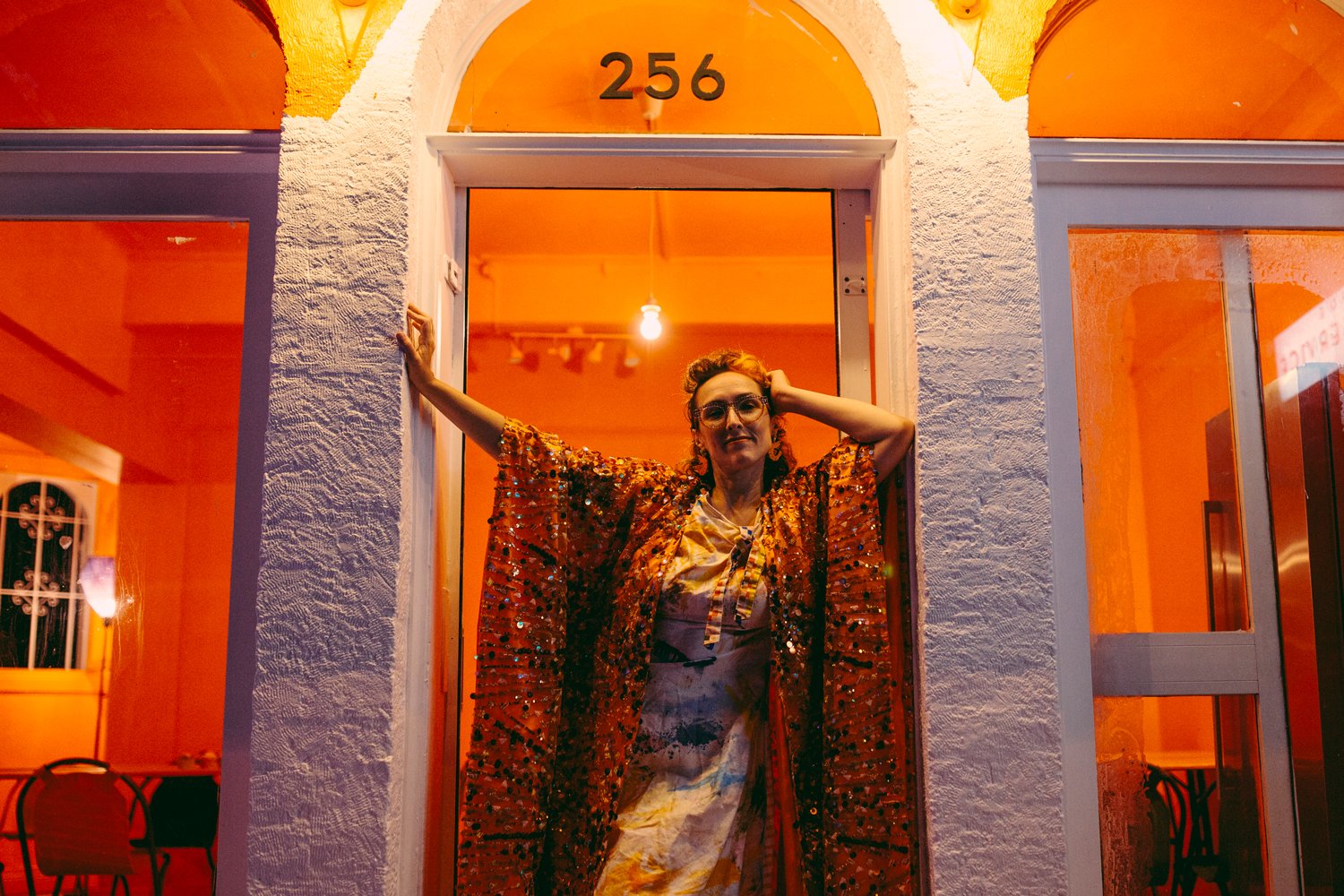



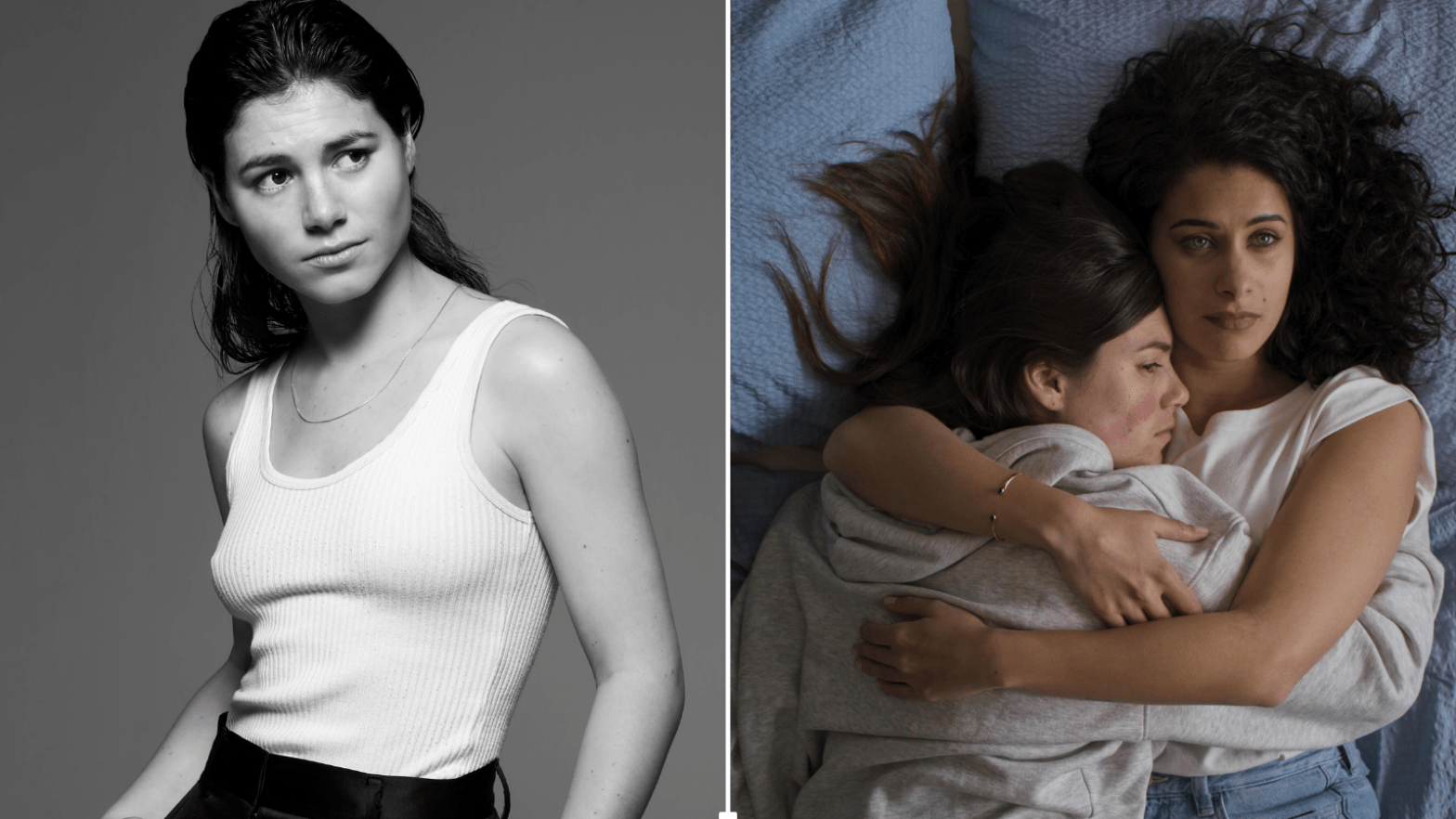
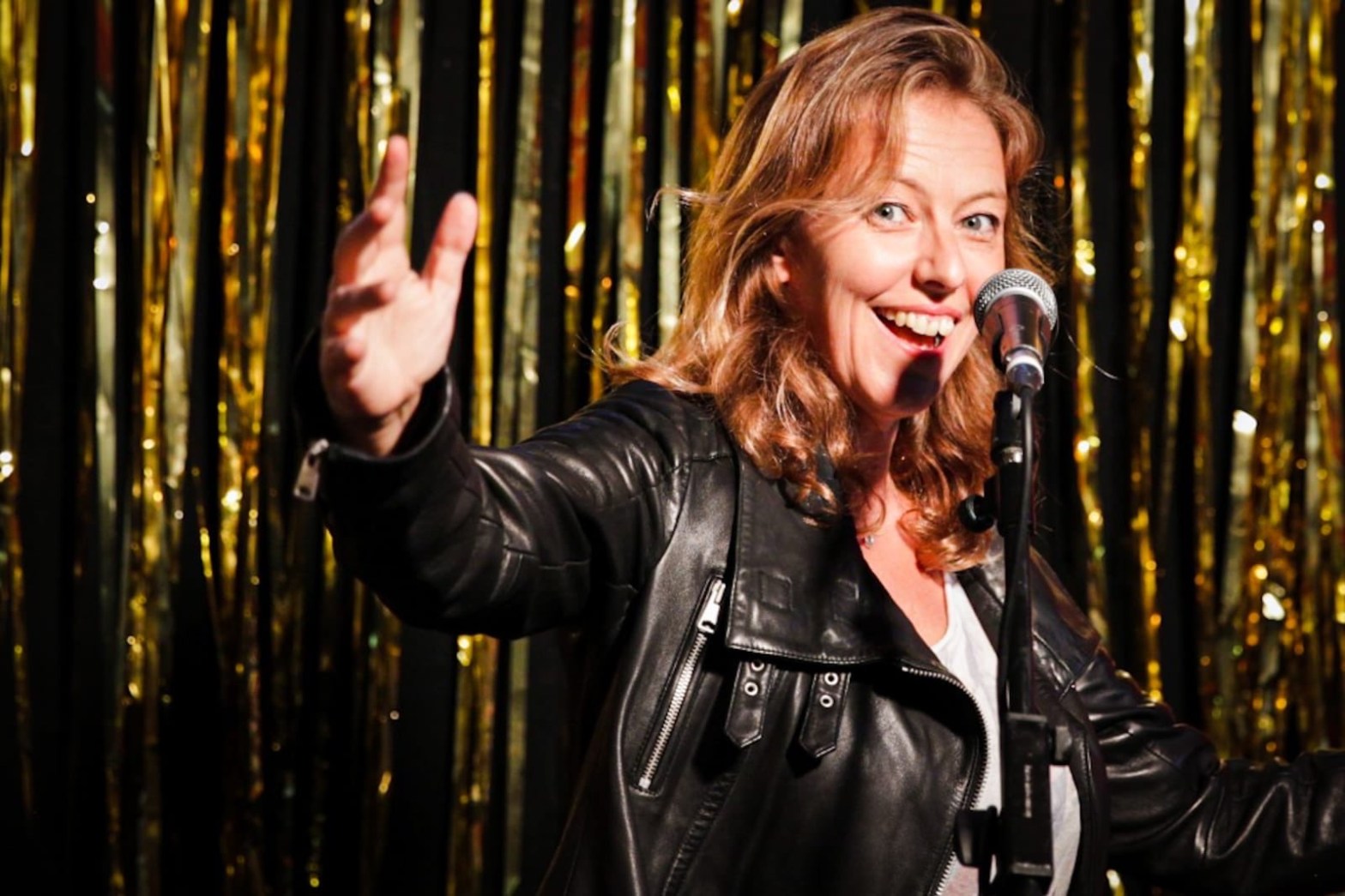




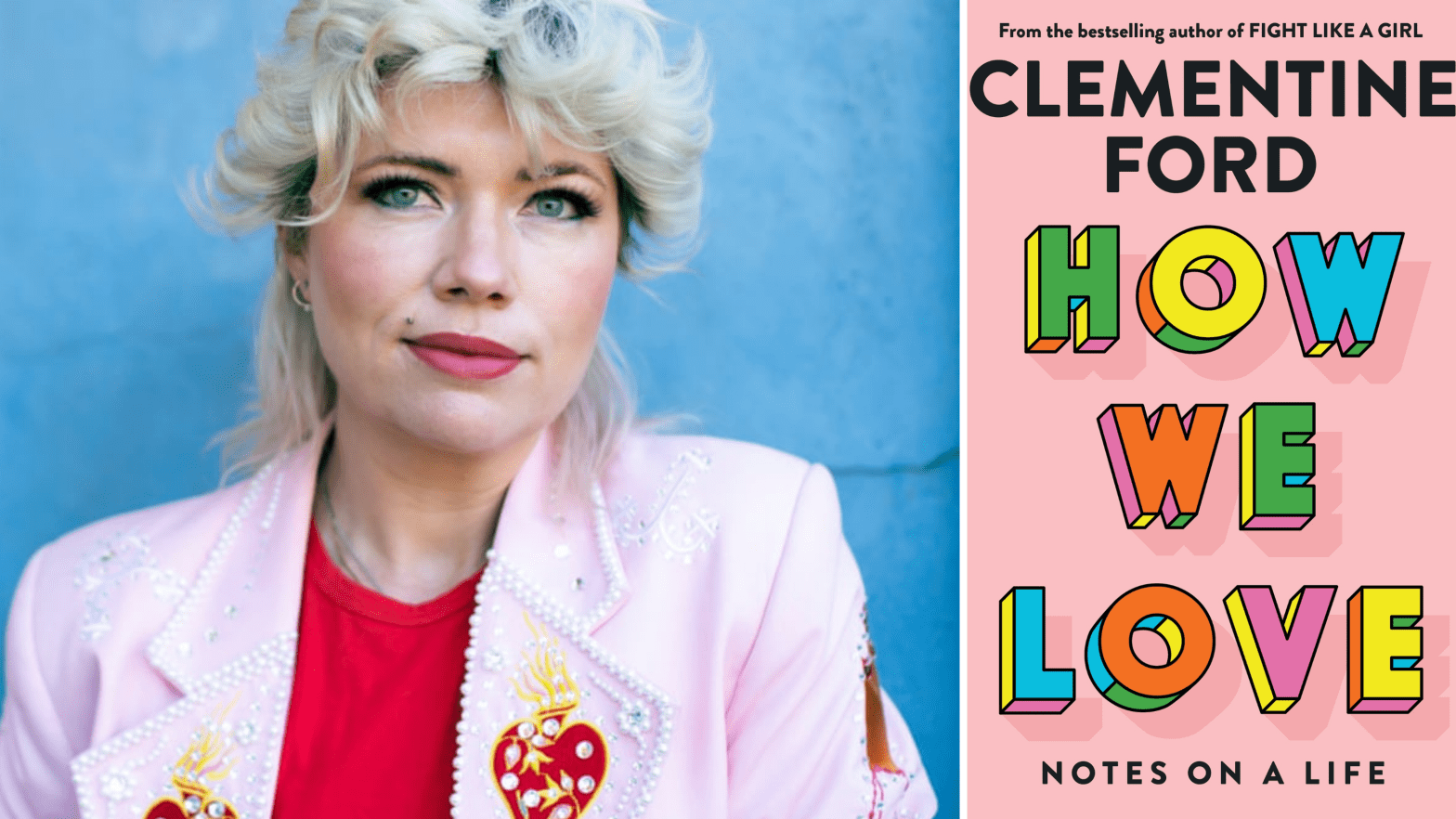

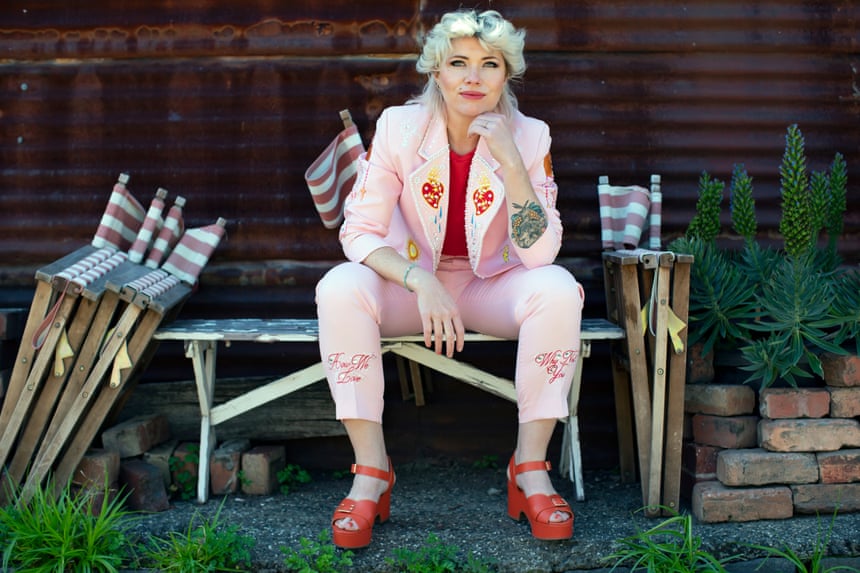
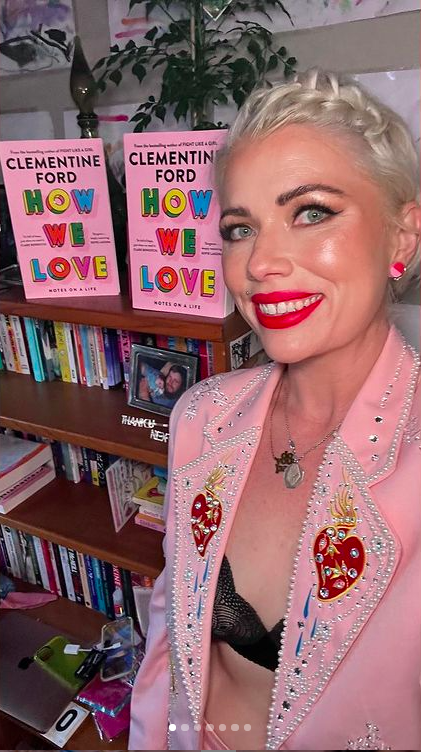

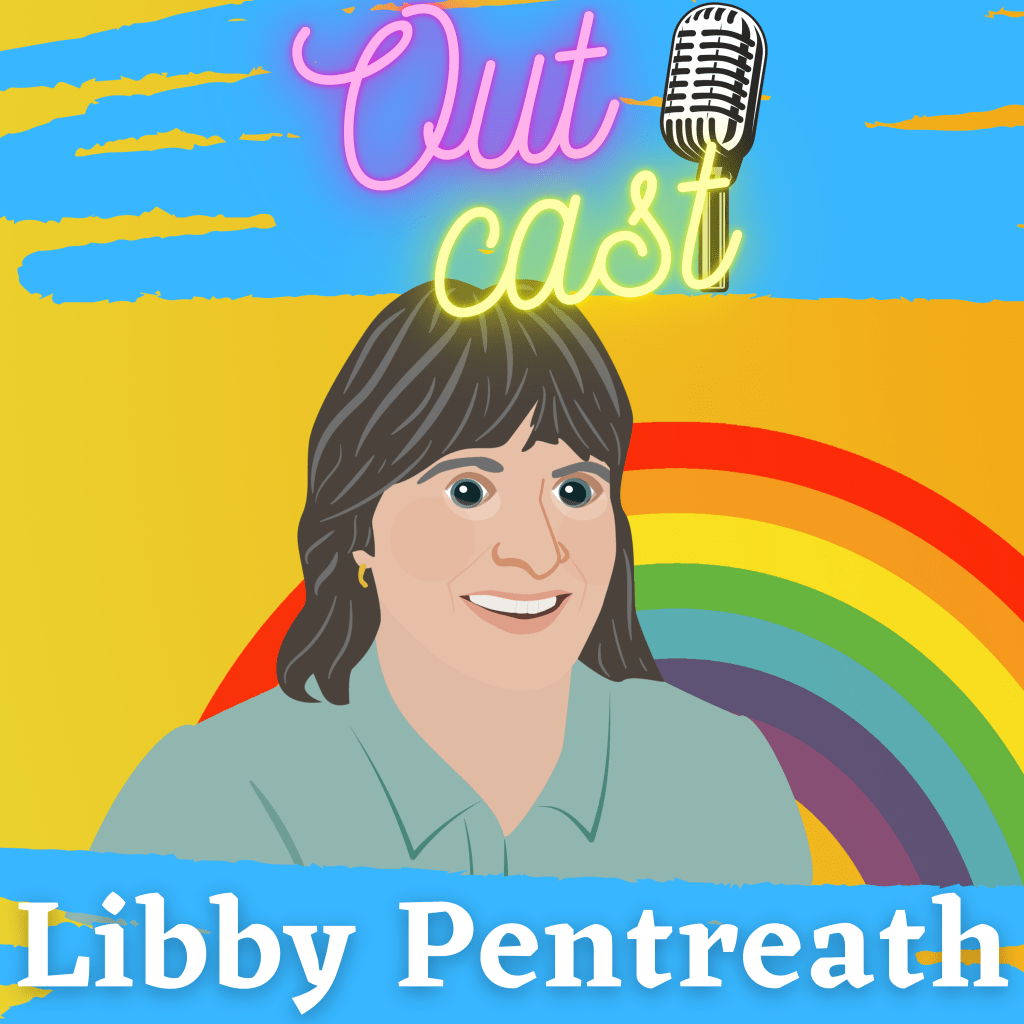


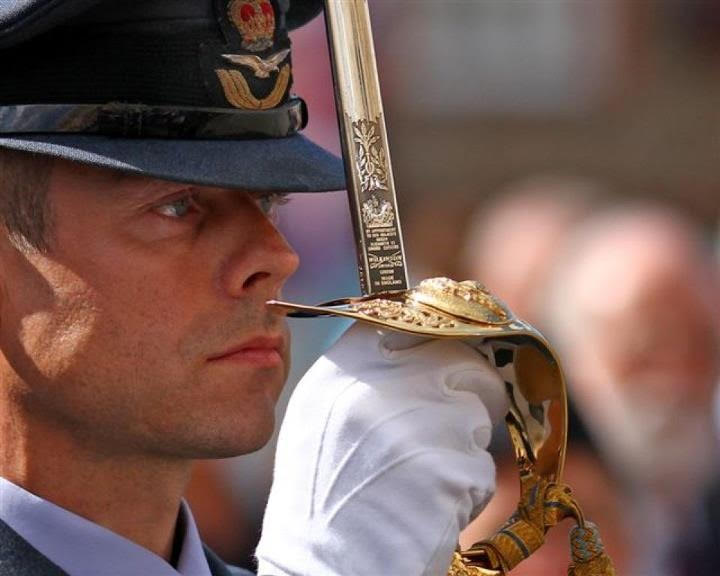
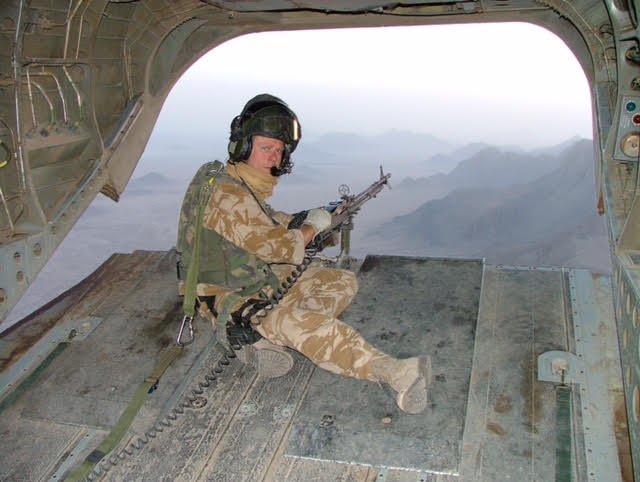

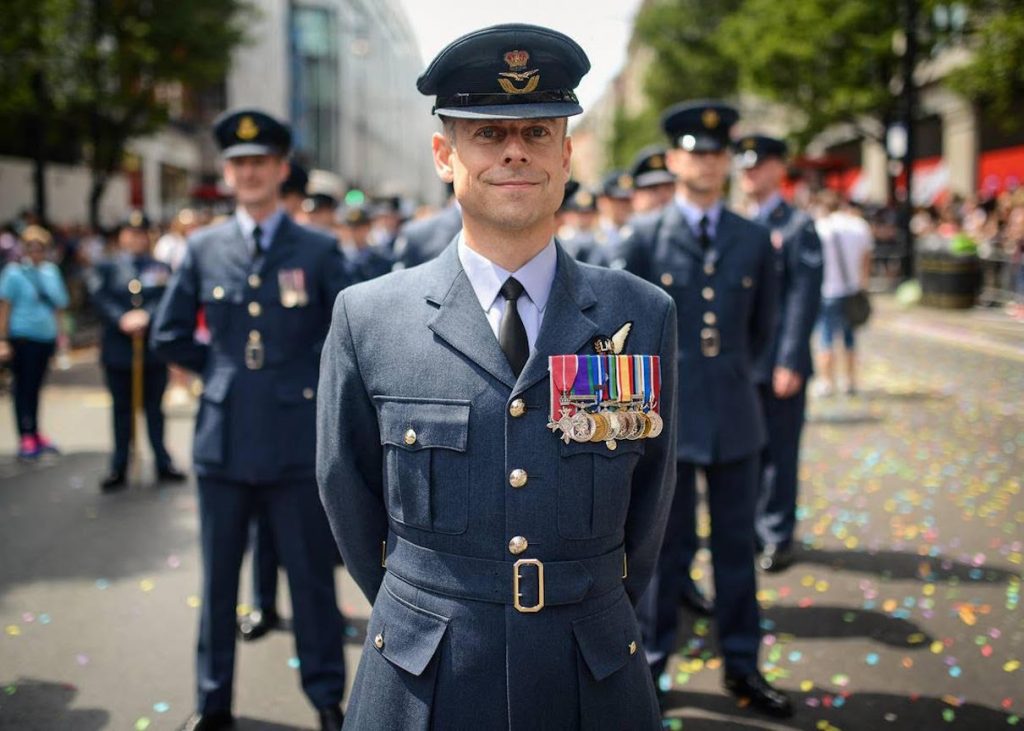


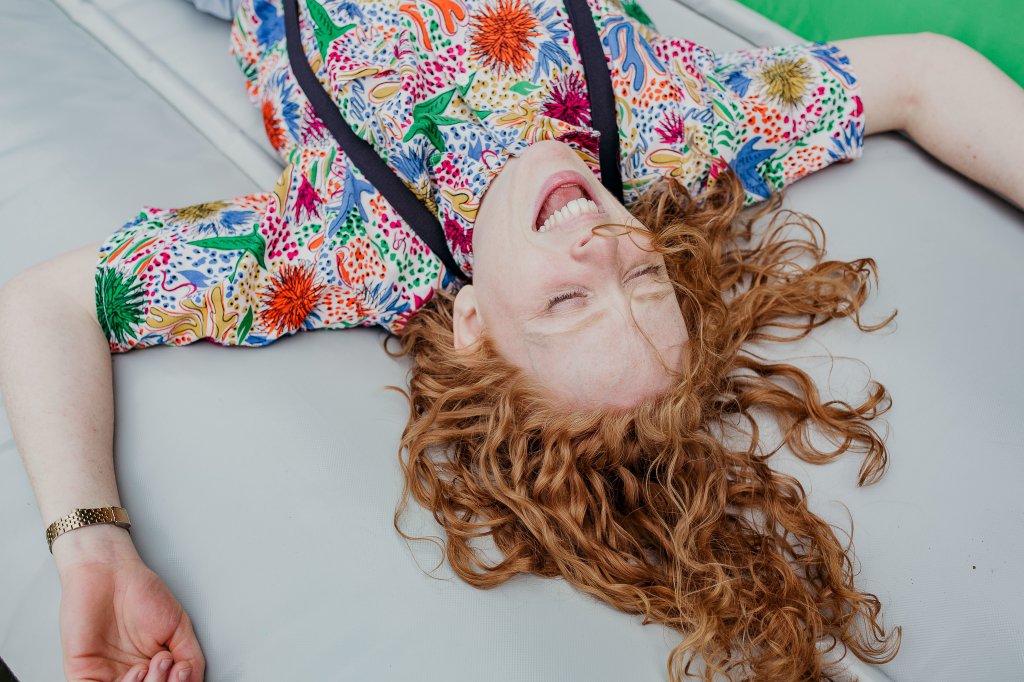


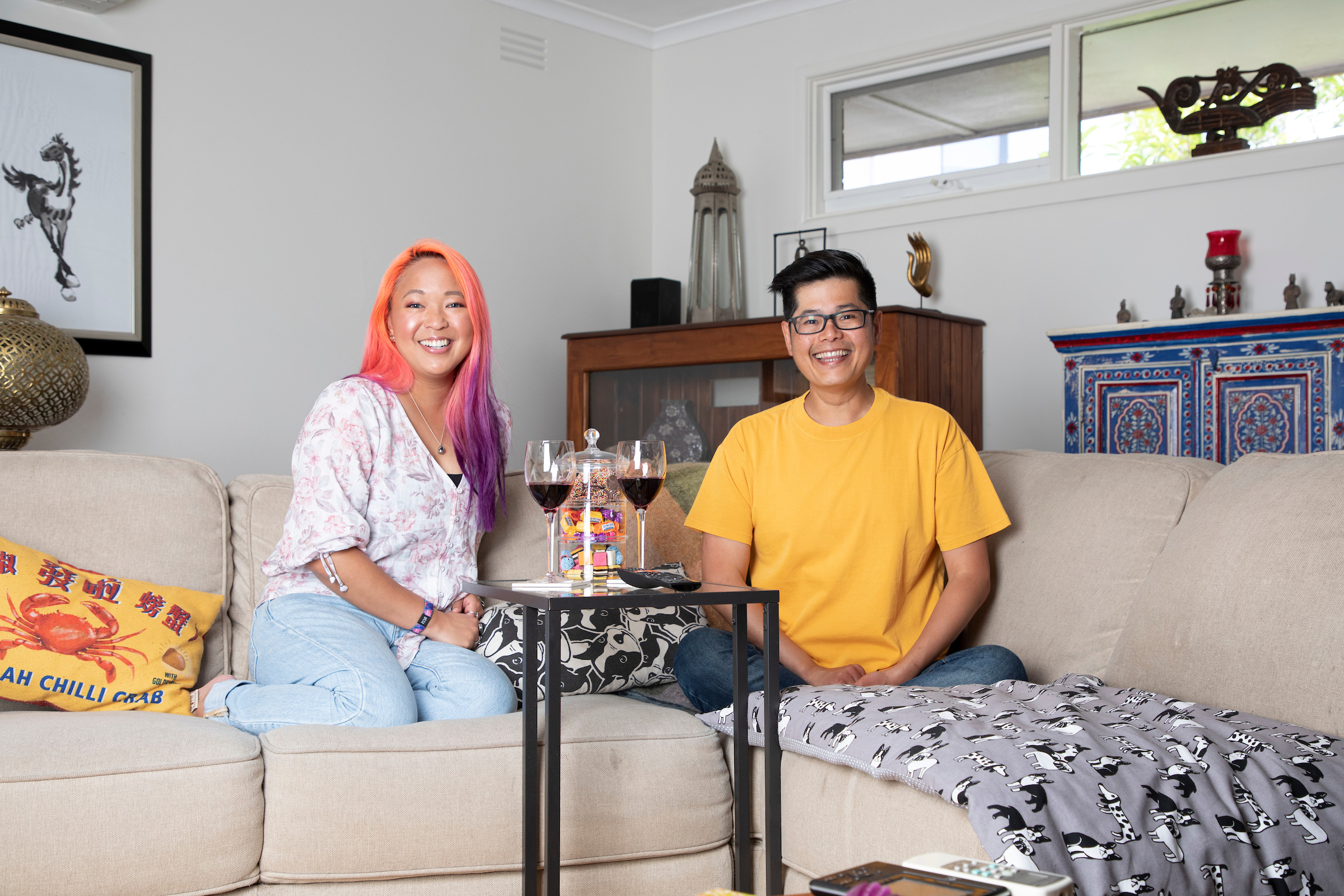


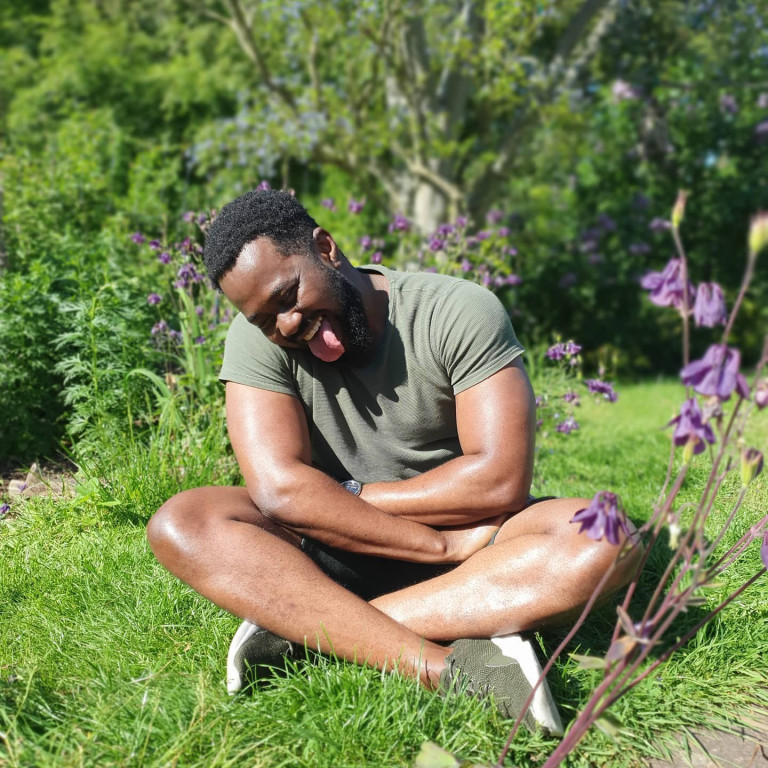
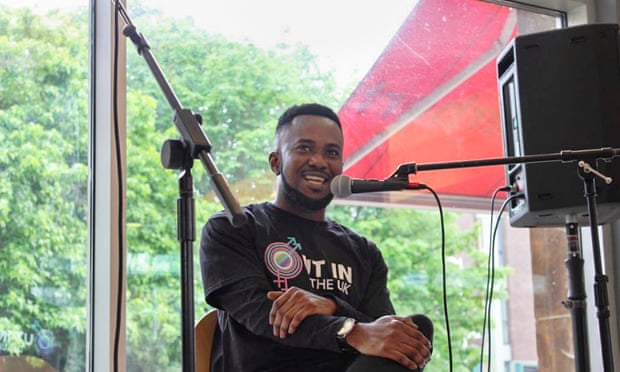


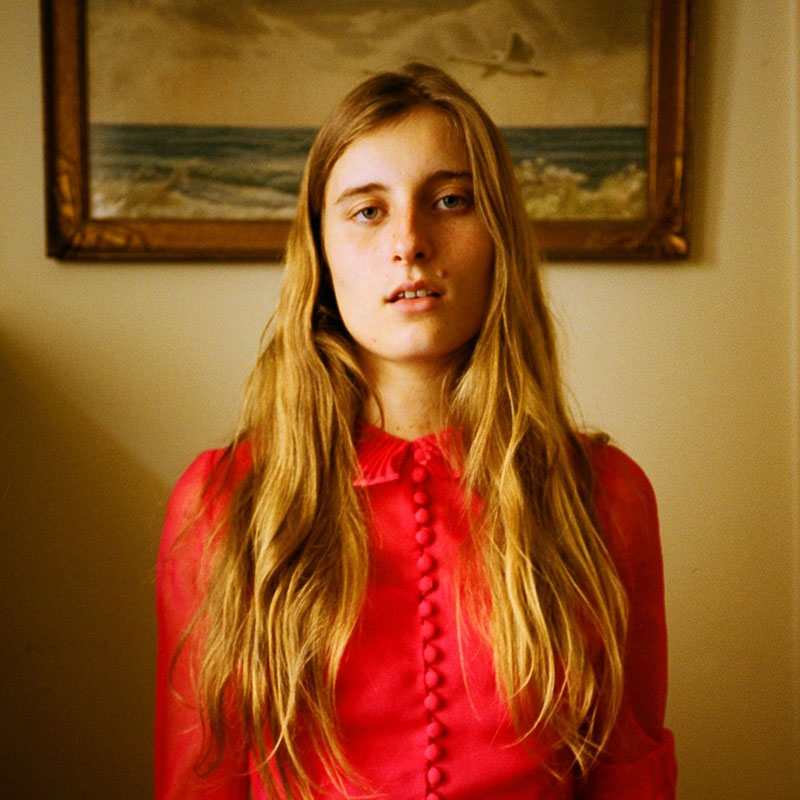


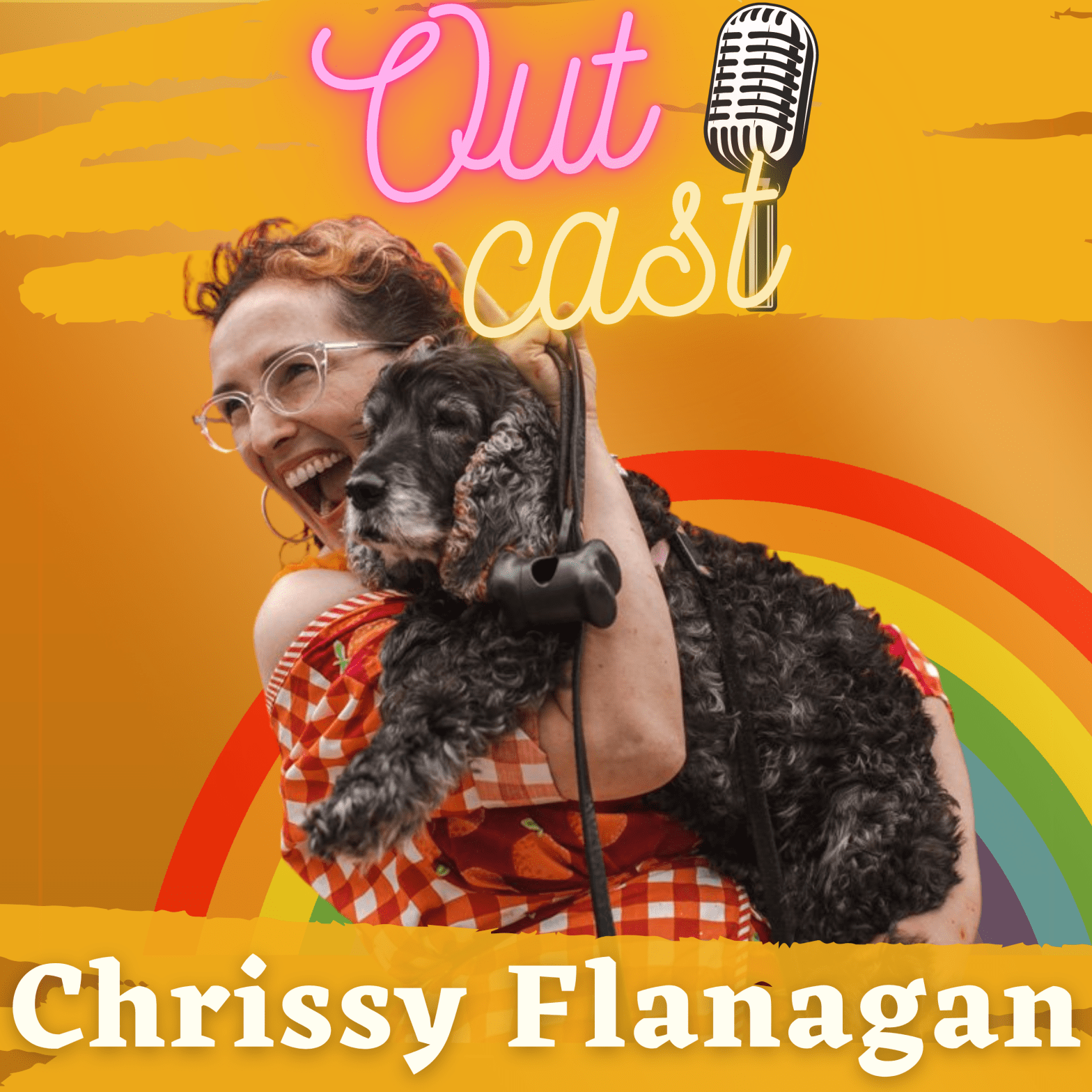
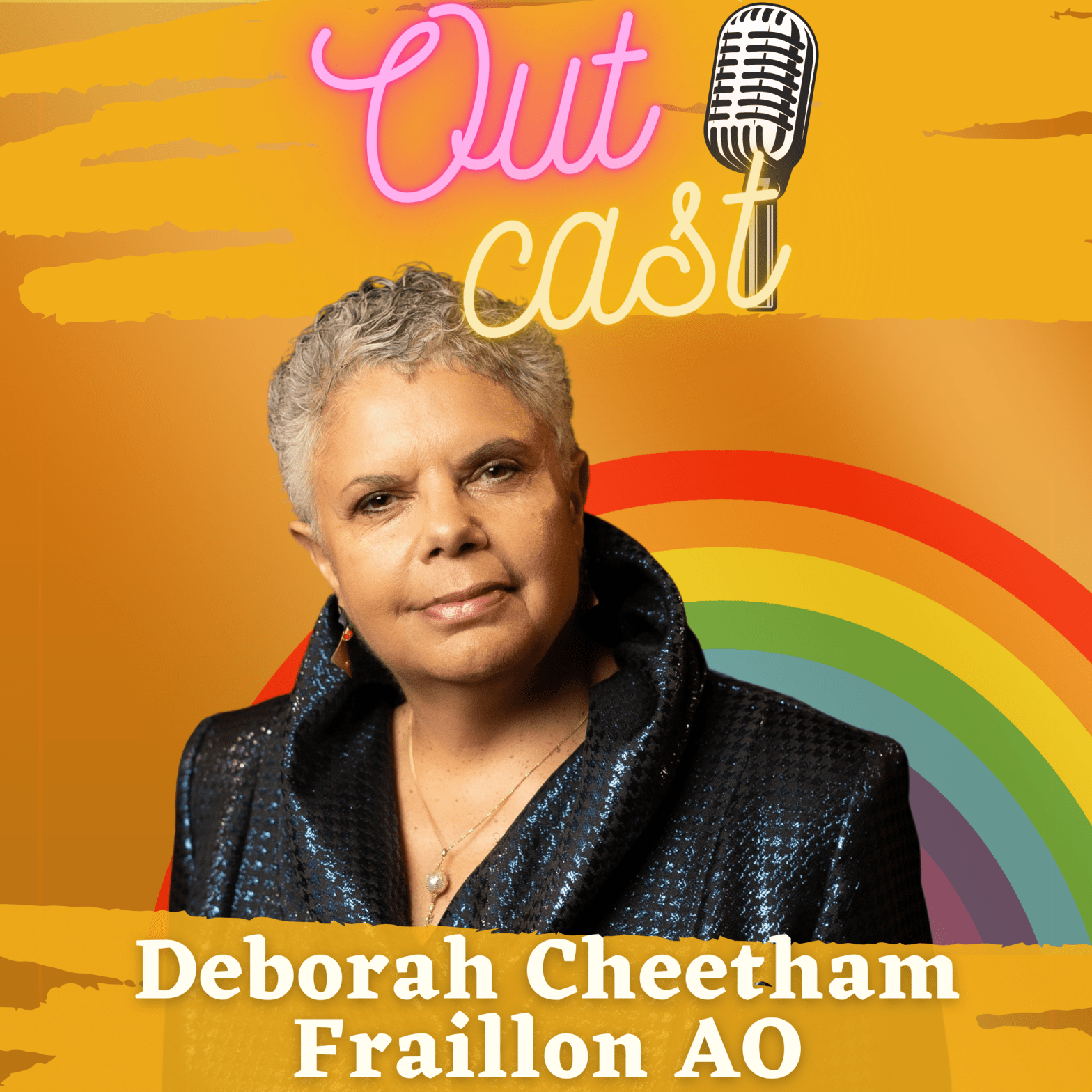

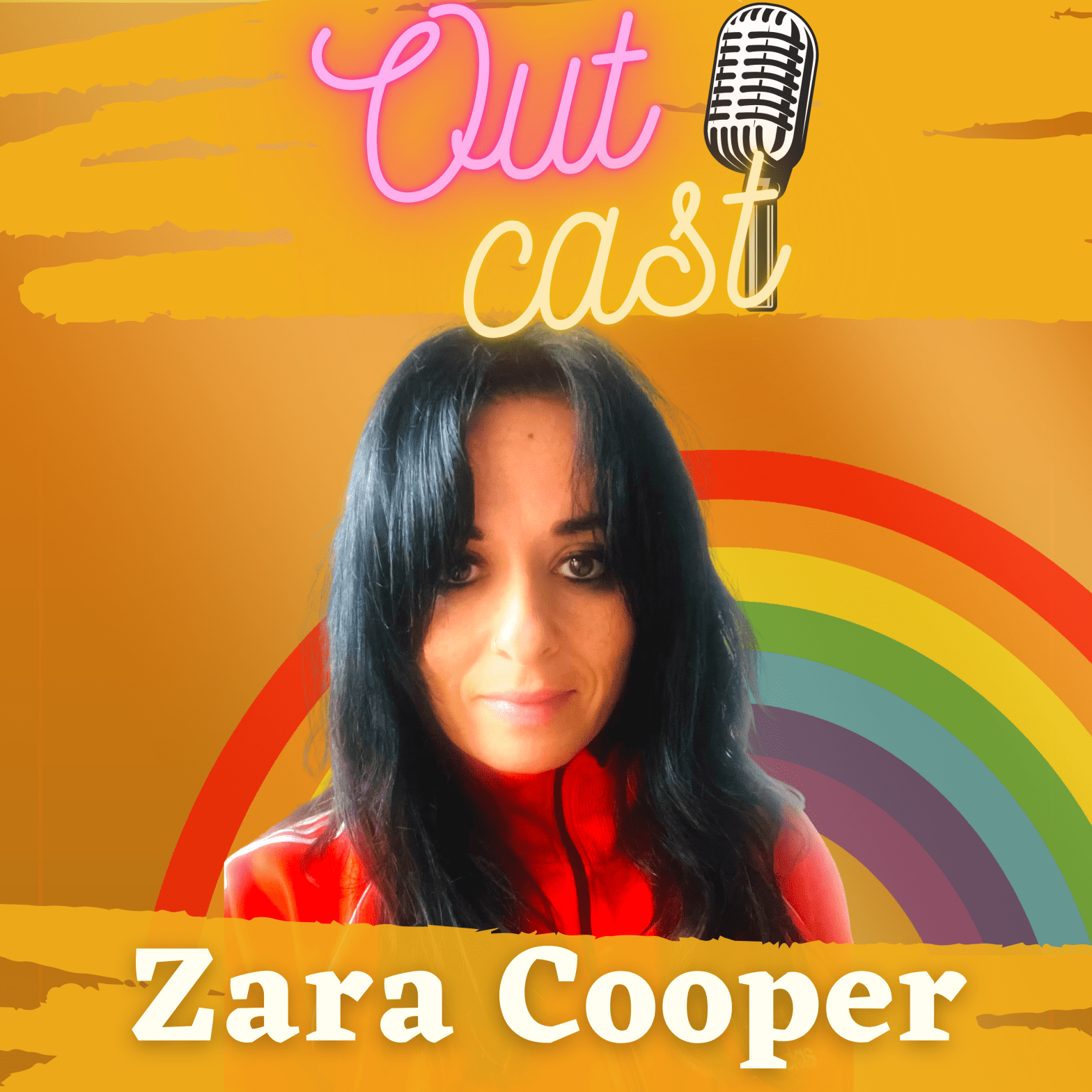
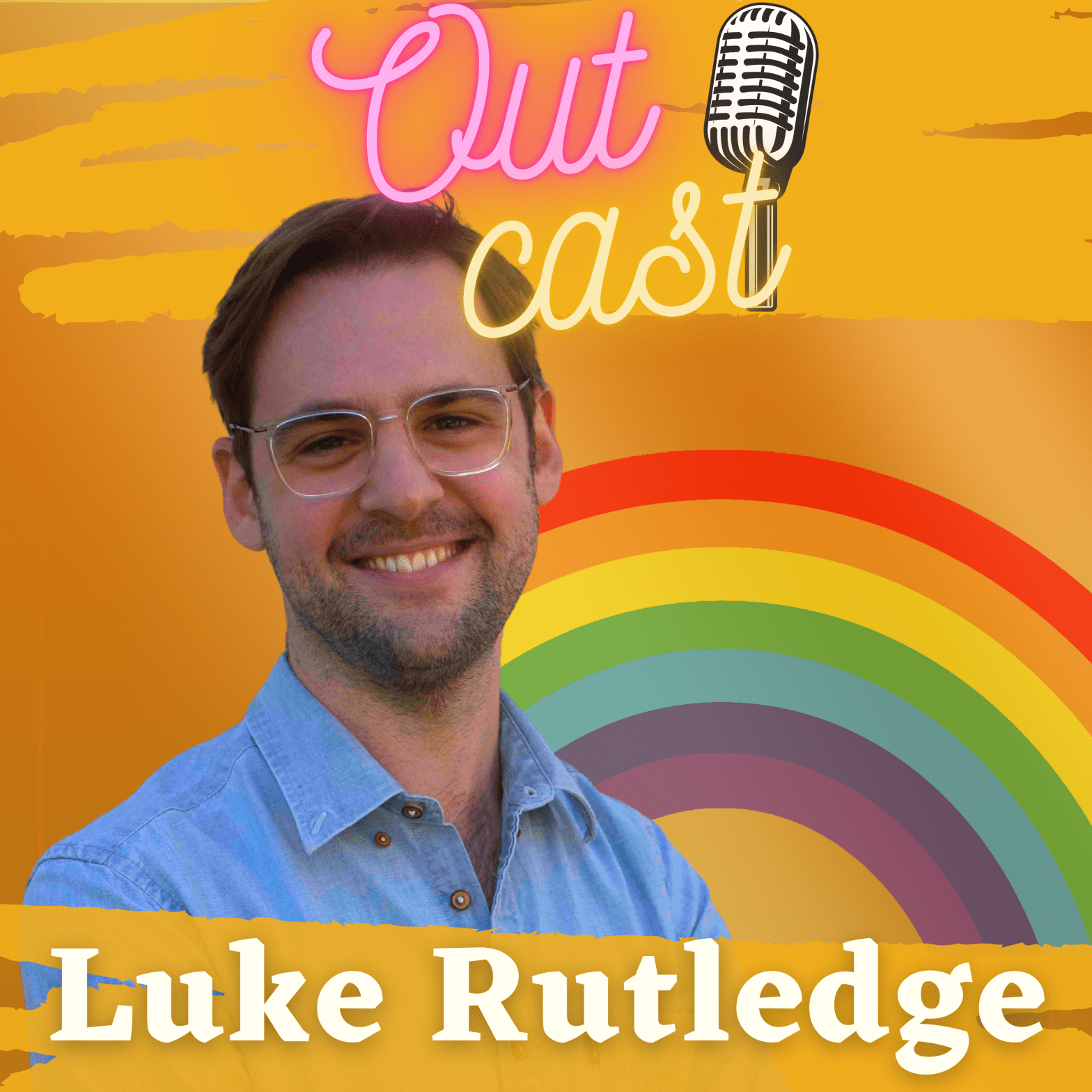
 OUTcast Podcast